

Maddy summaryThe Outdoors for All Act establishes a federal grant program to fund outdoor recreation projects in underserved communities. It authorizes the Secretary of the Interior to award grants to eligible entities (like states, cities, tribal organizations, or nonprofits) for acquiring land, developing parks, or renovating outdoor facilities in qualifying urban areas (population 25,000+ or tribal lands) or low-income communities (where 30%+ of residents have incomes at or below 80% of local median income or 200% of the federal poverty line). Grants require a 100% cash or in-kind match (with limited waivers), prohibit funding for indoor facilities or maintenance, and prioritize projects enhancing park access, engaging youth, creating jobs, or improving environmental benefits like reducing urban heat islands. The program mandates annual reporting and focuses on concrete community outcomes rather than speculative results.
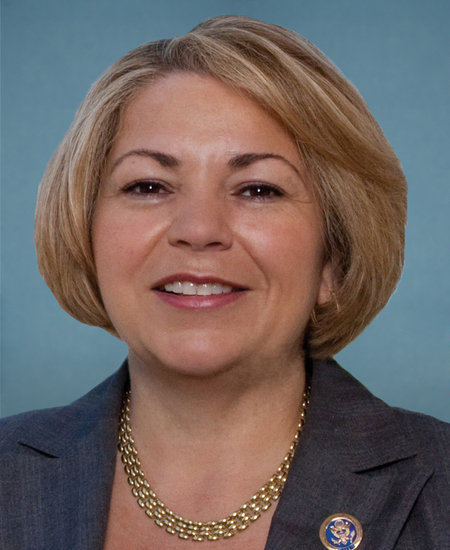
Rep. Linda T. Sánchez
Sponsored bills
Maddy summaryHR 1680, the Black Sea Security Act of 2023, mandates the U.S. government to develop a coordinated strategy for security and economic engagement with Black Sea states (Turkey, Romania, Bulgaria, Moldova, Ukraine, and Georgia). The bill requires an interagency strategy within 180 days, focusing on enhancing security cooperation with NATO, bolstering economic ties, supporting democratic resilience, and improving regional connectivity. Key mechanisms include assessing military presence options, diversifying energy partnerships, countering economic coercion from Russia and China, and strengthening infrastructure through initiatives like the Three Seas Initiative. The strategy aims to deepen U.S. engagement without creating new funding or altering existing authorities for affected countries.
Correcting Guam's History in the PACT Act This bill expands eligibility for a presumption of service-connection for specified diseases associated with exposure to certain herbicide agents. Under a presumption of service-connection, specific conditions diagnosed in certain veterans are presumed to have been caused by the circumstances of their military service. Health care benefits and disability compensation may then be awarded. Under the bill, service performed in Guam or its territorial waters between August 15, 1958, and July 31, 1980, provides a veteran who has a specified disease that is associated with exposure to certain herbicide agents with eligibility for a presumption of service-connection. (Under current law, the eligible time frame for service in Guam is between January 9, 1962, and July 31, 1980.)
Maddy summaryHR 1595 establishes a federal grant program to help states improve their licensing systems for firearms dealers. It authorizes annual competitive grants (up to $2.5 million per state per year) for states to develop, implement, or evaluate their dealer licensing programs, provided they already meet minimum standards like requiring 3-year licenses, conducting inspections, and imposing penalties for violations. States receiving grants must report annually on inspections, violations, license status, and other metrics, with the Attorney General also submitting annual reports to Congress. This bill directly affects state governments that operate firearms dealer licensing programs, providing funding to strengthen oversight without changing existing state laws.
Maddy summaryThis bill authorizes a Congressional Gold Medal to honor the "Hello Girls" - female telephone operators who served in the Army Signal Corps during World War I. They provided critical battlefield communications in France (connecting 26 million calls), wore military uniforms, and faced combat risks, but were denied veteran benefits for 60 years due to being classified as civilian contractors. The medal recognizes their pioneering service, devotion, and the decades-long struggle to gain military recognition. The award follows similar recognition for other WWII women veterans and aims to correct the historical injustice they faced.
Maddy summaryThe PHIT Act of 2023 allows individuals and families to deduct certain fitness expenses as medical costs on their federal taxes. It covers gym memberships, fitness classes, and specific equipment used exclusively for exercise (like home workout gear), with a yearly limit of $1,000 ($2,000 for joint returns). Expenses for activities like golf, hunting, or non-exercise-focused facilities (e.g., private clubs) are excluded, and equipment must be used solely for physical activity. This directly affects taxpayers who pay for qualifying fitness programs, making these costs partially tax-deductible under revised IRS rules.
Maddy summaryHR 1538 creates a new "emerging business enterprise" designation for very small, young businesses (under 5 years old, with fewer than 25 employees or under 10% of industry size standards, and managers earning no more than 200% of average manager salaries). It requires federal agencies to set annual goals for awarding 3% of contracts to these businesses, prioritizing them if goals aren't met. The bill also waives SBA loan fees for eligible businesses and mandates agencies to report their progress to the Small Business Administration and Congress annually. These provisions aim to increase federal contracting opportunities for early-stage small businesses through defined eligibility, agency targets, and financial incentives.
Maddy summaryHR 1499, the Good Jobs for Good Airports Act, requires airports receiving federal funding to pay covered service workers a minimum wage of at least $15 per hour (or higher if state/local laws or federal standards require it) and provide minimum fringe benefits. It directly affects workers in specific airport roles like security, ticketing, concessions, cleaning, and ramp services at small, medium, or large hub airports. The bill mandates annual certification from airport operators to verify compliance with these wage and benefit standards, tied to eligibility for federal airport grants under the Infrastructure Investment and Jobs Act. It does not override stricter state or local laws but ensures minimum standards for workers supporting airport operations.
Maddy summaryThe Paycheck Fairness Act (HR 17) strengthens equal pay protections by amending the Fair Labor Standards Act. It prohibits pay discrimination based on sex, pregnancy, childbirth, sexual orientation, gender identity, and sex characteristics. The bill modifies employer defenses for pay differences to require demonstration that any disparity is job-related, consistent with business necessity, and accounts for the entire pay differential. It also prohibits employers from relying on wage history when making hiring decisions or setting pay, enhances penalties for violations, and requires the EEOC to collect compensation data disaggregated by sex, race, and national origin.
Maddy summaryHCONRES 22 is a symbolic resolution recognizing the persistent gender pay gap in the U.S., documenting that women earn significantly less than men across racial groups (e.g., Black women earn 67 cents for every dollar earned by White men). It highlights the economic impact of this disparity, noting women lose over $958 billion annually in wages and face barriers like occupational segregation and workplace harassment. The resolution does not create new laws or policies but formally acknowledges the issue and reaffirms Congress’s commitment to addressing the gap. It references specific Equal Pay Days (e.g., March 14 for all women) to underscore the time women must work to earn what men did the previous year.