

Maddy summaryHRES 1480 is a symbolic resolution recognizing Hispanic Restaurant Week (September 22-October 3, 2024) and honoring Hispanic restaurant owners and employees. It acknowledges their economic contributions to the U.S. restaurant industry, citing data that 25.9% of restaurant workers are Hispanic and Hispanic-owned restaurants represent the second-highest number of Hispanic-owned businesses. The resolution does not create new policies or funding but formally celebrates their role during Hispanic Heritage Month. It was introduced by 14 House members and referred to the Energy and Commerce Committee.
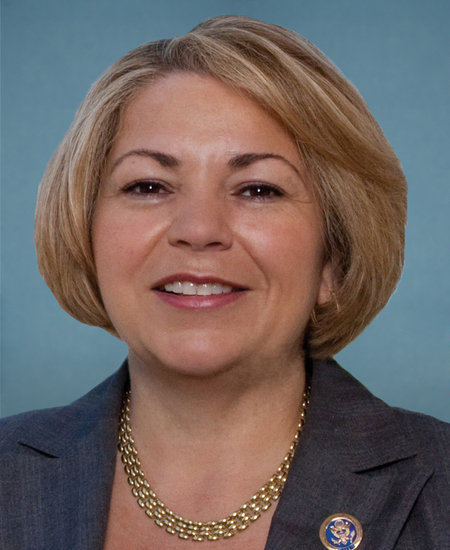
Rep. Linda T. Sánchez
Sponsored bills
Maddy summaryThis resolution (HRES 1472) symbolically recognizes the heritage, culture, and contributions of Latinas in the United States. It highlights their economic impact (over 2 million Latina-owned businesses), societal roles (48,000+ active-duty Latinas in the military, 18% of women-owned businesses), and ongoing challenges like the pay gap (Latinas earn 57 cents for every dollar earned by White, non-Hispanic men). The resolution notes that Latinas represent 1 in 5 U.S. women and will comprise 25% of the female population by 2060. As a non-binding resolution, it does not create new policies or allocate funds, but formally honors their contributions and acknowledges the need for continued progress.
Maddy summaryHRES 1473 is a non-binding resolution passed by the U.S. House of Representatives that condemns racism, bigotry, and misinformation targeting Haitian people and their descendants. It celebrates the historical contributions of Haitian Americans to U.S. society, including founding cities (like Chicago via Jean Baptiste Point du Sable), advancing civil rights (W.E.B. Du Bois), and enriching healthcare, education, and culture. The resolution specifically calls on all Americans to reject racist tropes and misinformation, and urges elected officials to promote inclusivity and responsible communication. It was introduced in response to recent false claims that fueled threats against Haitian communities, such as the bomb threats in Springfield, Ohio.
Maddy summaryHR 6319 (the 911 SAVES Act of 2023) requires the Office of Management and Budget to reclassify public safety telecommunicators as "Protective Service Occupations" within 30 days of enactment. This change corrects their current misclassification in the federal Standard Occupational Classification (SOC) system, which is used for statistical data on jobs. The bill directly affects how these professionals - critical in emergency calls involving missing children, active threats, and officer safety - are officially categorized in government workforce data. It does not create new benefits or funding but aims to better recognize their lifesaving role through accurate federal job classification.
Maddy summaryHRES 1464 is a symbolic House resolution recognizing the Latino community's engagement in outdoor recreation and conservation efforts. It expresses support for designating the third week of September as "Latino Conservation Week" to highlight community involvement in protecting natural resources. The resolution does not create new laws or allocate funds; it is purely a statement of recognition. It aims to acknowledge existing community activities like park cleanups and educational events focused on environmental stewardship.
Maddy summaryThis bill directs the U.S. government to immediately restore funding to the United Nations Relief and Works Agency for Palestine Refugees (UNRWA), reversing a temporary funding pause. It repeals two appropriations acts that halted payments and requires the Secretary of State to resume UNRWA funding under existing authorities. The legislation specifically aims to support UNRWA’s critical humanitarian work - providing shelter, education, healthcare, and aid to Palestinian refugees across Gaza, the West Bank, Syria, Lebanon, and Jordan - during an acute famine risk in Gaza. It also mandates quarterly reports to Congress on UNRWA’s implementation of reforms from an independent review, ensuring accountability for its humanitarian mission.
Maddy summaryThe BASIC Act (HR 9669) creates a system to help college students access federal assistance programs that address basic needs like food, housing, and healthcare. It requires federal agencies to share data to identify students who might qualify for programs like SNAP, Medicaid, or housing assistance, and mandates that colleges provide students with information about these programs. The bill authorizes $1 billion in funding for planning grants (up to $75,000 per institution for 2 years) and implementation grants (up to $1 million per institution for 5 years) to help colleges develop and carry out strategies to address student food insecurity, housing insecurity, and other basic needs. Community colleges, historically Black colleges, and other minority-serving institutions receive priority for funding, with at least 25% of funds reserved for each category.
Maddy summaryThe Artsakh Revenue Recovery Act of 2024 would establish a U.S. fund to compensate Armenians displaced from Artsakh (Nagorno-Karabakh) after Azerbaijan's military assault in September 2023. It requires the U.S. government to seize Azerbaijani sovereign assets held in the United States if Azerbaijan fails to compensate displaced Armenians for lost revenue from businesses, property, and employment. The bill creates a claims process through which displaced Armenians can submit claims for compensation for revenue lost since September 2023, with the fund paying claims if Azerbaijan does not compensate within 90 days. The Artsakh Revenue Recovery Fund would operate for up to one year after a peace agreement between Azerbaijan and Armenia is signed or until all claims are paid.
Maddy summaryHRES 1448 is a non-binding House resolution stating that the House believes every person has the right to emergency health care, including abortion care, during medical emergencies. It specifically addresses concerns that abortion restrictions force medical providers to choose between treating patients in life-threatening situations or risking criminal charges. The resolution highlights that such restrictions disproportionately harm Black, Indigenous, people of color, immigrants, low-income individuals, and LGBTQI+ patients. It does not change existing laws but expresses congressional support for ensuring access to emergency care without legal barriers. The resolution was introduced by multiple House members and referred to the Energy and Commerce Committee.
Maddy summaryHRES 1447 is a non-binding resolution expressing support for designating the week of September 22-28, 2024, as "Gold Star Families Remembrance Week." It directly honors families who lost loved ones while serving in the U.S. military (referred to as "Gold Star Families") and families of veterans. The resolution encourages Americans to observe the week by performing community service and celebrating the sacrifices of fallen service members, without creating new laws or obligations. It aligns with existing recognition of Gold Star Mother’s Day (the last Sunday in September) but expands the focus to all affected families.