

Maddy summaryHR 7381, the HEALTH AI Act, establishes a National Institutes of Health (NIH) grant program to fund research on using generative artificial intelligence (AI) in healthcare. The grants support projects that aim to improve clinical documentation, reduce administrative burdens for healthcare workers, speed up insurance claims, and enhance patient care services. Eligible recipients include universities, nonprofits, and government agencies, with priority given to projects addressing clinician burnout, health disparities, and improving care for medically underserved populations. The bill focuses on concrete research into AI applications that directly support healthcare practitioners and patients, without specifying implementation outcomes.
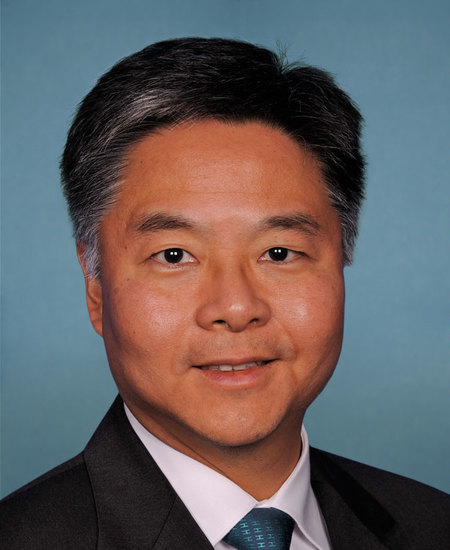
Rep. Ted Lieu
Sponsored bills
Maddy summaryHRES 1014 is a symbolic House resolution commemorating the Ukrainian people's sacrifices two years after Russia's February 24, 2022, invasion. It recognizes the war's devastating toll, including over 10,000 civilian deaths, 19,000 abducted children, and 10 million displaced people, while condemning Russia's actions. The resolution reaffirms U.S. support for Ukraine, condemns Vladimir Putin's regime, and stands in solidarity with Ukraine's defense of democratic values. As a commemorative resolution, it has no binding effect but formally acknowledges Ukraine's struggle and resilience. It directly honors Ukrainian civilians, soldiers, and those displaced by Russia's war of aggression.
Maddy summaryHR 7378, the Frederick Douglass Congressional Gold Medal Act, authorizes Congress to posthumously award a gold medal to honor Frederick Douglass's legacy as a pivotal abolitionist, writer, and advocate for civil rights. The medal, designed by the Treasury Secretary, will be presented to the National Museum of African American History and Culture for display, with bronze duplicates available for sale to cover costs. This ceremonial bill does not create new laws or affect current policies - it solely commemorates Douglass's historical contributions to ending slavery and advancing equality.
Maddy summaryHRES 966 is a symbolic resolution condemning alleged sexual violence committed by Hamas during its October 7, 2023, attack on Israel. It specifically references eyewitness accounts, forensic evidence, and Hamas fighters' admissions of ordering gang rape, sexual mutilation, and assault against Israeli civilians. The resolution calls for international condemnation of such acts as weapons of war, urges nations to criminalize sexual violence, and supports investigations into Hamas' actions. As a non-binding resolution, it does not create new laws or directly affect any individuals but formally expresses the House's position on the issue.
Maddy summaryHR 7331 establishes a new FISA Oversight Office within the Justice Department to review applications for foreign intelligence surveillance targeting U.S. persons. The Office can challenge applications it determines do not meet legal standards for probable cause, particularly when surveillance involves U.S. citizens or residents. It requires the Justice Department to share all relevant evidence with the Office and mandates annual reports to Congress detailing how often the Office challenges or declines to challenge surveillance requests. This bill directly affects U.S. persons whose communications may be subject to FISA surveillance by adding an independent review layer before court approval.
Maddy summaryHR 7329, the Election Day Holiday Act of 2024, would designate November 5, 2024 (and subsequent general elections) as a federal public holiday. This change would require federal offices to close and provide federal employees a paid day off on Election Day. The bill amends Title 5 of the U.S. Code to add "Election Day" to the list of designated federal holidays, following Columbus Day. This directly affects federal employees and operations, ensuring they have a day off during general elections.
Maddy summaryThis resolution (HRES 1005) is a non-binding expression of the House's opinion, not a law. It states that local print and digital journalism is vital for government transparency, local governance, and preventing political corruption, as these news sources are disappearing due to declining subscriptions, corporate buyouts, and reduced community trust. The resolution calls for federal, state, and local governments to make "all possible efforts" to sustain local news operations and urges Congress to collaborate with news outlets and stakeholders to ensure their continued viability. It directly addresses the growing crisis in local news coverage affecting communities nationwide.
Saving Local News Act This bill includes as a tax-exempt 501(c)(3) charitable organization purpose the publication (including electronic publication) of written news articles. In the case of an organization that is tax-exempt due to the publication of written news articles, the term unrelated business taxable incom e does not include any amount attributable to payments for advertisements in news publications.
Maddy summaryHRES 1003 is a symbolic resolution recognizing the contributions of Vietnamese Americans. It acknowledges that approximately 800,000 Vietnamese refugees resettled in the U.S. after the Vietnam War and that over 1.7 million Vietnamese Americans now live in the U.S., forming the fourth largest Asian American group. The resolution highlights their achievements in fields like business, education, the military, and public service, as well as their support for democracy and cultural diversity. As a non-binding resolution, it has no legal effect or direct impact on policy or individuals.
Maddy summaryHRES 1002 is a symbolic House resolution recognizing the cultural and historical significance of Lunar New Year (celebrated as the Year of the Dragon in 2024). It acknowledges the holiday's 4,000-year history in China, its celebration across Asia (including Seollal and Tết), and its significance to Asian Americans and others in the U.S. The resolution expresses respect for those observing the holiday and wishes them a happy new year, but it does not create new laws, policies, or funding. As a ceremonial resolution, it has no direct effect on legislation or constituents.