

Commission on Youth Homelessness Act This bill requires the Department of Housing and Urban Development to establish a commission on youth homelessness comprised of representatives from specified federal agencies and nonprofit organizations. The commission must submit a report to Congress that includes (1) how federal, state, tribal, and local laws, regulations, and policies have harmed or otherwise impacted youth and young adults who are homeless or at risk of homelessness; (2) a list of laws, regulations, and policies that unnecessarily target youth and young adults who identify as Black, Indigenous, people of color, or LGBTQIA+; and (3) legislative recommendations to prevent and end youth and young-adult homelessness.
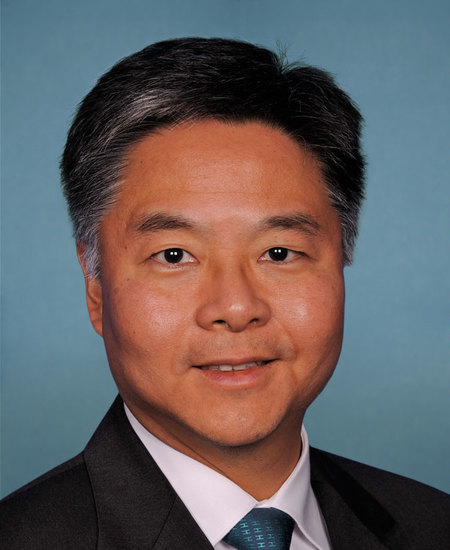
Rep. Ted Lieu
Sponsored bills
Maddy summaryHR 7862 directs federal agencies to annually report on converting unused government-owned buildings into affordable housing. It establishes two grant programs: a $1.75 million annual grant for exploring office-to-residential conversions, and a $250 million annual program for states and local governments to convert underutilized public buildings into rental housing. The state/local program requires converted housing to maintain affordability for 30 years, with at least 20% of units reserved for households earning ≤50% of local median income, or 40% for households ≤60% of median income. This bill directly affects federal agencies (through reporting) and state/local governments (through grant funding), focusing on repurposing vacant public property to expand affordable housing options.
Maddy summaryThis bill amends federal wiretap and communications laws to protect reproductive health information. It requires government entities seeking to access communications (via warrant, subpoena, or court order) to certify under oath that they will not use reproductive or sexual health data - including information about abortion, contraception, pregnancy, or fertility treatments - to investigate or prosecute individuals seeking, providing, or facilitating such care. The bill explicitly defines "reproductive or sexual health information" to cover medical services, prescriptions, health conditions, and related activities. This applies to all federal law enforcement and government agencies handling communications requests. The law directly affects government entities and the privacy rights of individuals accessing reproductive healthcare.
Maddy summaryHR 7849, the Disaster Resiliency and Coverage Act of 2024, establishes a federal grant program to help homeowners in high-risk disaster areas make their homes more resilient. The program provides up to $10,000 per household (adjusted annually for inflation) for specific qualifying mitigation activities, such as reinforcing roofs, installing flood barriers, or creating fire-resistant landscaping. Homeowners must have an adjusted gross income under $250,000 ($500,000 for joint filers) and the work must meet FEMA-established standards. States and tribal governments administer the program, with funds intended to incentivize insurance companies to offer or increase coverage in vulnerable areas.
Maddy summaryThis bill directs the federal government to launch a national public health education campaign about abortion access. It requires the Secretary of Health to provide medically accurate, culturally competent information on where to access abortion services (including medication abortion and telehealth), legality, identifying misleading crisis pregnancy centers, and spotting misinformation. The campaign specifically targets underserved groups like communities of color, immigrants, LGBTQ+ individuals, and people in rural areas. It prohibits promoting misinformation about abortion safety, abortion reversal, or abstinence-only programs, and bans collecting personal data from users. The effort aims to improve access to reliable information, not to change abortion laws.
Maddy summaryHRES 1109 is a symbolic resolution commemorating the 1913 Woman Suffrage Procession in Washington, DC, where suffragists led by Alice Paul and Inez Milholland marched to demand voting rights for women. It honors the participants' courage during a protest that drew 500,000 spectators despite violent opposition, highlighting how this event advanced the national push for the 19th Amendment. The resolution does not create new laws but reaffirms support for voting rights equality, connecting the 1913 march to ongoing efforts to protect democratic access. It specifically acknowledges the intersectional struggles of women of color in the suffrage movement. As a commemorative resolution, it has no binding policy effect.
Maddy summaryHR 7795, the ProTECT Act of 2024, bans trophy hunting and importing trophies of threatened wildlife species in the U.S. and prohibits issuing permits for such activities. It amends the Endangered Species Act to extend existing protections - previously only covering endangered species - to threatened species, making it unlawful to take or import trophies (including parts or derivatives) of these species. The bill defines "trophy" broadly to cover whole animals, parts, or processed items obtained under hunting authorization, aiming to prevent legal trade from masking illegal wildlife trafficking.
Maddy summaryThe AADAPT Act reauthorizes and expands the Project ECHO grant program to specifically address Alzheimer's disease and dementia care. It provides $1 million annually (2026-2031) for grants to eligible health care entities - such as rural clinics, tribal organizations, or community health centers - to develop online training programs for primary care providers working in underserved areas (including rural, frontier, or medically underserved communities). These programs aim to improve provider retention, increase early diagnosis of dementia, and enhance quality care. The bill requires grantees to report on outcomes and ensures funding supplements, rather than replaces, existing resources.
Maddy summaryHRES 1101 is a non-binding resolution expressing the House of Representatives' support for collaborating with the Congressional Black Caucus to develop a "Black Wealth Agenda." It commits the House to outlining legislative priorities focused on closing the racial wealth gap through key areas like expanding Black entrepreneurship, reforming housing policies, building workforce development programs, and updating the federal minimum wage. The resolution emphasizes addressing systemic barriers in homeownership, education access, employment discrimination, and tax policy to advance economic equity for Black communities. It does not create new laws but directs the House to coordinate with the CBC on policy solutions targeting wealth-building opportunities.
Maddy summaryHRES 1084 is a non-binding resolution condemning the death of Russian opposition leader Alexei Navalny in a Russian prison and demanding the release of all political prisoners in Russia. It specifically calls on the U.S. State and Treasury Departments to impose sanctions on Russian officials responsible for Navalny’s death and ongoing imprisonment of political prisoners, including U.S. citizens like Evan Gershkovich. The resolution expresses solidarity with Navalny’s family and other imprisoned activists, highlighting Russia’s systemic abuse of prisoners and politically motivated detentions. It does not create new laws but urges U.S. and allied governments to prioritize the release of political prisoners through diplomatic and economic pressure.