

Maddy summaryThis bill would prevent the leasing of Federal lands for oil and gas development when there's low or no potential for such development. It requires the Secretary of the Interior to first complete a "reasonably foreseeable development scenario" that assesses oil and gas potential before offering land for lease, with public participation required in this process. The bill would stop offering for lease land designated as low or no potential, with limited exceptions for preventing drainage from adjacent producing wells, affecting how public lands and National Forest System lands are managed for oil and gas leasing.
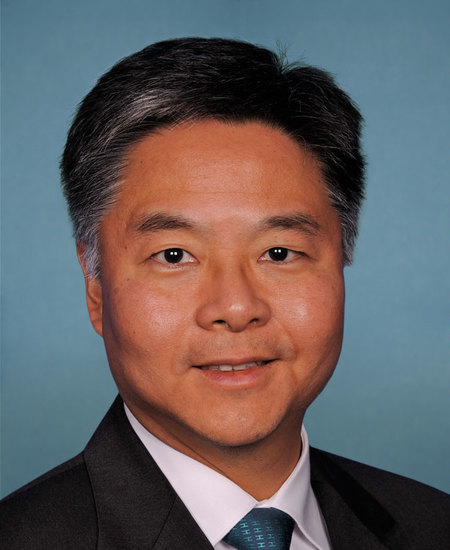
Rep. Ted Lieu
Sponsored bills
Maddy summaryHRES 319 is a symbolic resolution passed by the U.S. House of Representatives on April 24, 2023, recognizing the federal government's duty to develop a Green New Deal. It states the House believes the government should create a comprehensive plan to address climate change and economic inequality through a 10-year national mobilization. The resolution outlines goals like achieving net-zero emissions by 2050, creating high-wage union jobs, upgrading infrastructure, and prioritizing frontline communities, but it does not establish binding policy or funding mechanisms. As a non-binding resolution, it serves as a statement of legislative intent rather than a law.
Maddy summaryThis bill extends eligibility for the WIC nutrition program to new mothers for 24 months after childbirth (up from six months) and extends breastfeeding support periods to 24 months (up from one year). It directly affects new mothers and infants who rely on WIC for nutrition assistance, breastfeeding support, and health services. Key provisions include amending the Child Nutrition Act to lengthen these benefit periods and requiring a report within two years evaluating health outcomes, breastfeeding rates, and family experiences. The report must assess impacts on maternal/infant health, racial disparities, and program effectiveness. This is a substantive policy change focused on improving access to critical postpartum support.
Justice for Incarcerated Moms Act This bill establishes new requirements related to grants, programs, and reports to improve the treatment and care of pregnant and postpartum women who are incarcerated. Specifically, the bill requires the following: states must restrict the use of restraints on pregnant women in prison in order to receive full funding under the Edward Byrne Memorial Justice Assistance Grant program; the Bureau of Prisons must establish programs to optimize maternal health outcomes for pregnant and postpartum women in federal prisons; the Bureau of Justice Assistance must award state grants for programs to support pregnant and postpartum women in state and local prisons and jails; and the Government Accountability Office must report on adverse maternal and infant health outcomes among incarcerated individuals and infants born to such individuals, with a particular focus on racial and ethnic disparities.
Maddy summaryThe FIGHT Act (HR 2742) amends the Animal Welfare Act to specifically target animal fighting events, such as cockfighting, by defining "rooster" as any male chicken over six months old and banning the live broadcasting (simulcasting) of such events. It prohibits using the postal service or interstate transport to move roosters for animal fighting purposes and adds civil enforcement tools allowing citizens to sue violators after a 60-day notice period. Fines up to $5,000 per violation may be imposed, and property used in animal fighting ventures can be seized. These changes strengthen enforcement against animal fighting by expanding legal remedies for the public and authorities.
Maddy summaryThe PAST Act of 2023 amends the Horse Protection Act to ban specific devices used to cause pain (soring) in horses at shows, particularly affecting Tennessee Walking Horses, Racking Horses, and Spotted Saddle Horses. It defines prohibited "action devices" (like boots or chains causing friction) and requires licensed, conflict-free inspectors at events to enforce rules. The bill increases penalties for violations to up to $5,000 fines or 3 years in jail, and mandates longer disqualifications for repeat offenses (180 days → 1 year → 3 years). Horse show organizers, exhibitors, and participants must comply with these new inspection and penalty requirements.
Maddy summaryThe Firearm Safety Act of 2023 amends the Consumer Product Safety Act to remove firearms from an existing exclusion, reclassifying them as consumer products under federal law. This change would subject firearms to safety standards, testing, and oversight by the Consumer Product Safety Commission (CPSC), which currently does not regulate firearms under this framework. The bill specifically targets Section 3(a)(5) of the Consumer Product Safety Act, eliminating the exemption that previously kept firearms outside the definition of "consumer product." As a result, firearm manufacturers and sellers would now face CPSC requirements, such as safety testing, labeling, and reporting, similar to other consumer products.
Maddy summaryHRES 390 is a resolution recognizing May as Asian American, Native Hawaiian, and Pacific Islander (AANHPI) Heritage Month. It formally honors the historical contributions of AANHPI communities to the United States, highlighting their diverse cultural impact and achievements across U.S. history. The resolution emphasizes celebrating these contributions while acknowledging ongoing challenges, such as anti-Asian hate crimes, and references key milestones like the 125th anniversary of *United States v. Wong Kim Ark*. As a symbolic recognition resolution, it does not create new policies or affect specific groups through legislation.
Maddy summaryHR 3238, the Affordable Housing Credit Improvement Act of 2023, updates the Low-Income Housing Tax Credit (LIHTC) program to increase the availability of affordable housing across the United States. The bill makes several key changes including increasing state funding formulas, modifying tenant eligibility rules to better serve vulnerable populations (such as domestic violence victims and students), and expanding credit eligibility for projects in rural and Native American communities. Specific provisions raise the credit for properties serving extremely low-income households, clarify rules around tenant income increases, and require housing providers to protect victims of domestic violence. The bill also updates terminology from "low-income" to "affordable" throughout the tax code and enhances program transparency through data sharing requirements. These changes aim to make the LIHTC program more effective at creating and preserving affordable housing units for low-income households nationwide.
Maddy summaryThis bill would rename the current Taipei Economic and Cultural Representative Office in Washington, D.C., to the "Taiwan Representative Office." It directs the U.S. Secretary of State to negotiate this name change with Taiwan's office, ensuring all U.S. government documents, laws, and courts update references to the new name. The bill explicitly states it does not restore diplomatic relations with Taiwan or alter the U.S. position on Taiwan's international status, as defined by the Taiwan Relations Act and the Six Assurances. The change applies only to the Washington, D.C. office and its official references.