

Maddy summaryThis bill renames a U.S. Postal Service facility at 300 Long Beach Boulevard in Long Beach, California, as the "Alan S. Lowenthal Post Office Building." It directly affects the postal facility and all federal documents, maps, or records referencing it. The key provision updates every official reference to the building to use the new name, ensuring consistency in government records. The bill does not change postal services, funding, or policy - only the building's official designation.
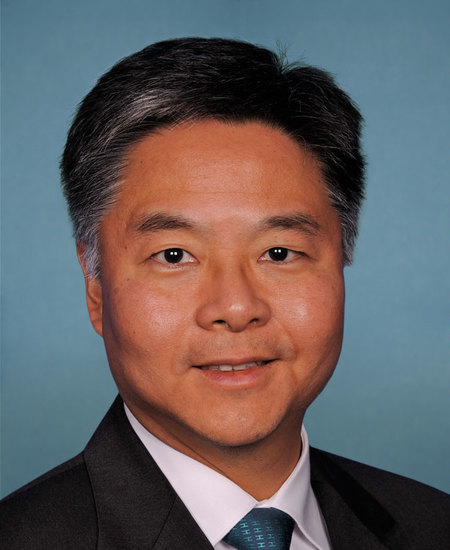
Rep. Ted Lieu
Sponsored bills
Maddy summaryThis bill designates the U.S. Postal Service facility at 7911 Imperial Highway in Downey, California, as the "Lucille Roybal-Allard Post Office Building." It updates all official references in federal laws, documents, and records to use this new name for the specific post office location. The change affects the facility's official identification but does not alter its operations or services.
Maddy summaryHR 3165, the Military Housing Transparency and Accountability Act, requires the military to create a new database tracking complaints about housing units occupied by service members and their families who do not own their housing. It mandates an annual report to Congress summarizing all complaints, categorized into specific types like mold or lead hazards (physiological), security issues (psychological), safety risks, and maintenance problems (timeliness and quality). This directly affects military members and their dependents living in government-provided housing. The bill aims to improve transparency by making complaint data publicly available and requiring the military to report on actions taken to resolve issues.
Maddy summaryThis bill would designate approximately 1.7 million acres of public land in Utah's Colorado Plateau and Great Basin regions as wilderness areas, protecting them from development while preserving traditional uses by Indigenous communities. It establishes specific wilderness areas across Utah's red rock canyons, including the Great Basin Wilderness Areas, Grand Staircase-Escalante Wilderness Areas, and others, with detailed acreage for each designated zone. The bill includes administrative provisions for managing these areas, such as maintaining existing livestock grazing rights, setting road setbacks to protect wilderness character, and reserving water rights for the wilderness areas. This legislation directly affects how the Bureau of Land Management administers public lands in Utah and defines the boundaries for public use of these designated wilderness areas.
Coastal State Climate Preparedness Act of 2023 This bill directs the Department of Commerce to establish a coastal climate change adaptation preparedness and response program. Under the program, Commerce must (1) assist coastal states with voluntarily developing coastal climate change adaptation plans, and (2) provide financial and technical assistance as well as training for coastal states to implement the adaptation plans.
Maddy summaryHRES 425 is a non-binding House resolution designating July 19, 2023, as "Glioblastoma Awareness Day" to increase public recognition of glioblastoma, an aggressive brain cancer. It directly supports patients, caregivers, and families affected by the disease, which has a low 5-year survival rate (6.9%) and no effective screening methods. The resolution encourages greater public awareness, honors those impacted by the disease, and urges continued research investments, including through the Glioblastoma Therapeutics Network. It does not create new laws or alter funding but serves as a symbolic statement to advance understanding and support for glioblastoma research.
Maddy summaryThe EVs for All Act of 2023 establishes a Department of Energy grant program to fund electric vehicle (EV) sharing services at public housing projects. Eligible entities - like public housing agencies, local governments, and partner nonprofits - can apply for grants to purchase used EVs, install charging equipment, and run community outreach. Grants prioritize projects in historically marginalized communities with high pollution or limited transportation access, require fair labor practices, and mandate affordable, non-discriminatory charging fees. The program requires grantees to report on usage, emissions reductions, and service costs while ensuring EVs meet domestic content and worker protection standards.
Maddy summaryHR 3548, the Pursuing Equity in Mental Health Act, aims to reduce mental health disparities for racial and ethnic minority groups by directing federal funding and policy changes. It increases annual grants for primary/behavioral health services to $60 million in 2023 and $80 million yearly through 2029, prioritizing entities serving minority communities. The bill requires the NIH to study mental health disparities within 9 months and mandates new training for mental health professionals (including social work and psychiatry) on culturally appropriate care. Additionally, it funds a $15 million annual outreach strategy to combat stigma and improve access to care, requiring materials tailored to cultural and language needs of minority groups.
Maddy summaryThis bill requires sponsors of NIH-funded or NIH-approved clinical trials (for drugs, devices, biological products, or behavioral interventions) to set specific, measurable goals for recruiting participants reflecting race, ethnicity, age, and sex - either based on disease prevalence or the U.S. population. Key mechanisms include mandating detailed plans for achieving these goals, annual reporting of demographic data (without personally identifiable information), and strategies to reduce participation barriers like virtual visits or flexible scheduling. It also requires training for researchers on diversity and health inequities, and establishes a remediation process if goals aren’t met. The law aims to improve representation in clinical trials to ensure medical research better serves all patient groups.
Maddy summaryHR 3523, the Perinatal Workforce Act, provides $15 million annually from 2024 to 2028 to expand and diversify maternity care providers. It directs HHS to issue guidance for states on recruiting diverse providers (including midwives, nurses, and community health workers) and requires grant recipients to prioritize students from racial/ethnic minority groups, implement bias training, and target health professional shortage areas. The bill also mandates annual reporting on workforce diversity and outcomes, and requires a GAO report assessing barriers to equitable access in maternal healthcare. This legislation directly affects hospitals, nursing schools, midwifery programs, and insurers by funding targeted workforce development to address racial disparities in maternal care.