Pigs in Gestation Stalls Act of 2023 or the PIGS Act of 2023 This bill expands the Animal Welfare Act to prohibit certain methods of confining breeding pigs that restrict their movement. In addition, it establishes a program that provides financial assistance to pig producers to assist them in complying with the prohibitions.
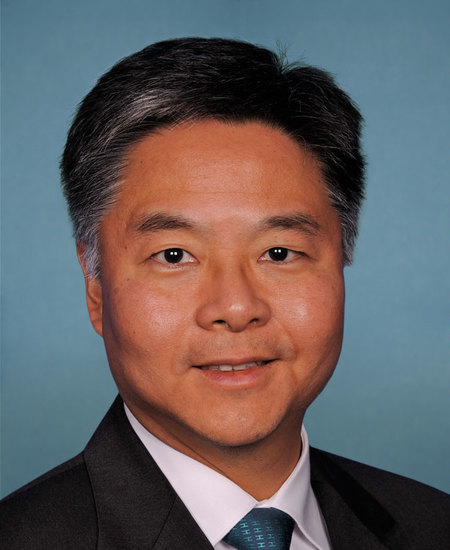
Rep. Ted Lieu
Sponsored bills
Maddy summaryHRES 455 is a symbolic House resolution expressing support for Black service members who died protecting the U.S. during military conflicts while facing racism in the Armed Forces and systemic inequities. It acknowledges their historical contributions and struggles, citing examples from the Revolutionary War through the Global War on Terror. The resolution has no legislative effect - it solely affirms recognition on Memorial Day without proposing policy changes or requiring action. As a non-binding resolution, it directly affects public acknowledgment of this group but does not alter military policies or address systemic issues.
Maddy summaryHR 3680, the Stop Mental Health Stigma in Our Communities Act, targets mental health disparities affecting Asian American, Native Hawaiian, and Pacific Islander (AANHPI) communities. It requires the Health and Human Services Secretary to develop a national outreach strategy (Section 4) to create culturally appropriate mental health resources and reduce stigma, with annual reports on outcomes. The bill also mandates two studies: one on AANHPI youth mental health and suicide rates (Section 5), and another on AANHPI mental health workforce shortages (Section 6), both requiring disaggregated data by race, language, and other factors. Funding of $3 million annually (2024-2028) supports the strategy, while $1.5 million each funds the studies.
Maddy summaryThe Cady Housh and Gemesha Thomas Student Suicide Prevention Act of 2023 requires states to establish a policy mandating annual suicide prevention training for school staff and high school students (grades 9-12). The training must be evidence-based, cover recognizing suicide warning signs, appropriate responses, and referrals to mental health services, while including cultural competency. It allocates $48 million in federal funds, with at least 15% dedicated to supporting this training program, and requires states to collaborate with mental health experts. The bill directly affects school staff and high school students in states that adopt the policy and receive federal funding.
Maddy summaryThe Real Education and Access for Healthy Youth Act of 2023 would provide federal grants to support comprehensive sex education and sexual health services for young people ages 10-29, with specific focus on marginalized communities including Black, Indigenous, Latine, Asian American, Native Hawaiian, Pacific Islander, and LGBTQ+ youth. The bill authorizes $100 million annually for 2024-2029 to fund programs through grants for elementary/secondary schools (section 4), colleges (section 5), educator training (section 6), and youth-friendly sexual health services for marginalized young people (section 7). These programs must be evidence-informed, medically accurate, culturally responsive, age-appropriate, and trauma-informed, while addressing racial and gender inequities in current sex education approaches. The bill also repeals the "abstinence-only-until-marriage" program and redirects its funding to support this comprehensive approach, requiring grantees to report on implementation and impact.

Reward Work Act This bill prohibits issuers from purchasing their own securities on a national exchange. The bill also requires one-third of an issuer's board of directors to be elected by employees in order for the issuer to be allowed to register securities.
Preemption of Real Property Discrimination Act This bill preempts any state law that prohibits or restricts the purchase of real property by an individual based on the individual's citizenship.
Maddy summaryHRES 439 is a non-binding resolution expressing the House of Representatives' support for keeping the U.S. Postal Service (USPS) as an independent federal agency, not subject to privatization. It highlights USPS's constitutional role, self-sustaining nature (relying on service revenue, not taxpayer funds), and its importance to rural communities, e-commerce, and over 600,000 employees. The resolution urges Congress to take action to preserve USPS's independence, emphasizing that privatization could raise prices, reduce services, and harm the nation's mail infrastructure. As a procedural resolution, it does not change law but formally states the House's position.
Maddy summaryHRES 430 is a non-binding resolution expressing Congress's sense that the U.S. should work to protect and conserve at least 50% of the nation's land, freshwater, and ocean ecosystems, while encouraging global diplomatic efforts to achieve similar conservation goals worldwide. It highlights biodiversity loss as an urgent crisis and emphasizes that protecting natural areas provides climate mitigation, clean water, economic benefits, and health advantages. The resolution does not create new laws or funding but calls for stakeholder collaboration and equitable approaches to conservation. It builds on existing goals like the America the Beautiful Initiative's 30% target by proposing a more ambitious 50% benchmark for U.S. ecosystems.
This resolution supports (1) the goals of Wildfire Preparedness Week; and (2) resources and educational initiatives that communicate how affected communities can take preventative measures such as instituting early warning systems and reducing unplanned human ignitions, as well as how to safely and efficiently evacuate people and their animals.