

Maddy summaryHR 4076 establishes a joint U.S.-Israel program to fund health technology development, authorizing $4 million annually (2024-2026) through the U.S. Health and Human Services Department. It requires Israel to match U.S. funding and focuses on collaborative projects in artificial intelligence, vaccines, telemedicine, diagnostic tests, and data-driven personalized medicine for emerging infectious diseases. The program can either build on an existing U.S.-Israel agreement or create a new one under a 2008 science cooperation framework. This bill directly affects U.S. federal health agencies and the Israeli government, with funds restricted to joint projects meeting specific technological and health priorities.
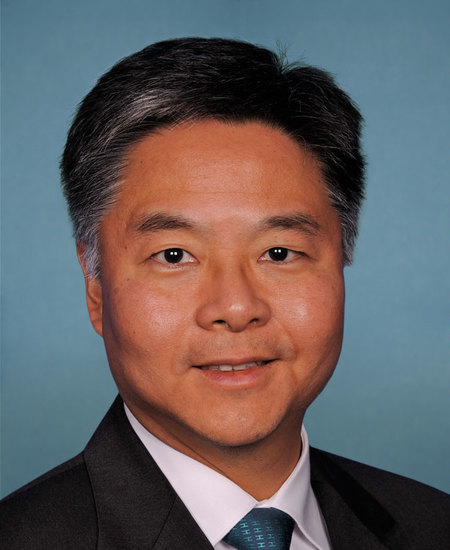
Rep. Ted Lieu
Sponsored bills
Maddy summaryHR 4024, the Clean Shipping Act of 2023, requires commercial vessels over 400 gross tons to gradually reduce the carbon intensity of their fuel. Starting in 2027, vessels must cut fuel carbon intensity by 20% compared to a 2024 baseline, increasing to 100% (zero emissions) by 2040. The bill mandates annual reporting of fuel carbon intensity and emissions for covered voyages (commercial trips between US ports or to foreign ports) and allows fleet averaging under common ownership. Vessels operating fewer than 30 days annually are exempt, and standards may be adjusted if technological or economic feasibility is challenged.
Maddy summaryHR 3946, the FASD Respect Act, establishes a new federal program within the Department of Health and Human Services (HHS) to address fetal alcohol spectrum disorders (FASD). The bill creates FASD Centers for Excellence to build state, tribal, and national capacity for prevention, identification, and support services - directly affecting individuals with FASD, their families, and healthcare providers. Key provisions include developing standardized diagnostic guidelines, expanding screening and training for medical professionals, creating a national resource directory for FASD services, and promoting culturally informed interventions. The program requires HHS to report to Congress on progress within four years. This legislation restructures existing HHS authority to focus comprehensively on FASD across the lifespan, replacing older terminology with consistent "FASD" references.
Maddy summaryThis symbolic resolution (HRES 517) expresses congressional support for the existing tradition of observing the third Sunday in June as "Father's Day," which has been recognized since 1972. It acknowledges fathers' roles in families and society, citing statistics about fatherhood in the U.S. The resolution specifically urges support for policies like universal paid family leave, affordable childcare, and a permanent child tax credit - though these are framed as recommendations, not new laws. It does not create new legal requirements or change the Father's Day designation itself.
Maddy summaryHR 4172, the Hate Crimes Commission Act of 2023, establishes a 12-member United States Commission on Hate Crimes to investigate trends and improve responses to hate crimes. The commission, appointed by Senate and House leaders plus the Attorney General and Secretary of Health and Human Services, will examine hate crime increases since 2015, factors driving them, and strategies to reduce underreporting to the FBI’s National Incident-Based Reporting System. It will also assess successful bias prevention efforts and online hate crime prevalence. Within one year of its formation, the commission must submit a report to Congress and the President with recommendations for federal agencies and community-based prevention programs. This bill directly affects local law enforcement agencies through reporting requirements and federal agencies through proposed policy changes.
Maddy summaryHR 4184 repeals legal protections for gun manufacturers and sellers under the Protection of Lawful Commerce in Arms Act. It allows victims of gun violence to use gun trace data from the ATF's Firearms Trace System in civil court cases. This data, previously protected from discovery, can now be subpoenaed, admitted as evidence, and relied upon in lawsuits against gun sellers or manufacturers. The bill directly affects victims seeking legal recourse and gun industry defendants in civil litigation.
Maddy summaryHR 4166, the Support UNFPA Funding Act, authorizes annual U.S. funding for the United Nations Population Fund (UNFPA) over five years. It directly supports UNFPA’s global programs serving women and girls in over 150 countries, particularly focusing on reducing preventable maternal deaths, expanding access to contraception, ending gender-based violence, and addressing harmful practices like female genital mutilation and child marriage. The bill specifically directs funding toward UNFPA’s core work in developing nations, humanitarian crises (such as in Ukraine and Yemen), and rebuilding health systems post-pandemic, without altering UNFPA’s existing operations or policies.
Maddy summaryThe American Dream and Promise Act of 2023 would create two pathways to permanent residency for certain immigrants. The "Dream Act" portion would provide conditional permanent resident status to individuals who entered the U.S. as children, have lived continuously in the U.S. since January 1, 2021, and meet educational requirements (such as completing high school, earning a degree, or enrolling in education programs). The "American Promise Act" portion would provide permanent residency to individuals eligible for Temporary Protected Status (TPS) or Deferred Enforced Departure (DED) as of specific dates (January 1, 2017, or January 20, 2021). The bill includes provisions for background checks, fee exemptions for low-income applicants, and processes for removing conditional status after meeting specific criteria like completing higher education or earning income.
Maddy summaryHJRES 72 proposes a constitutional amendment to remove the exception in the Thirteenth Amendment that allows slavery and involuntary servitude as punishment for a crime. If ratified, this amendment would ban the use of forced labor in prisons as a criminal penalty, directly affecting how the U.S. criminal justice system handles sentencing. The resolution clarifies it does not interfere with voluntary work programs in correctional facilities, existing employment protections for incarcerated people, or community service alternatives. This change aims to eliminate a historical loophole that has disproportionately impacted Black Americans since the 1860s.
Maddy summaryHRES 505 is a non-binding resolution recognizing June 19, 2023, as the annual observance of Juneteenth Independence Day. It acknowledges the historical significance of June 19, 1865, when Union troops announced the end of slavery in Texas, marking the first widespread celebration of freedom for formerly enslaved people in the U.S. The resolution encourages all Americans to observe the day through ceremonies and educational activities to honor this milestone in U.S. history. It does not create new policy or benefits but formally supports public recognition of Juneteenth as part of the nation's heritage.