

Tax Simplification for Americans Abroad Act This bill directs the Internal Revenue Service to make available a new tax form for certain U.S. citizens living abroad. The form shall allow such individuals to demonstrate nonresidence, and declare foreign income, foreign taxes paid, and U.S. source income from retirement, pension and social security benefits. The bill also expands the types of income allowed as foreign earned income for purposes of the foreign earned income tax exclusion and sets forth requirements for reporting foreign financial assets.
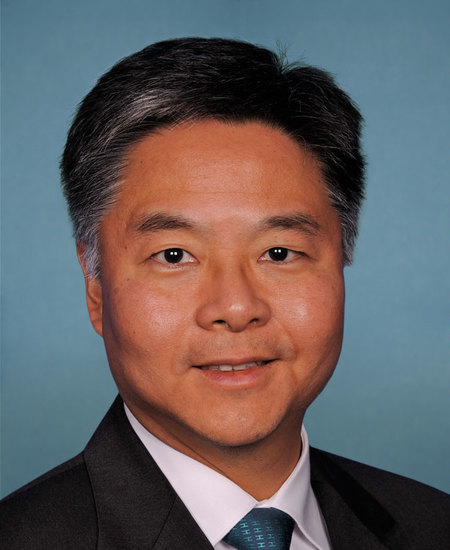
Rep. Ted Lieu
Sponsored bills
Maddy summaryHR 5433, the Child Care Stabilization Act, provides $16 billion annually from 2024 to 2028 to stabilize the child care sector through grants administered by the Health and Human Services Secretary. It directly affects licensed child care providers by offering stable funding to cover operating costs, while supporting higher wages for early educators without raising family fees. Key provisions include expanding access to high-quality, affordable care - especially for infants/toddlers, rural communities, and children with disabilities - and addressing shortages in underserved areas. The funding builds on existing American Rescue Plan resources, aiming to strengthen the child care workforce and increase available options for working families.
Maddy summaryHR 3152, the "Fight CRIME Act," aims to maintain international restrictions on Iran's missile-related activities by requiring diplomatic efforts to extend these restrictions before they expire in October 2023. The bill mandates annual reports detailing U.S. diplomatic strategies, potential impacts of expiration, and measures to deter missile technology transfers to Iran. It establishes sanctions against foreign individuals or entities that knowingly support Iran's missile or drone programs, including asset freezes and visa restrictions. These sanctions apply regardless of whether UN restrictions remain in effect after their expiration, directly affecting foreign entities involved in these activities.
Maddy summaryThis bill increases penalties for companies causing oil spills in offshore waters. It directly affects offshore oil operations and polluters by raising minimum civil fines and doubling maximum criminal penalties, including higher fines and longer prison terms for violations. Key changes include raising minimum civil penalties from "up to" amounts to "at least" those amounts, and doubling all maximum fines (e.g., from $2,500 to $5,000 per violation) and prison sentences under the Federal Water Pollution Control Act. The bill modifies specific sections of the law to strengthen enforcement against offshore pollution.
Women's Business Centers Improvement Act of 2023 This bill reauthorizes the Women's Business Center Program through FY2027, raises the cap on individual center grants, establishes an accreditation program for grant recipients, and revises the duties of the Office of Women's Business Ownership. Specifically, the bill modifies the Women's Business Center Program to enable the Small Business Administration (SBA) to provide initial and continuation grants to eligible entities to operate women's business centers for the benefit of women-owned small businesses. The SBA must also publish standards for a program to accredit entities that receive grants from the Women's Business Center Program, and such entities' receipt of continuation grants shall be contingent upon their obtaining accreditation.
Maddy summaryThis bill allows the President to declare a "smoke emergency" when wildfire smoke causes a significant drop in air quality across one or more states, following a request from a state governor. If declared, the federal government (via FEMA and other agencies) can provide direct assistance to affected states and communities, including grants for smoke shelters, air purifiers, and air monitoring equipment. It also authorizes the Small Business Administration to offer grants to small businesses that suffer significant revenue loss due to the smoke emergency. The bill includes a budget provision ensuring funds for this assistance won't count toward deficit reduction targets.
Maddy summaryThe Government Surveillance Transparency Act of 2023 requires courts to make criminal surveillance orders, applications, and inventories publicly available after a limited sealing period (up to 180 days, with possible extensions only for specific safety concerns like witness intimidation or evidence destruction). It establishes procedures for requesting unsealing of documents and mandates courts to publish detailed annual reports on surveillance requests, including the nature of investigations and the number of applications granted or denied. The law requires electronic filing of all surveillance-related documents and creates a $25 million grant program to help State and Tribal courts implement these transparency requirements. This bill directly affects law enforcement agencies, courts, and service providers that handle surveillance requests, aiming to increase public transparency around government surveillance activities.
Maddy summaryThe SWAMP Act of 2023 requires the President to reimburse the U.S. Treasury for all government costs incurred when staying at properties they own or have a financial interest in. This directly affects the President, mandating repayment for Secret Service protection, security expenses (like local law enforcement overtime), and transportation costs (such as Air Force One flights) during stays at properties like Mar-a-Lago or Trump Tower. The bill’s key mechanism is a mandatory reimbursement clause for all government expenditures related to such stays, as specified in Section 3. It focuses on financial accountability, requiring the President to cover costs the taxpayer would otherwise bear, without altering existing security protocols or creating new programs.
Maddy summaryHR 5311, the ENCRYPT Act of 2023, prevents states from requiring technology companies to weaken encryption or create backdoors for surveillance. It prohibits states from mandating that companies design products to allow government access to user data or from banning encrypted services like messaging apps, email, or cloud storage. The law applies to any consumer technology (hardware, software, or online services) that travels across state lines and is available to the public. This preempts conflicting state laws, ensuring a uniform federal standard for encryption requirements nationwide.
Maddy summaryHR 5309, the Warrant for Metadata Act, requires law enforcement to obtain a warrant before accessing electronic communication metadata (like call logs, email headers, or location data) from service providers. It amends federal law to mandate this warrant requirement for metadata - distinct from actual message content - using standard judicial procedures. The bill directly affects law enforcement agencies and service providers (such as email or cloud storage companies) by changing how they access subscriber information. It does not apply to existing data requests made before the law's enactment but requires warrants for any new or expanded requests after it takes effect.