

Maddy summaryHouse Resolution 527 (HRES 527), introduced on June 20, 2023, is a symbolic resolution condemning the rise in antisemitic violence and harassment targeting Jewish Americans. It directly addresses Jewish Americans affected by recorded increases in antisemitic incidents, including attacks on synagogues and hate speech. The resolution calls on all members of Congress to denounce antisemitism, commit to combating it, and advance accurate Holocaust education while countering Holocaust denial. As a non-binding resolution, it expresses congressional solidarity but does not create new laws or funding.
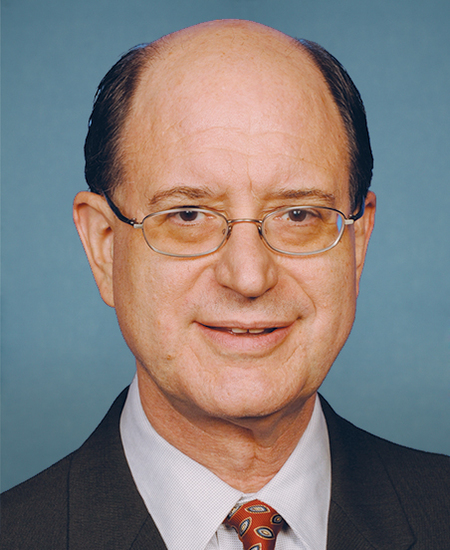
Rep. Brad Sherman
Sponsored bills
Maddy summaryHR 4209, the Incentivizing Safe and Sound Banking Act, prohibits senior executives at large banks from selling securities they received as compensation if the bank faces regulatory issues. It directly affects senior executives at bank holding companies, bank subsidiaries, or banks with over $50 billion in assets that receive a poor regulatory rating (3-5) or fail to resolve issues noted by regulators within a deadline. The bill automatically blocks such stock sales until the bank fixes the problem to the regulator's satisfaction. This provision aims to align executive compensation with bank stability by preventing sales during periods of regulatory concern. The law amends the Federal Deposit Insurance Act to implement these restrictions.
Maddy summaryThis bill requires large standalone banks (those without a parent bank holding company) to follow the same enhanced supervision and prudential standards as bank holding companies with similar asset sizes. It amends the Financial Stability Act of 2010 to close a regulatory gap where these standalone banks previously faced fewer oversight requirements. The key mechanism mandates that banks with total consolidated assets comparable to covered bank holding companies must undergo identical stress testing, capital planning, and risk management processes. This directly affects large, independent banks that operate without a parent financial holding company but have significant assets.
Maddy summaryThis bill requires financial regulators to reclaim compensation from bank executives and directors whose negligence caused a bank's failure. It allows the FDIC to claw back salaries, bonuses, and other compensation received in the two years before the bank failed (with no time limit for fraud), and imposes fines of up to $25,000 per day for negligent conduct. Executives found responsible for a bank's failure may also face orders prohibiting them from working in any insured bank. The law directly affects executives and directors of failed institutions like Silicon Valley Bank, Signature Bank, and First Republic Bank. It amends the Federal Deposit Insurance Act and Dodd-Frank Act to strengthen accountability mechanisms without limiting existing regulatory powers.
Maddy summaryHR 4212, the Middle Class Mortgage Insurance Premium Act of 2023, increases the income limit for deducting mortgage insurance premiums on federal income taxes. It raises the cap from $100,000 (or $50,000 for married filing separately) to $200,000 (or $100,000 for married filing separately), making this deduction permanent. This change directly benefits middle-income homeowners who itemize deductions and pay mortgage insurance premiums, allowing them to deduct more of these costs. The bill applies to taxable years beginning after December 31, 2023.
Maddy summaryHR 4178, the Quiet Communities Act of 2023, reestablishes the Environmental Protection Agency's (EPA) Office of Noise Abatement and Control, which was defunded in 1982. The bill directly affects communities exposed to harmful noise pollution from sources like aircraft, traffic, and highways, impacting millions with hearing impairments or health risks. Key mechanisms include authorizing $25 million annually for the EPA office to provide technical assistance and grants to states for local noise control programs, fund national research on noise health impacts, and conduct a study on aircraft noise effects. The bill also repeals outdated provisions from the 1970 Noise Control Act to modernize the EPA's role in addressing noise pollution.
Maddy summaryHR 4121, the Right to Contraception Act, establishes a federal statutory right for individuals to access contraceptives and contraception services without government restriction or coercion, directly affecting all people seeking reproductive care and health care providers. The bill prohibits state or federal laws that limit access to contraceptives (defined broadly to include devices, drugs, and fertility methods), prevent individuals from obtaining or using them, or allow providers to refuse services based on personal beliefs. It preempts conflicting state laws, requires any restrictions to be justified by "clear and convincing evidence" of advancing access with no less restrictive alternative, and allows private lawsuits to challenge violations. The Act applies nationwide to all health care providers and individuals, protecting access regardless of factors like race, income, or location.
Maddy summaryHR 4076 establishes a joint U.S.-Israel program to fund health technology development, authorizing $4 million annually (2024-2026) through the U.S. Health and Human Services Department. It requires Israel to match U.S. funding and focuses on collaborative projects in artificial intelligence, vaccines, telemedicine, diagnostic tests, and data-driven personalized medicine for emerging infectious diseases. The program can either build on an existing U.S.-Israel agreement or create a new one under a 2008 science cooperation framework. This bill directly affects U.S. federal health agencies and the Israeli government, with funds restricted to joint projects meeting specific technological and health priorities.
Maddy summaryHR 4166, the Support UNFPA Funding Act, authorizes annual U.S. funding for the United Nations Population Fund (UNFPA) over five years. It directly supports UNFPA’s global programs serving women and girls in over 150 countries, particularly focusing on reducing preventable maternal deaths, expanding access to contraception, ending gender-based violence, and addressing harmful practices like female genital mutilation and child marriage. The bill specifically directs funding toward UNFPA’s core work in developing nations, humanitarian crises (such as in Ukraine and Yemen), and rebuilding health systems post-pandemic, without altering UNFPA’s existing operations or policies.
Maddy summaryThe American Dream and Promise Act of 2023 would create two pathways to permanent residency for certain immigrants. The "Dream Act" portion would provide conditional permanent resident status to individuals who entered the U.S. as children, have lived continuously in the U.S. since January 1, 2021, and meet educational requirements (such as completing high school, earning a degree, or enrolling in education programs). The "American Promise Act" portion would provide permanent residency to individuals eligible for Temporary Protected Status (TPS) or Deferred Enforced Departure (DED) as of specific dates (January 1, 2017, or January 20, 2021). The bill includes provisions for background checks, fee exemptions for low-income applicants, and processes for removing conditional status after meeting specific criteria like completing higher education or earning income.