

Maddy summaryThe SAFE Act of 2023 extends a 2018 law that prohibits slaughtering animals for human consumption to include horses, donkeys, and other equine animals, such as ponies. It amends Section 12515 of the Agriculture Improvement Act of 2018 by updating the language to replace "dog or cat" with "dog, cat, or equine" in both the section title and the main prohibition. This change directly affects the livestock industry and slaughter facilities by banning the processing of equines for food. The bill modifies existing law without adding new enforcement mechanisms, closing a gap in animal protection.
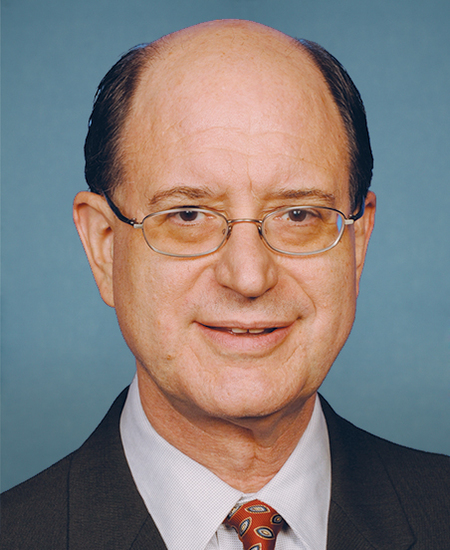
Rep. Brad Sherman
Sponsored bills
Maddy summaryHRES 540 is a symbolic U.S. House resolution reaffirming Arunachal Pradesh as an integral part of India and condemning China's actions in the region. It specifically condemns China's 2021 map publishing (assigning Chinese names to features in Arunachal Pradesh), border skirmishes, and territorial claims in Bhutan. The resolution supports India's sovereignty, development efforts in Arunachal Pradesh (including infrastructure and renewable energy), and U.S. cooperation with India through defense partnerships and the Quad. As a procedural resolution, it does not create new laws or policies but expresses U.S. diplomatic support for India's position.
Maddy summaryThis non-binding resolution (HRES 539) symbolically recognizes the significance of U.S.-India relations, citing historical ties (India's 75th independence anniversary), economic collaboration (India as the 5th largest economy), educational exchanges (20% of U.S. international students), and defense partnerships. It has no legal effect and does not create new policies or funding. The resolution affirms the relationship's importance through existing cooperation in forums like the Quad and iCET, without proposing concrete legislative changes.
Maddy summaryThis bill amends the Arms Export Control Act to formally include India in existing eligibility provisions for foreign military sales and exports. It updates specific sections of the law to add "India" alongside other qualifying countries like New Zealand and Israel where the text currently lists them. The change directly affects U.S. military sales to India by streamlining its eligibility under current export control rules, without creating new requirements or altering existing policies.
Maddy summaryThis bill renames the U.S. Food for Peace program after Peter O'Brien and makes key changes to how agricultural aid is delivered. It prohibits using cash, food vouchers, or foreign-sourced food for aid (section 2d), requires that at least 50% of annual funds be used for procuring U.S. agricultural commodities (section 2b(5)), and mandates annual reports to Congress on fund usage (section 2b(6)). These changes directly affect U.S. farmers supplying aid and international recipients of food assistance. The bill focuses on strengthening domestic agricultural exports within the Food for Peace program while adding transparency requirements.
Maddy summaryHJRES 76 proposes renaming the Robert E. Lee Memorial in Arlington National Cemetery to the "Arlington House National Historic Site." This procedural bill would replace all official references to the memorial with the new name and repeal two prior resolutions (1955 and 1972) that established the memorial. The change affects how the site is identified in federal laws, documents, and records but does not alter its management or historical significance. The bill focuses solely on the official designation, not on policy changes or historical interpretation.
Maddy summaryHRES 488 is a non-binding resolution calling on the Biden administration to transfer Army Tactical Missile Systems (ATACMS) to Ukraine. It requests immediate provision of these long-range missiles - capable of striking targets up to 200 miles away - to help Ukraine counter Russian forces by targeting logistics hubs and command centers deeper in occupied territory. The resolution notes Ukraine already operates compatible launch systems and cites that allies like the UK and France have provided similar long-range weapons without triggering significant Russian escalation. It emphasizes that delaying this transfer could prolong the war and that the U.S. possesses sufficient existing stockpiles to fulfill the request while maintaining military readiness. The resolution does not mandate action but urges the administration to act.
Maddy summaryThe Housing Crisis Response Act of 2023 authorizes over $100 billion in funding for housing programs, including $10 billion for public housing capital improvements, $9.9 billion for the HOME Investment Partnerships Program, and $1.77 billion for energy efficiency improvements in affordable housing. It creates new down payment assistance programs for first-time and first-generation homebuyers, expands housing vouchers for vulnerable populations including those experiencing homelessness, and establishes new requirements for accessible housing units. The bill mandates that many housing projects maintain affordability for at least 20 years and includes specific provisions for rural housing, Native American communities, and lead-based paint hazard control. It also creates a new Housing Investment Fund to support affordable housing development and preservation, primarily for low-, very-low, and extremely low-income renters.
Maddy summaryThis bill establishes the John Lewis Civil Rights Fellowship Program within the Fulbright exchange system to honor civil rights leader John Lewis and advance U.S. foreign policy through global civil rights education. It creates a new fellowship for U.S. early- to mid-career professionals, selecting at least 25 annually for 10-month programs to conduct research or intern with approved organizations in countries participating in Fulbright exchanges. Fellows must complete a work plan, attend an orientation in Washington, DC, and present findings at an annual summit, with the State Department covering costs for travel, lodging, and expenses. The program requires annual reports on participant demographics and program effectiveness, and expires seven years after enactment.
Maddy summaryThe Equality Act (HR 15) would amend federal civil rights laws to explicitly prohibit discrimination based on sexual orientation and gender identity in public accommodations, housing, employment, credit, and jury service. It amends the Civil Rights Act of 1964 to include sexual orientation and gender identity as protected characteristics under existing sex discrimination provisions. The bill would require businesses, housing providers, employers, and government entities to provide equal access and services without regard to a person's sexual orientation or gender identity. It includes specific definitions for gender identity and sexual orientation to clarify protections across all covered areas. The law would apply to all entities covered by the Civil Rights Act of 1964, including those receiving federal funding.