

Maddy summaryHRES 1473 is a non-binding resolution passed by the U.S. House of Representatives that condemns racism, bigotry, and misinformation targeting Haitian people and their descendants. It celebrates the historical contributions of Haitian Americans to U.S. society, including founding cities (like Chicago via Jean Baptiste Point du Sable), advancing civil rights (W.E.B. Du Bois), and enriching healthcare, education, and culture. The resolution specifically calls on all Americans to reject racist tropes and misinformation, and urges elected officials to promote inclusivity and responsible communication. It was introduced in response to recent false claims that fueled threats against Haitian communities, such as the bomb threats in Springfield, Ohio.
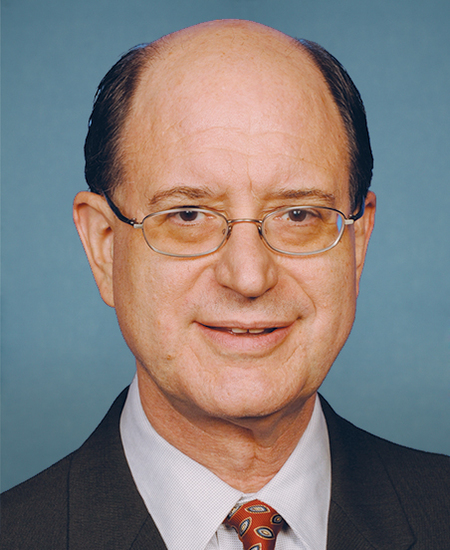
Rep. Brad Sherman
Sponsored bills
Maddy summaryThe 8-K Trading Gap Act of 2024 requires publicly traded companies to prevent executives and directors from trading company stock during specific gaps between significant events and their official disclosure on Form 8-K (a standard financial disclosure form). It prohibits trades between when certain events occur (like earnings reports or acquisitions) and when they are filed, or between when a company decides to disclose an event (like leadership changes) and the filing date. Exemptions include automatic transactions, pre-arranged plans meeting strict criteria, and companies that already use press releases to announce events before filing. The Securities and Exchange Commission must issue rules within one year to implement these requirements.
Maddy summaryThe Artsakh Revenue Recovery Act of 2024 would establish a U.S. fund to compensate Armenians displaced from Artsakh (Nagorno-Karabakh) after Azerbaijan's military assault in September 2023. It requires the U.S. government to seize Azerbaijani sovereign assets held in the United States if Azerbaijan fails to compensate displaced Armenians for lost revenue from businesses, property, and employment. The bill creates a claims process through which displaced Armenians can submit claims for compensation for revenue lost since September 2023, with the fund paying claims if Azerbaijan does not compensate within 90 days. The Artsakh Revenue Recovery Fund would operate for up to one year after a peace agreement between Azerbaijan and Armenia is signed or until all claims are paid.
Maddy summaryThis bill designates the U.S. Postal Service facility at 130 South Patterson Avenue in Santa Barbara, California, as the "Brigadier General Frederick R. Lopez Post Office Building." It updates all official U.S. government references to the building to reflect this new name, with no policy changes or funding impacts.
Maddy summaryThe Remote Access Security Act (HR 8152) amends the Export Control Reform Act of 2018 to explicitly include "remote access" under U.S. export controls. It defines remote access as foreign entities accessing U.S.-controlled items (like technology or data) via internet or cloud services from abroad, or through future regulations. The bill updates existing export control provisions across 12 sections to require oversight of remote access alongside physical exports and in-country transfers. This directly affects companies handling U.S. technology or data that could be accessed remotely by foreign entities. The change integrates remote digital access into current export control frameworks without creating new restrictions.
Maddy summaryThis bill imposes U.S. sanctions on foreign individuals or entities that build, maintain, or repair tunnels or bridges connecting Russia to Crimea. It requires blocking their U.S. assets and banning visas for those involved, with exceptions for humanitarian aid, national security activities, and international obligations. The bill targets infrastructure supporting Russia’s control over Crimea, which the U.S. considers illegally occupied Ukrainian territory following Russia’s 2014 annexation and 2022 invasion of Ukraine.
Maddy summaryHR 7159, the Pacific Partnership Act, mandates the U.S. government to develop a comprehensive strategy for engagement with Pacific Island nations. It requires the President, by January 1, 2026, and every four years thereafter, to submit a detailed strategy to Congress outlining U.S. diplomatic, defense, and economic goals in the region, including assessments of threats like natural disasters, illegal fishing, and foreign military activity. The strategy must detail plans to address these threats, coordinate with Pacific Island governments and regional organizations like the Pacific Islands Forum, and outline required resources and staffing. This bill directly affects U.S. foreign policy operations and shapes how the federal government engages with Pacific Island nations on shared security, economic, and environmental priorities.
Maddy summaryHR 4741, the Securing Global Telecommunications Act, requires the U.S. State Department to develop a strategy within 90 days to promote secure telecommunications infrastructure globally, focusing on countering security risks from untrusted vendors like Huawei. The strategy must address mobile networks, data centers, 6G technology, and satellite systems, emphasizing collaboration with allies and developing nations to encourage the use of "trusted" equipment providers. It also mandates reports on Chinese and Russian influence at the International Telecommunication Union (ITU) and opportunities for multilateral financing to support secure telecom projects. The bill directly affects U.S. government agencies (State Department, FCC, development finance entities) and foreign countries selecting telecom infrastructure providers. It does not impose direct restrictions but outlines U.S. policy actions to strengthen global telecom security and market leadership for allied vendors.
Maddy summaryHR 554, the Taiwan Conflict Deterrence Act of 2023, requires the U.S. Treasury to report annually for three years on financial assets held by specific Chinese Communist Party officials involved with Taiwan, including Politburo members and certain Central Committee members. It mandates that U.S. financial institutions cannot engage in significant transactions with these officials or their immediate family (spouses, children, parents) if the Treasury finds they benefit from funds detailed in the reports. The prohibition on financial transactions expires either 30 days after the President certifies the threat to U.S. interests has ended or 25 years after the final report is submitted. The law aims to deter actions by China that threaten Taiwan by targeting financial ties of high-level officials.
Maddy summaryHR 8361, the Economic Espionage Prevention Act, requires the State Department to submit a report within 90 days detailing Chinese entities (citizens or organizations) that knowingly supply critical components to Russia's military or intelligence sectors. The bill authorizes the President to impose sanctions - including property blocking and visa revocation - on foreign entities (including Chinese persons or entities) that engage in economic espionage, support Russia's military, or violate U.S. export controls. These sanctions target entities knowingly involved in activities that support Russia's war efforts, as defined in the bill. The report will analyze the extent of such transactions and potential sanctions, with annual updates required thereafter.