

Economic Espionage Prevention Act
HR 8361, the Economic Espionage Prevention Act, requires the State Department to submit a report within 90 days detailing Chinese entities (citizens or organizations) that knowingly supply critical components to Russia's military or intelligence sectors. The bill authorizes the President to impose sanctions - including property blocking and visa revocation - on foreign entities (including Chinese persons or entities) that engage in economic espionage, support Russia's military, or violate U.S. export controls. These sanctions target entities knowingly involved in activities that support Russia's war efforts, as defined in the bill. The report will analyze the extent of such transactions and potential sanctions, with annual updates required thereafter.
Bill status
passed
3 of 5 stages cleared
Introduction
May 2024
Committee Review
May 2024
House Passage
Sep 2024
Senate Passage
President
Introduced May 10, 2024
Last action Sep 9, 2024
Maddy AI version diff · 1 comparison
What changed between versions
Introduced in House
→
Engrossed in House
·
2 edits
·
Sep 9, 2024
MINOR
The Engrossed version of HR 8361 (Economic Espionage Prevention Act) makes one substantive policy change: it expands the immigration consequences for sanctioned foreign persons from simple visa revocation to broader ineligibility for visas, admission, and parole under the Immigration and Nationality Act. All other changes are formatting adjustments (adding blank lines between sections).
ENFORCEMENT
Section 4(c)(2) was renamed from 'Visa revocation' to 'Ineligibility for visas, admission, or parole.' A new subparagraph (A) was added making a sanctioned alien inadmissible to the United States, ineligible to receive a visa or other entry documentation, and otherwise ineligible to be admitted or paroled into the United States or to receive any other benefit under the Immigration and Nationality Act. The prior visa revocation language was restructured as subparagraph (B)(i) with immediate effect in (B)(ii).
TECHNICAL
Formatting changes throughout the bill adding blank lines between section headings and subsections for readability. No substantive policy impact.
Floor votes
How they voted
This bill passed the House by voice vote (no roll call recorded).
Full legislative history
Actions timeline
Total actions
10
Key actions
2
Committee
2
Amendments
2
Sep 9, 2024
Introduced
On motion to suspend the rules and pass the bill, as amended Agreed to by voice vote. (text: CR H5071-5072)
lower
Sep 9, 2024
Lower · Passed
Passed/agreed to in House: On motion to suspend the rules and pass the bill, as amended Agreed to by voice vote. (text: CR H5071-5072)
lower
Sep 9, 2024
Introduced
Mr. Barr moved to suspend the rules and pass the bill, as amended.
lower
May 16, 2024
Lower · Passed
Committee Consideration and Mark-up Session Held
lower
May 10, 2024
Committee
Referred to the Committee on Foreign Affairs, and in addition to the Committee on the Judiciary, for a period to be subsequently determined by the Speaker, in each case for consideration of such provisions as fall within the jurisdiction of the committee concerned.
lower
May 10, 2024
Introduced
Introduced in House
lower
1 primary · 3 co-sponsors
Sponsors
Role
Legislator
Party
State
District
P

Richard McCormick
RRepublican
Co
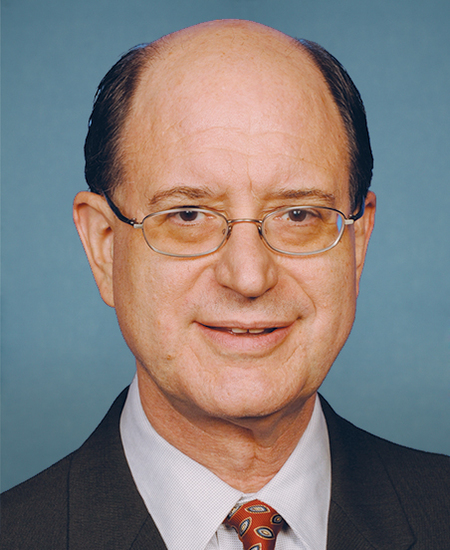
Brad Sherman
DDemocratic
Co

John R. Moolenaar
RRepublican
Co

Michael Lawler
RRepublican
Ask Maddy
·
AI policy assistant
Ask Maddy about HR 8361
Scope: US
Hi! I can help you understand HR 8361. What would you like to know?
Try one of these
i
Maddy answers using official bill text and legislative records. Always verify before sharing.
Sources cited inline