

Adjustable Interest Rate (LIBOR) Act of 2021 This bill provides for the transition of certain financial contracts away from the London Interbank Offered Rate (LIBOR), a reference interest rate based upon the lending terms certain banks offer to each other for various lengths of time. LIBOR is set to be retired in 2023. Various financial contracts reference LIBOR as a benchmark for prevailing interest rates and use LIBOR in calculating certain payments or obligations. In the event a contract referencing LIBOR does not have a fallback or replacement rate provision in effect when LIBOR is retired, or a replacement rate is not selected by a determining person as defined by the bill, the bill provides for a transition to a replacement rate selected by the Board of Governors of the Federal Reserve System. The bill also provides for conforming changes to these contracts, the continuity and enforceability of these contracts, and protections against liability as a result of such a transition.
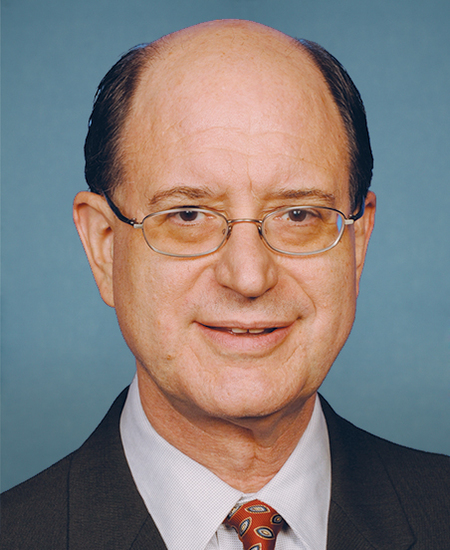
Rep. Brad Sherman
Sponsored bills
Supporting Americans with Lower Taxes Act or the SALT Act This bill modifies the limitation on the tax deduction for certain state, local, and foreign real and personal property taxes. Specifically, the bill denies a tax deduction for foreign real property taxes to any individual taxpayer with an adjusted gross income that equals or exceeds $400,000. It also limits the deduction for the aggregate amount of other state and local taxes and sales taxes for such taxpayers to $60,000 in a taxable year. The bill transfers revenues from this bill to a Medicare Vision and Hearing Trust Fund to provide vision and hearing benefits under the Medicare program.
Women's Health Protection Act of 2021 This bill prohibits governmental restrictions on the provision of, and access to, abortion services. Specifically, governments may not limit a provider's ability to prescribe certain drugs, offer abortion services via telemedicine, or immediately provide abortion services when the provider determines a delay risks the patient's health. Furthermore, governments may not require a provider to perform unnecessary medical procedures, provide medically inaccurate information, comply with credentialing or other conditions that do not apply to providers whose services are medically comparable to abortions, or carry out all services connected to an abortion. In addition, governments may not (1) require patients to make medically unnecessary in-person visits before receiving abortion services or disclose their reasons for obtaining such services, or (2) prohibit abortion services before fetal viability or after fetal viability when a provider determines the pregnancy risks the patient's life or health. The bill also prohibits other governmental measures that are similar to the bill's specified restrictions or that otherwise single out and impede access to abortion services, unless a government demonstrates that the measure significantly advances the safety of abortion services or health of patients and cannot be achieved through less restrictive means. The Department of Justice, individuals, or providers may bring a lawsuit to enforce this bill, and states are not immune from suits for violations. The bill applies to restrictions imposed both prior and subsequent to the bill's enactment.
Original Black History Month Resolution of 2022 This resolution recognizes the importance of commemorating Black History Month to acknowledge the achievements of Black Americans throughout history.
No Most Favored Nation Trading with Russia Act This bill withdraws normal trade relations treatment from Russia. Additionally, the bill requires the President to encourage U.S. allies and partners to (1) consider taking similar actions; and (2) condemn, at the World Trade Organization (WTO), Russia's aggression in Ukraine. Further, the President must direct the U.S. Permanent Representative to the WTO to seek suspension of Russia's membership in the WTO.
This resolution condemns the atrocities and possible crimes against humanity being perpetrated against women and girls in Ethiopia. It also supports the full investigation of atrocities against women and girls in Tigray, Amhara, Afar, and other parts of northern Ethiopia.
Maddy summaryThis ceremonial House resolution (HRES 764) recognizes the religious and historical significance of Diwali to Hindu, Sikh, and Jain communities, both in India and among Indian-Americans in the United States. It expresses respect for Indian-American communities celebrating the festival of lights and acknowledges religious diversity in the U.S. and globally. The resolution also supports U.S.-India relations and describes Diwali as a celebration symbolizing light overcoming darkness and good triumphing over evil. As a non-binding resolution, it does not create new laws or policies.
National Science and Technology Strategy Act of 2021 This bill requires the Office of Science and Technology Policy (OSTP) to develop a national science and technology strategy and publish a science and technology review. The bill revises OSTP reporting requirements to direct the OSTP to submit to Congress a comprehensive national science and technology strategy of the United States to meet national research and development objectives for the following four-year period. No later than December 31, 2022, and every four years afterwards, the OSTP shall complete a review of the science and technology enterprise of the United States.
Wild Horse and Burro Protection Act of 2022 This bill prohibits the Bureau of Land Management (BLM) from using or contracting for the use of helicopters or fixed-wing aircraft for gathering horses and burros under the Wild Free-roaming Horses and Burros Act. Further, BLM may not make contracts to use helicopters for transporting captured animals under such act.
This resolution extends collective bargaining rights prescribed in the Congressional Accountability Act of 1995 to employees of the House of Representatives.