

This resolution urges the government of Argentina to bring the perpetrators of the March 17, 1992, terrorist attack on the Embassy of Israel in Buenos Aires to justice (in 1999 the Supreme Court of Argentina found that the transnational terrorist organization Hezbollah was responsible for the attack). The resolution commends the Argentinian government for designating Hezbollah as a terrorist organization and urges other U.S. allies and partners in Latin America and the Caribbean to do the same. The resolution urges these allies and partners to condemn and counter regional governments in the hemisphere that aid and abet Iran and Hezbollah. The resolution also commends the Argentinian government for adopting the International Holocaust Remembrance Alliance working definition of antisemitism and encourages other partners and allies to do the same. Finally, the resolution commends the Secretary General of the Organization of American States for appointing a Commissioner to Monitor and Combat Anti-Semitism in the Western Hemisphere.
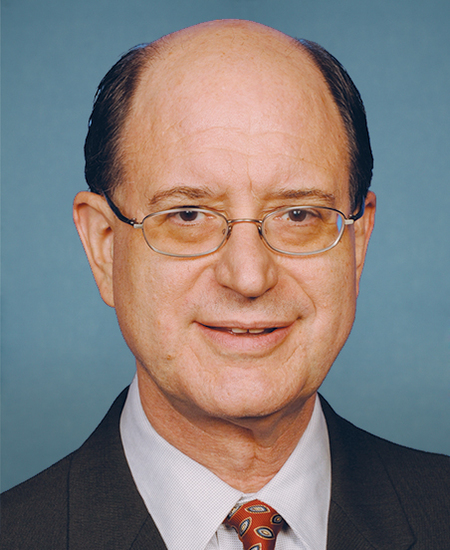
Rep. Brad Sherman
Sponsored bills
Stop Gas Price Gouging Tax and Rebate Act This bill imposes an excise tax of 50% of the excess of the windfall profit of a producer of crude oil (including crude oil condensates and natural gasoline) that has an average daily worldwide production of crude oil of at least 300,000 barrels for the taxable year, and had gross receipts in excess of $1 billion for its last taxable year during 2005. The bill defines windfall profit as the excess of the adjusted taxable income of such producer for taxable year 2022 over the reasonably inflated average profit for such taxable year. The bill requires payment of energy price rebates to eligible individuals.
LIHTC Financing Enabling Long-term Investment in Neighborhood Excellence Act or the LIFELINE Act This bill permits states, territories, or tribal governments to use State and Local Fiscal Recovery Funds to finance qualified low-income housing projects (i.e., projects for residential rental property meeting certain income tests) with loans obligated by December 31, 2024, and having maturities of 30 or more years.
Consolidated Appropriations Act, 2022 This bill provides appropriations to federal agencies for the remainder of FY2022, provides supplemental appropriations for activities to support Ukraine, and modifies or establishes various programs that address a wide range of policy areas. The bill includes the 12 regular appropriations bills that fund federal agencies for FY2022. These bills include the Agriculture, Rural Development, Food and Drug Administration, and Related Agencies Appropriations Act, 2022; the Commerce, Justice, Science, and Related Agencies Appropriations Act, 2022; the Department of Defense Appropriations Act, 2022; the Energy and Water Development and Related Agencies Appropriations Act, 2022; the Financial Services and General Government Appropriations Act, 2022; the Department of Homeland Security Appropriations Act, 2022; the Department of the Interior, Environment, and Related Agencies Appropriations Act, 2022; the Departments of Labor, Health and Human Services, and Education, and Related Agencies Appropriations Act, 2022; the Legislative Branch Appropriations Act, 2022; the Military Construction, Veterans Affairs, and Related Agencies Appropriations Act, 2022; the Department of State, Foreign Operations, and Related Programs Appropriations Act, 2022; and the Transportation, Housing and Urban Development, and Related Agencies Appropriations Act, 2022. The bill provides supplemental appropriations for several federal agencies to assist Ukraine in responding to the attack by Russia. For example, the bill provides funding for emergency food assistance, migration and refugee assistance, defense equipment, economic assistance, and enforcing sanctions against Russia. In addition, the bill reauthorizes several expiring programs and authorities, including the National Flood Insurance Program; several immigration-related authorities and programs; the Department of Agriculture's livestock mandatory reporting program; the special assessment on nonindigent people or entities convicted of certain criminal offenses (e.g., sexual abuse and trafficking); the authority for the Department of Health and Human Services to make certain appointments for the National Disaster Medical System; the temporary scheduling order issued by the Drug Enforcement Administration to place fentanyl-related substances in Schedule I of the Controlled Substances Act; the Temporary Assistance for Needy Families (TANF) program; the U.S. Anti-Doping Agency; programs and activities under the Violence Against Women Act that seek to prevent and respond to domestic violence, sexual assault, dating violence, and stalking; intelligence activities and programs; and the National Aeronautics and Space Administration's (NASA's) enhanced-use leasing authority. The bill also includes several additional provisions that address a wide range of policy issues and programs, including: the regulation of synthetic nicotine; Medicare, Medicaid, and other health programs; fraud targeting the elderly; deceptive acts or practices targeting Native Americans; carbon monoxide poisoning; salaries for certain Department of Veterans Affairs (VA) medical positions; VA cemetery grants; credit union governance; the replacement of the London Interbank Offered Rate (LIBOR) benchmark interest rate; recovery and assistance efforts for Haiti; reporting requirements and law enforcement activities related to cybercrimes; the Trans-Sahara Counterterrorism Partnership Program; the EB-5 immigrant investor visa program; and the normalization of relations between Israel and Arab countries.
This bill designates the medical center of the Department of Veterans Affairs (VA) in San Diego, California, as the Jennifer Moreno Department of Veterans Affairs Medical Center. The bill also expresses the sense of Congress that the VA should designate a prominent physical space within the Jennifer Moreno Department of Veterans Affairs Medical Center to honor Kathleen Mae Bruyere.
Closing Loopholes in Russia Sanctions Act of 2022 This bill requires and authorizes various actions relating to digital assets, such as cryptocurrencies, and sanctions relating to Russia. Specifically, the bill (1) authorizes the President to impose sanctions on a foreign person (i.e., individual or entity) in the digital asset industry that facilitates transactions involving persons subject to U.S. sanctions relating to Russia; (2) prohibits digital asset exchanges from transacting with digital asset wallets or cryptocurrency addresses that are known to be, or could reasonably be known to be, affiliated with persons headquartered in Russia; and (3) requires U.S. taxpayers holding a certain amount of cryptocurrency in non-U.S. accounts to report such holdings to the Internal Revenue Service.
Mortgage Borrower Protection Act of 2022 This bill requires an entity extending a Property Assessed Clean Energy (PACE) financing agreement to receive written consent from each owner of any residential mortgage loan or other recorded lien on the property before extending such financing to the dwelling owner. (PACE financing is used to cover the costs of home improvements such as energy-efficient improvements. The subsequent lien is tied to the specific property in the form of a tax assessment.) Consent is not required if the PACE financing does not have priority over the mortgage loan or lien.
This resolution condemns the terrorist attack on Congregation Beth Israel in Colleyville, Texas, on January 15, 2022. It also expresses support for the affected community, commends the actions of law enforcement and emergency responders, and reaffirms a commitment to combat hate, bigotry, anti-Semitism, and violence against Jewish Americans.
Ukraine Humanitarian Support Act of 2022 This bill authorizes the Department of State and the U.S. Agency for International Development to provide humanitarian assistance to address the urgent needs of Ukrainians fleeing Ukraine and those internally displaced within Ukraine. The State Department must also report to Congress a strategy for working with foreign governments and multilateral organizations to address the humanitarian situation in the region as a result of further invasion of Ukraine by Russia.
Ban Russian Energy Imports Act This bill declares that a national emergency exists with respect to the aggression of Russia against Ukraine. During this emergency, the President must prohibit the importation of crude oil, petroleum, petroleum products, liquefied natural gas, and coal in which Russia or a Russian national has any interest. The bill exempts products that are already loaded or in transit at the time of this bill's enactment.