

Closing the Meal Gap Act of 202 1 This bill revises the requirements for calculating Supplemental Nutrition Assistance Program (SNAP) benefits. The bill increases the minimum SNAP benefit and requires benefits to be calculated using the value of a low-cost food plan. The Department of Agriculture (USDA) must determine the requirements for the low-cost food plan, which is the diet required to feed a family of four, consisting of a man and a woman 19-50 years of age, a child 6-8 years of age, and a child 9-11 years of age. USDA must (1) reevaluate and publish the market baskets of the plan by January 1, 2027, and every five years thereafter, based on current food prices, food composition data, consumption patterns, and dietary guidance; and (2) make adjustments to the plan to account for household size, changes in the cost of the diet, and the costs of food in specified areas. The bill modifies the requirements for calculating household income to determine SNAP eligibility by (1) authorizing a standard medical expense deduction for households containing an elderly or disabled member, and (2) eliminating the cap on the excess shelter expense deduction. The bill eliminates certain work requirements for SNAP. The requirements apply to able-bodied adults who are ages 18-49 and have no dependent children. The bill allows Puerto Rico, American Samoa, and the Northern Mariana Islands to participate in SNAP. Currently, the three territories receive block grants instead of participating in SNAP.
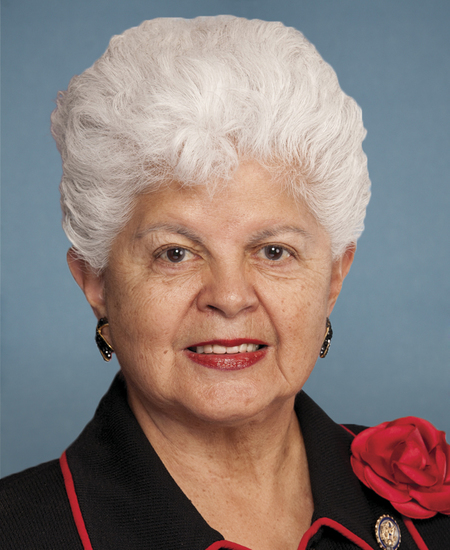
Rep. Grace F. Napolitano
Sponsored bills
Extinction Crisis Emergency Act of 2021 This bill requires the President to declare the global wildlife extinction crisis a national emergency and to take certain actions to restore wildlife. Specifically, the President shall direct the U.S. Fish and Wildlife Service and the National Marine Fisheries Service to review all species that are identified as critically imperiled, critically endangered, endangered, or vulnerable, and to use all authorities to propose and finalize protections for all species that may warrant protection; and establish new national wildlife refuges and new marine protected areas. The Departments of Commerce and the Interior must, after accepting public comment, conduct annual reviews of every nation's compliance with any international fishery conservation program or international program for endangered or threatened species, and take specified actions. The President must enlist all federal agencies to help fight the wildlife extinction crisis by directing each federal agency to take specified actions to prioritize the recovery of endangered species and to rebuild healthy wildlife and plant populations, including by fully integrating climate change concerns into the conservation and recovery of endangered species. The President must direct the Department of Defense to prioritize the protection of endangered species and rare habitats on U.S. military installations around the world.
Close the Medigap Act of 2021 This bill (1) expands guaranteed issue rights with respect to Medigap policies (Medicare supplemental health insurance policies), (2) eliminates certain limitations on Medigap policies for newly eligible Medicare beneficiaries, and (3) modifies other provisions related to Medigap policies. (Guaranteed issue rights require that a policy be offered to any eligible applicant without regard to health status.)
Water Conservation Rebate Tax Parity Act This bill expands the tax exclusions for energy conservation subsidies to include subsidies provided (directly or indirectly) (1) by a public utility for the purchase or installation of any water conservation or efficiency measure; (2) by a storm water management provider for the purchase or installation of any storm water management measure; or (3) by a state or local government to a resident of such state or locality for the purchase or installation of any wastewater management measure, but only if such measure concerns the taxpayer's principal residence.
Protecting Our Students by Terminating Graduate Rates that Add to Debt Act or the POST GRAD Act This bill authorizes graduate and professional students to receive subsidized Stafford Loans. These students have been ineligible to receive subsidized Stafford Loans since July 1, 2012.
Universal School Meals Program Act of 2021 This bill revises requirements under the food and nutrition programs of the Department of Agriculture, such as the school lunch and breakfast programs. For example, the bill permanently provides free meals to all school children regardless of income. The bill increases the reimbursement rate for school food authorities participating in the food and nutrition programs. The bill also prohibits school food authorities from (1) physically segregating or otherwise discriminating against any child participating in the free breakfast program, or (2) overtly identifying a child participating in the program with a special token or announcement. Additionally, the bill expands the summer food service program by making all children eligible for participation in the program. Further, the bill revises eligibility determinations for measuring poverty to include runaway or homeless youth, foster children, migratory children, and children participating in specified programs (e.g., Head Start).
Support Through Loss Act This bill provides employees with 24 hours of paid leave time each year for an absence resulting from a pregnancy loss or other specified circumstance related to pregnancy, fertility, or an unsuccessful assisted reproductive procedure or adoption match. Employers must notify each employee about the availability of this paid leave and may not discriminate or discharge an employee for exercising or attempting to exercise the right to such paid leave. The bill provides for enforcement of this requirement by the Department of Labor and through civil action brought by an employee or individual. Further, the bill requires specified federal agencies to conduct research and publish information about pregnancy loss and related evidence-based treatment options.
Generating Resilient, Environmentally Exceptional National Streets Act or the GREEN Streets Act This bill establishes national goals to reduce carbon dioxide and other greenhouse gas emissions and improve the resilience of the transportation system. Specifically, the bill directs the Department of Transportation (DOT) to establish minimum standards for states to decrease greenhouse gas emissions and per capita vehicle miles traveled (VMTs) on the National Highway System; DOT to establish measures for states to assess and reduce carbon dioxide; states and metropolitan planning organizations (MPOs) to consider projects and strategies that reduce carbon dioxide and other greenhouse gas emissions and decrease per capita VMT's; states and MPOs to publish an analysis of the impact on per capita VMTs and mobile source greenhouse gas emissions for each project that adds new lanes or otherwise increases traffic capacity and costs more than $25 million; states that are out of compliance with the per capita VMT standards or carbon dioxide or greenhouse gas emission measures to dedicate federal highway funding to achieve compliance; and DOT to establish national transit access standards and performance measures for transit accessibility, transit stop distance, and transit mode share.
Comprehensive Paid Leave for Federal Employees Act This bill provides paid family and medical leave to federal employees. Currently, federal employees are entitled to 12 weeks of administrative leave for one or more of the following reasons: (1) the birth of a child, (2) the adoption or foster care of a child, (3) the care of an immediate family member with a serious health condition, (4) inability to work due to a serious health condition, and (5) exigencies relating to an immediate family member's active duty service in the Armed Forces. However, of these reasons, employees are entitled to paid administrative leave only in connection with the birth, adoption, or foster care of a child (i.e., parental leave). The bill provides 12 weeks of paid administrative leave for any of these reasons, and specifies that this leave is in addition to any annual or sick leave to which employees are entitled.
This resolution supports the goals of Bebe Moore Campbell BIPOC Mental Health Awareness Month, including bringing attention to the mental health disparities faced by communities of color.