Alexander Lofgren Veterans in Parks (VIP) Act This bill makes the America the Beautiful-National Parks and Federal Recreational Lands Pass available, without charge, to members of the Armed Forces, veterans, and Gold Star Families. The pass covers the entrance fee and standard amenity recreation fee for all federal recreational lands and waters.
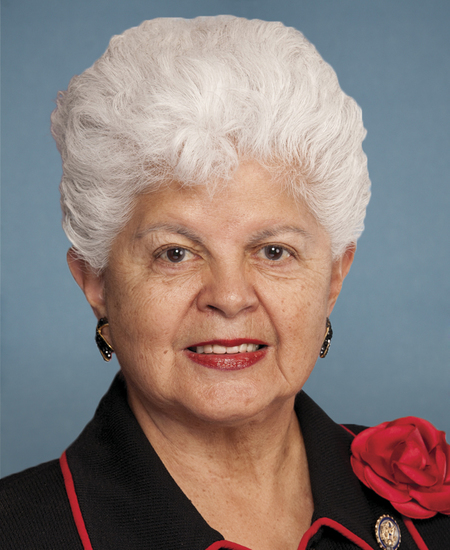
Rep. Grace F. Napolitano
Sponsored bills
Protecting Our Widows and Widowers in Retirement (POWR) Act This bill increases Social Security benefits for widows or widowers in two-income households by establishing an alternative method to calculate survivors benefits based on combined household benefit amounts.
City and State Diplomacy Act This bill establishes within the Department of State the Office of City and State Diplomacy, which shall coordinate federal support for engagement by state and municipal governments with foreign governments. The head of the office shall be the Ambassador-at-Large for City and State Diplomacy, who shall be appointed by the President with the advice and consent of the Senate.
Captive Primate Safety Act This bill limits the trade and possession of nonhuman primates. For example, the bill prohibits most individuals from owning a nonhuman primate as a pet.
Critically Endangered Animals Conservation Act of 2021 This bill provides statutory authority for the Critically Endangered Animals Conservation Fund, which finances a grant program to protect critically endangered species. Specifically, the bill requires the Department of the Interior to establish the fund as a separate account in the Multinational Species Conservation Fund. Critically endangered species means any animal species categorized on the International Union for Conservation of Nature (IUCN) Red List of Threatened Species as either endangered or critically endangered. The term also means any other animals species categorized on such list as data deficient or under a threat category lower than endangered if Interior determines that (1) the most recent IUCN Red List assessment indicates that the population is decreasing, or (2) such species is facing new or emerging threats.
Keep Finfish Free Act of 2021 This bill prohibits the Department of the Interior and the Department of Commerce from authorizing commercial finfish aquaculture operations in the U.S. Exclusive Economic Zone, except in accordance with a law enacted after enactment of this bill.
This resolution (1) commits to advancing policies that will end roadway fatalities by 2050, and (2) calls on Congress and the Department of Transportation to commit to working together to achieve zero roadway fatalities by the year 2050.
Performing Artist Tax Parity Act of 2021 This bill modifies the tax deduction for the expenses of performing artists (including commissions paid to managers or agents) to provide for a phaseout of such deduction for taxpayers whose adjusted gross income exceeds $100,000 ($200,000 for joint return filers). The $100,000 phaseout threshold is adjusted for inflation annually for taxable years beginning after 2021.
Revitalizing Downtowns Act This bill expands the investment tax credit to add a qualified office conversion credit. The amount of such credit is 20% of the qualified conversion expenditures with respect to a qualified converted building. The bill defines qualified converted building as any building if (1) prior to conversion, the building was nonresidential real property which was leased, or available for lease, to office tenants; (2) the building has been substantially converted from an office use to a residential, retail, or other commercial use; (3) the building was initially placed in service at least 25 years prior to the beginning of the conversion, and (4) straight line depreciation is allowable with respect to the building.
Saving America's Pollinators Act of 2021 This bill addresses the use of certain pesticides and the health and status of native bees and other pollinators. First, the bill requires the Environmental Protection Agency (EPA) to establish a Pollinator Protection Board to develop an independent review process for pesticides that pose a threat to pollinators and their habitats. All active ingredients and pesticide products that contain one or more specified neonicotinoid pesticides must be deemed to generally cause unreasonable adverse effects to the environment. Under the bill, the registration of all uses of neonicotinoid pesticides must be immediately and permanently canceled. The EPA must revoke any tolerance or exemption that allows the presence of a neonicotinoid pesticide, or any pesticide chemical residue that results from neonicotinoid pesticide use, in or on food. The continued sale or use of existing stocks of neonicotinoid pesticides is prohibited, and the EPA may not register any such pesticides under the Federal Insecticide, Fungicide and Rodenticide Act. The bill requires the Department of the Interior, the EPA, and the Department of Agriculture to coordinate monitoring activities and report on the health and population status of native bees and other pollinators. Finally, a state or federal agency may be granted an exemption to use neonicotinoid pesticides if the board votes that use of the pesticide is warranted (1) in an emergency situation to avert significant risk to threatened or endangered species, (2) to quarantine invasive species, or (3) to protect public health.