

Maddy summaryThis resolution expresses the U.S. House of Representatives' support for designating October 1, 2024, as "National Latino Physician Day." It highlights that only 6% of U.S. physicians are Latino or Latina - despite Latinos making up over 1 in 4 Americans by 2050 - and notes that increasing physician diversity improves health outcomes for Latino communities. The resolution does not create new policies but formally supports raising awareness about the need to grow Latino/Latina representation in medicine. It specifically endorses the day's designation to promote diversity in the medical field and acknowledges the 2022 observance of the day. As a non-binding resolution, it has no legal effect but serves as a symbolic statement.
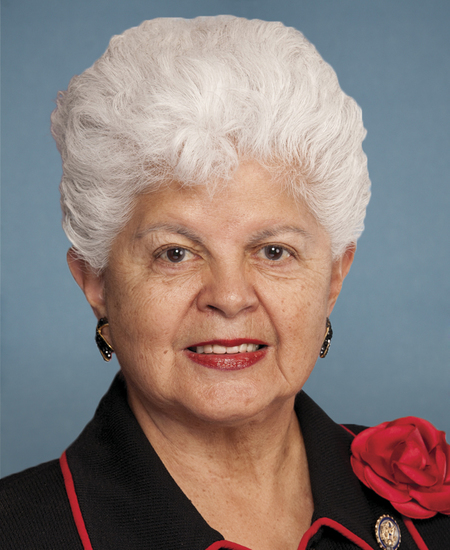
Rep. Grace F. Napolitano
Sponsored bills
Maddy summaryHRES 1494 is a non-binding resolution recognizing that air pollution and extreme heat disproportionately threaten maternal and infant health for pregnant Latinas in the U.S., citing systemic inequities that place them at higher risk than other groups. It expresses the House's sense that equitable interventions - such as bilingual air quality alerts, community air monitoring, expanded cooling access, and culturally tailored health education - must be rapidly developed to address these vulnerabilities. The resolution specifically calls for actions like improving heat guidelines at health facilities serving pregnant women and increasing access to affordable cooling solutions in Latino neighborhoods. As a statement of congressional opinion, it does not create new laws but aims to guide future policy and resource allocation.
Maddy summaryHR 3433, the "Give Kids a Chance Act of 2024," requires pharmaceutical companies developing certain cancer drugs to conduct pediatric studies if the drugs target molecular pathways relevant to childhood cancers. It directly affects drug manufacturers submitting new applications for cancer treatments, particularly those combining previously approved adult cancer drugs or containing a single new active ingredient. The bill amends FDA regulations to mandate these pediatric investigations only when specific conditions are met, such as when a drug's molecular target is relevant to pediatric cancer growth. The FDA must issue implementing guidance within 12 months, and reports to Congress will track implementation and effectiveness starting 2 years after enactment.
Maddy summary# Summary of Health Equity and Accountability Act of 2024 This comprehensive legislation addresses multiple aspects of health care access, workforce development, and immigration policy with a strong focus on health equity. ## Key Themes 1. **Workforce Diversity**: Significant emphasis on increasing racial, ethnic, and socioeconomic diversity in the health care workforce 2. **Language Access**: Mandates for language access services for individuals with limited English proficiency 3. **Underserved Communities**: Targeted investments in medically underserved areas and communities 4. **Immigration Policy**: Modifications to programs that bring health care professionals to the U.S. ## Major Provisions ### Workforce Development - **$1 billion** for nursing education enhancement and modernization grants in underserved areas - **$552 million** for health professions workforce development in 2032 (increasing annually) - **$392 million** for health professions education programs in 2025 - New grants for schools of medicine and osteopathic medicine in underserved areas - Expansion of the Conrad State 30 program for foreign physicians to address physician shortages ### Language Access - Requires health care providers to provide language access services to individuals with limited English proficiency - Mandates translation services and interpretation services for all health care settings ### Diversity Initiatives - **David Satcher Public Health and Health Services Corps** to increase awareness of health career opportunities - **Louis Stokes Public Health Scholars Program** for underrepresented students - **Patsy Mink Health and Gender Research Fellowship Program** - **Paul David Wellstone International Health Fellowship Program** - **Edward R. Roybal Health Scholar Program** ### Immigration Policy - **Conrad State 30 program extension** through 2027 - **Physician retention** provisions to help foreign physicians stay in medically underserved areas - **Dual intent for physicians** seeking graduate medical training - **Clarifications to national interest waiver** requirements - **Automatic extension** of physician nonimmigrant status during residency transitions ### Funding - **Health Professions Workforce Fund** established with multi-year funding increasing from $392 million in 2025 to $552 million in 2032 - Specific allocations for nursing workforce development and health professions education This legislation represents a comprehensive approach to addressing health care disparities through workforce development, improved access, and policy changes to support a more diverse and equitable health care system.
Maddy summaryHRES 1480 is a symbolic resolution recognizing Hispanic Restaurant Week (September 22-October 3, 2024) and honoring Hispanic restaurant owners and employees. It acknowledges their economic contributions to the U.S. restaurant industry, citing data that 25.9% of restaurant workers are Hispanic and Hispanic-owned restaurants represent the second-highest number of Hispanic-owned businesses. The resolution does not create new policies or funding but formally celebrates their role during Hispanic Heritage Month. It was introduced by 14 House members and referred to the Energy and Commerce Committee.
Maddy summaryThis bill expands TRICARE coverage to allow military service members and their dependents to obtain up to a full year's supply of contraception in a single fill (365 days) at military pharmacies, retail pharmacies, or through TRICARE's mail-order program. It requires TRICARE to implement this coverage within 180 days of enactment and mandates outreach to inform beneficiaries and providers within 90 days of implementation. The policy directly affects active-duty military members and their eligible dependents enrolled in TRICARE, removing prior restrictions on supply limits for contraceptive prescriptions. This change simplifies access by eliminating the need for frequent refills while maintaining existing coverage requirements under TRICARE.
Maddy summaryThis resolution (HRES 1472) symbolically recognizes the heritage, culture, and contributions of Latinas in the United States. It highlights their economic impact (over 2 million Latina-owned businesses), societal roles (48,000+ active-duty Latinas in the military, 18% of women-owned businesses), and ongoing challenges like the pay gap (Latinas earn 57 cents for every dollar earned by White, non-Hispanic men). The resolution notes that Latinas represent 1 in 5 U.S. women and will comprise 25% of the female population by 2060. As a non-binding resolution, it does not create new policies or allocate funds, but formally honors their contributions and acknowledges the need for continued progress.
Maddy summaryHR 6319 (the 911 SAVES Act of 2023) requires the Office of Management and Budget to reclassify public safety telecommunicators as "Protective Service Occupations" within 30 days of enactment. This change corrects their current misclassification in the federal Standard Occupational Classification (SOC) system, which is used for statistical data on jobs. The bill directly affects how these professionals - critical in emergency calls involving missing children, active threats, and officer safety - are officially categorized in government workforce data. It does not create new benefits or funding but aims to better recognize their lifesaving role through accurate federal job classification.
Maddy summaryHRES 1464 is a symbolic House resolution recognizing the Latino community's engagement in outdoor recreation and conservation efforts. It expresses support for designating the third week of September as "Latino Conservation Week" to highlight community involvement in protecting natural resources. The resolution does not create new laws or allocate funds; it is purely a statement of recognition. It aims to acknowledge existing community activities like park cleanups and educational events focused on environmental stewardship.
Maddy summaryThe Artsakh Revenue Recovery Act of 2024 would establish a U.S. fund to compensate Armenians displaced from Artsakh (Nagorno-Karabakh) after Azerbaijan's military assault in September 2023. It requires the U.S. government to seize Azerbaijani sovereign assets held in the United States if Azerbaijan fails to compensate displaced Armenians for lost revenue from businesses, property, and employment. The bill creates a claims process through which displaced Armenians can submit claims for compensation for revenue lost since September 2023, with the fund paying claims if Azerbaijan does not compensate within 90 days. The Artsakh Revenue Recovery Fund would operate for up to one year after a peace agreement between Azerbaijan and Armenia is signed or until all claims are paid.