

Maddy summaryHR 1060 designates the United States Postal Service facility at 1663 East Date Place in San Bernardino, California, as the "Dr. Margaret B. Hill Post Office Building." The bill updates all federal references - such as in laws, maps, regulations, and official documents - to use this new name for the building. This is a procedural designation with no policy changes or direct impact on residents or services. The bill was passed by Congress and signed into law on November 25, 2024.
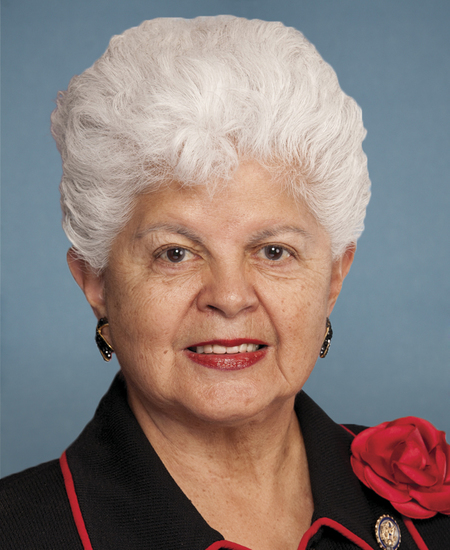
Rep. Grace F. Napolitano
Sponsored bills
Maddy summaryThe Working Dog Commemorative Coin Act (HR 807) directs the U.S. Treasury to mint three types of commemorative coins honoring working dogs' service: $5 gold coins, $1 silver coins, and half-dollar coins with specific weight and composition requirements. Each coin will carry a surcharge ($35 for $5 coins, $10 for $1 coins, $5 for half-dollars) that will be paid directly to America's VetDogs to support their programs providing service dogs for veterans, the disabled, and others. The coins will be issued in 2027 with designs reflecting working dogs' roles in military, detection, therapy, and assistance work. The legislation specifies that all surcharge revenue must fund America's VetDogs' operations without creating new government programs. This is a commemorative measure focused on honoring working dogs' contributions through coin sales, with all surcharge funds going to a specific nonprofit organization.
Maddy summaryThis bill redesignates a United States Postal Service facility at 3500 West 6th Street, Suite 103 in Los Angeles, California, as the "Dosan Ahn Chang Ho Post Office." It directly affects the postal service location by changing its official name to honor Dosan Ahn Chang Ho, a Korean independence activist and community leader. The bill amends prior legislation to update references to the facility’s address and name in all federal records and documents. This is a ceremonial naming resolution with no policy changes to postal services or operations.
Maddy summaryThis bill establishes a Truth and Healing Commission to investigate the history and impacts of U.S. Indian Boarding School policies on Native American communities, including cultural, emotional, and physical effects on survivors, descendants, and tribal communities. The Commission will document these impacts through research, public meetings, and testimony, working with two advisory committees focused on Native American perspectives and Federal agency coordination. The Commission will operate for six years, with annual reports to Congress and a final report containing recommendations for Federal action. The bill also includes provisions for managing burial sites related to boarding schools and ensures the Native American Graves Protection and Repatriation Act applies to remains found on Federal lands related to these schools.
Maddy summaryHRES 1588 is a House resolution supporting Transgender Day of Remembrance (TDoR) by recognizing the epidemic of violence against transgender people and memorializing those killed between October 1, 2023, and September 30, 2024. It specifically honors 38 transgender or gender-nonconforming individuals whose lives were lost to violence during that period, highlighting that transgender women of color face disproportionate risks. The resolution acknowledges systemic issues like underreporting, barriers to healthcare, and higher rates of homelessness and suicide within the community. It calls for the U.S. government to prioritize solutions to this violence while affirming transgender people's right to dignity and safety. As a symbolic resolution, it does not create new laws or policies but formally recognizes these issues for congressional record.
Maddy summaryThis bill establishes a new interest-bearing fund within the Treasury to manage non-Federal contributions for the Lower Colorado River Multi-Species Conservation Program. It requires the Treasury to deposit existing and future state contributions (from participating states) into this fund, which can then earn interest through U.S. government securities. The fund's principal and interest are available for program expenses as specified in the existing funding agreement, without needing new annual appropriations. This directly affects the participating states (referred to as "State Parties" in the agreement) and the federal Treasury, streamlining how conservation program funds are held and invested.
Maddy summaryThe VA Employee Fairness Act of 2024 modifies collective bargaining rules for employees of the Veterans Health Administration (VHA). It removes existing subsections (b), (c), and (d) from the law governing VHA employee bargaining and renumbers the remaining provision. This change streamlines the collective bargaining framework but does not alter the Secretary of Veterans Affairs' existing authorities over incentive pay and expedited hiring. The bill directly affects VHA employees by changing how their collective bargaining rights are structured under federal law. The law remains neutral, focusing solely on procedural adjustments to the existing bargaining framework.
Maddy summaryHRES 1525 is a non-binding resolution calling for the U.S. government to address policies contributing to forced migration and displacement. It urges reforms such as overhauling economic sanctions, investing in developing countries to reduce poverty and instability, and reforming trade agreements to protect workers. The resolution also calls for expanding legal immigration pathways, improving asylum processing, and creating a roadmap to citizenship for immigrants living in the U.S. As a resolution, it does not create new laws but sets policy priorities for future legislative action.
Maddy summaryHR 9878, the No Shame at School Act of 2024, requires schools to automatically certify students from households with unpaid meal fees for free or reduced-price meals (instead of allowing discretion), and mandates retroactive reimbursement for past unpaid meals. It directly affects school districts and students in households owing meal fees by prohibiting stigmatizing practices like special tokens, public lists of names, or withholding grades due to unpaid fees. Key provisions ban schools from physically segregating students, using debt collectors, or taking food away from students who owe fees, while requiring clear communication to households about meal applications. The bill defines "covered child" as any student enrolled in a participating school meal program whose household owes fees or is eligible for free/reduced meals.
Maddy summaryHRES 1514 is a symbolic House resolution recognizing that cancer patients should have the right to access care focused on prevention, early diagnosis, treatment, rehabilitation, and affordability. It does not create new laws or funding but formally states the House's support for five key care principles: access to advanced treatments at specialized centers, diagnostic testing, multidisciplinary care, and culturally appropriate information. This resolution directly addresses cancer patients and their families, highlighting disparities in care access. As a non-binding resolution, it has no legal effect but aims to raise awareness of cancer care challenges.