

Equal Access to Abortion Coverage in Health Insurance Act of 2021 or the EACH Act of 2021 This bill requires federal health care programs to provide coverage for abortion services and requires federal facilities to provide access to those services. The bill also permits qualified health plans to use funds attributable to premium tax credits and reduced cost sharing assistance to pay for abortion services.
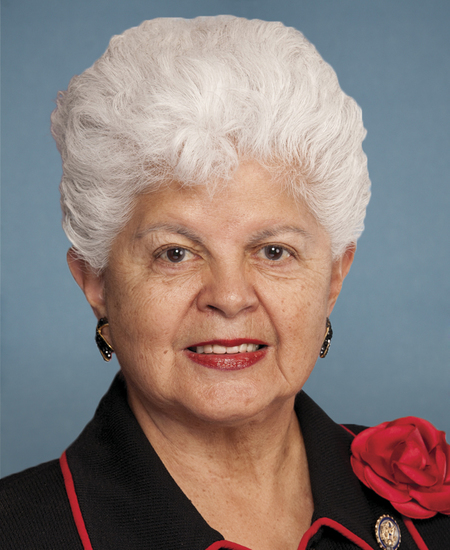
Rep. Grace F. Napolitano
Sponsored bills
Outdoors for All Act This bill directs the Department of the Interior to establish an outdoor recreation legacy partnership grant program under which Interior may award grants to states, certain political subdivisions of a state, special purpose districts, Indian tribes, or Alaska Native or Native Hawaiian communities or organizations. Funds must be used for projects to (1) acquire land and water for parks and other outdoor recreation purposes in qualifying areas, and (2) develop new or renovate existing outdoor recreation facilities that provide outdoor recreation opportunities to the public in qualifying areas. A qualifying area is an area that has a population of 30,000 or more in the most recent census, or that is administered by an Indian tribe or an Alaska Native or Native Hawaiian community organization. Interior shall give priority to projects that create or significantly enhance access to park and recreational opportunities in an urban neighborhood or community, engage and empower underserved communities and youth, provide opportunities for employment or job training for youth or underserved communities, establish or expand public-private partnerships, and take advantage of coordination among various levels of government.
Revising and Expediting Actions for the Crisis Hotline for Veterans Act or the REACH for Veterans Act This bill requires the Department of Veterans Affairs (VA) to update training and procedures for call responders of the Veterans Crisis Line. Specifically, the VA must enter into an agreement with an outside organization to review the training for crisis line call responders. The VA must update the training if any deficiencies are identified after the review. Among other requirements, the VA must develop guidelines on retraining and quality management for when a call responder has an adverse event or needs improvement, annually perform a common cause analysis for identified callers to the crisis line who died by suicide in situations where the crisis line was the last point of contact, develop enhanced guidance and procedures to respond to calls to the crisis line related to substance use and overdose risk, review the current emergency dispatch standard operating procedure of the crisis line, and solicit feedback from veterans service organizations on how to conduct outreach regarding the move to 988 as the new suicide and mental health crisis hotline. Each call responder must be subject to at least two calls per month that are silently monitored by a supervisor to check for quality of conduct. The Veterans Crisis Line, Office of Mental Health and Suicide Prevention of the VA, and National Center for Patient Safety of the VA must establish quality management processes and expectations for staff of the crisis line.
Making Advances in Mammography and Medical Options for Veterans Act This bill addresses the Department of Veterans Affairs (VA) provision of mammograms and breast cancer treatment. Among other requirements, the VA must submit a strategic plan for improving breast imaging services for veterans, implement a three-year pilot program to provide telemammography services for veterans who live in locations where access to breast imaging services at a VA facility is difficult or unfeasible, upgrade all mammography services at its facilities to use three-dimensional breast imaging, update guidelines to increase the use of testing for the breast cancer gene and genetic counseling for veterans diagnosed with breast cancer, and update its policies and directives to ensure that it confirms the accessibility of a breast imaging site when referring a veteran with a spinal cord injury or disorder to a non-VA provider. In addition, the VA must enter into a partnership with at least one cancer center of the National Cancer Institute of the National Institutes of Health in each Veterans Integrated Service Network to expand access to high-quality cancer care for women veterans. In implementing such partnerships, the VA must ensure that veterans with breast cancer who reside in rural areas or states without a partner cancer center are able to receive care through telehealth. Finally, the VA must collaborate with the Department of Defense and report on all current research and health care collaborations between the departments on treating veterans and members of the Armed Forces with breast cancer.
Reconciliation in Place Names Act This bill directs the Department of the Interior to establish the Advisory Committee on Reconciliation in Place Names to advise the Board on Geographic Names with regard to renaming geographic features with offensive place names. The board shall rename a geographic feature with an offensive name in accordance with a recommendation of the committee unless the board determines that (1) there is a compelling reason and substantial public interest in rejecting the recommendation, or (2) approving the recommendation would violate federal law. The board shall accept or reject a recommendation within three years of receiving the recommendation.
Preventing Opportunities for Teen E-Cigarette and Tobacco Addiction Act or the PROTECT Act This bill requires the Centers for Disease Control and Prevention (CDC) to develop a strategy and carry out a specific initiative to prevent and reduce the use of electronic cigarettes and emerging tobacco products among youth and young adults. As part of the initiative, the CDC must conduct research and surveillance on types of products, patterns of use, health impacts, and other aspects of the use of such products by youth and young adults; evaluate prevention and intervention strategies and develop guidance for intervening and treating youth and young adults who use such products; identify effective messaging and communication efforts and implement a national public education campaign concerning the use of such products; and continue to fund grants for tobacco control programs in health departments, including efforts to prevent and reduce the use of such products by youth and young adults.
This resolution recognizes (1) the celebration of Hispanic Heritage Month; and (2) the integral role of Latinos and their manifold heritage in the economy, culture, and identity of the United States.
Improving Mental Health and Wellness in Schools Act This bill requires local educational agencies (LEAs) participating in the school lunch or breakfast programs to include in their local school wellness policies (1) goals for mental health promotion and education, and (2) nutrition guidelines for reducing childhood eating disorders. Such LEAs must also include registered dietitians and school-based mental health services providers in the development, implementation, and periodic review of such policies. The bill also requires the Department of Agriculture to provide information and technical assistance to school health professionals (including school-based mental health services providers) for use in establishing healthy school environments. Such technical assistance must promote mental health, encourage mental health assessments, and establish resilient school environments.
Gun Suicide Prevention Act This bill prohibits manufacturers and retailers from selling firearms unless the firearm includes a label with the toll-free telephone number for the National Suicide Prevention Lifeline.
Minks in Narrowly Kept Spaces are Superspreaders Act or the MINKS are Superspreaders Act This bill makes it unlawful to import, export, transport, sell, receive, acquire, or purchase American mink ( Neovison vison ) raised in captivity for fur production, whether dead or alive.