

Maddy summaryHRES 1332 is a symbolic resolution recognizing June as LGBTQIA+ Pride Month. It encourages the celebration of Pride Month to honor the historical struggles and achievements of LGBTQIA+ people in the United States, while acknowledging the ongoing challenges they face. This resolution does not create new laws or policies, but serves as a formal recognition of LGBTQIA+ rights as human rights and highlights their integral role in American history. The resolution was introduced by multiple members of Congress and passed by the House of Representatives.
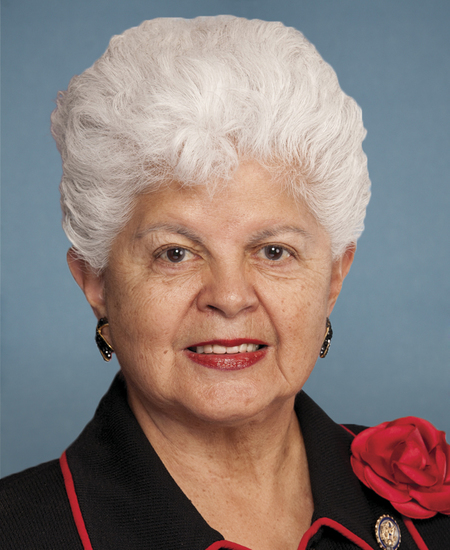
Rep. Grace F. Napolitano
Sponsored bills
Maddy summaryThis bill creates a federal framework for "extreme risk protection orders" (ERPOs) that temporarily remove firearms from individuals who pose a risk of harming themselves or others. Family members or law enforcement officers can petition a federal court for a temporary order (up to 14 days) based on probable cause, followed by a hearing within 72 hours to determine if a longer-term order (up to 180 days) is warranted. The bill requires clear and convincing evidence of risk at the hearing and mandates respondents to surrender firearms to law enforcement within 48 hours. It also includes provisions for reporting, training law enforcement on ERPOs, and a federal grant program to support state ERPO implementation, without preempting state laws.
Maddy summaryHR 8732, the Domestic Workers Bill of Rights Act, would establish new labor protections for domestic workers including nannies, housekeepers, and caregivers who work in private homes. The bill requires written agreements between employers and domestic employees, provides earned sick days, ensures fair scheduling practices, and prohibits unfair wage deductions for cash shortages or communications. It also creates a Domestic Employee Standards Board to recommend workplace standards and establishes a National Domestic Employee Hotline for assistance. The bill specifically targets domestic workers who have historically been excluded from labor protections under the Fair Labor Standards Act and Civil Rights Act, benefiting an estimated 2.2 million domestic workers in the U.S. who are disproportionately women of color and immigrants.
Maddy summaryHR 537 authorizes a Congressional Gold Medal to honor 60 diplomats who saved Jewish lives during the Holocaust by issuing visas and passports against their governments' orders, risking expulsion and personal danger. The medal will be presented to the next of kin of these diplomats, alongside representatives from their home countries, and permanently displayed at the United States Holocaust Memorial Museum. The bill also permits the sale of bronze duplicates to cover production costs, with proceeds going to the U.S. Mint. This legislation recognizes the diplomats' humanitarian actions without creating new government programs or altering existing laws.
Maddy summaryHR 1687 names the United States Postal Service facility at 6444 San Fernando Road in Glendale, California, as the "Paul Ignatius Post Office." All official U.S. government references to this location - such as in laws, maps, or documents - will now use the new name. This is a procedural bill with no policy changes beyond the naming designation.
Maddy summaryThis resolution (HRES 1271) is a symbolic gesture expressing the House's support for designating June 7, 2024, as "National Gun Violence Awareness Day" and June 2024 as "National Gun Violence Awareness Month." It does not create new laws or policies but urges the public to wear orange, raise awareness about gun violence, and focus on community safety during summer months when such incidents often increase. The resolution references statistics on gun-related deaths and honors victims like Hadiya Pendleton, who was killed in 2013. It directly affects the public by calling on individuals and communities to participate in awareness activities. This is a non-binding, commemorative measure with no direct legal impact on legislation or regulations.
Maddy summaryThis bill changes Medicaid rules to exclude small mental health facilities (36 beds or fewer) from the definition of "institution for mental diseases" if they meet specific national standards for care. It directly affects small mental health and substance use disorder treatment centers seeking Medicaid coverage. Facilities must follow evidence-based standards approved by the federal Secretary, covering service types, clinical hours, and staff qualifications. The changes take effect 180 days after the law is signed, applying to state Medicaid plans from that date.
Maddy summaryHR 8556, the Clarifying E-Rate Act of 2024, expands eligibility under the E-Rate program to include school buses (when owned, leased, or contracted by a school for student transport) and other locations determined by the FCC as appropriate for learning. It modifies three sections of the Communications Act to explicitly add these locations alongside classrooms for funding purposes. The changes apply to funding starting in 2025, and the FCC must issue a rulemaking within one year to identify additional eligible locations and establish an annual review process. This directly affects schools and libraries receiving E-Rate discounts for telecommunications services.
Maddy summaryThe George Floyd Justice in Policing Act of 2024 establishes a National Police Misconduct Registry to track complaints and disciplinary actions against officers, requiring all federal, state, and local law enforcement agencies to report use-of-force incidents with racial, gender, and age data. It bans chokeholds and carotid holds in police encounters, prohibits no-knock warrants in drug cases, and reforms qualified immunity to make it harder for officers to avoid accountability for misconduct. The bill mandates body cameras for federal officers, requires independent investigations of officer-involved shootings, and creates new data collection systems to monitor racial profiling and use-of-force patterns. It also includes provisions for civilian oversight boards, improved officer training on de-escalation and implicit bias, and restrictions on military equipment transfers to local police departments. This law affects all law enforcement agencies receiving federal funding under programs like Byrne and COPS grants.
Maddy summaryHR 8444 establishes two federal grant programs to improve mental health support in schools. The School Mental Health Awareness Program funds evidence-based education for all students on mental wellness, destigmatization, and coping skills, while the Mental Health Career Promotion Program exposes high school students to mental health careers through internships, mentorships, and partnerships with professionals. Grants require culturally appropriate, trauma-informed activities and mandate annual outcome reporting on student and program effectiveness. The bill authorizes $50 million annually for each program from 2025-2029 to support schools partnering with mental health providers and community organizations.