

Maddy summaryHRES 1419 is a symbolic resolution recognizing Overdose Awareness Day and committing the House to strengthen efforts against the opioid crisis. It does not create new law but formally: (1) recognizes Overdose Awareness Day, (2) pledges to advance bipartisan policies reducing stigma around substance use disorders, and (3) commits to collaborating with states, communities, and organizations to support prevention, treatment, harm reduction, and recovery services. The resolution highlights the crisis' severity - including 932,000 overdose deaths since 1999 and a $1 trillion annual economic burden - but focuses on shared goals rather than specific policy changes. It directly affects congressional action and public messaging, not individual citizens or programs.
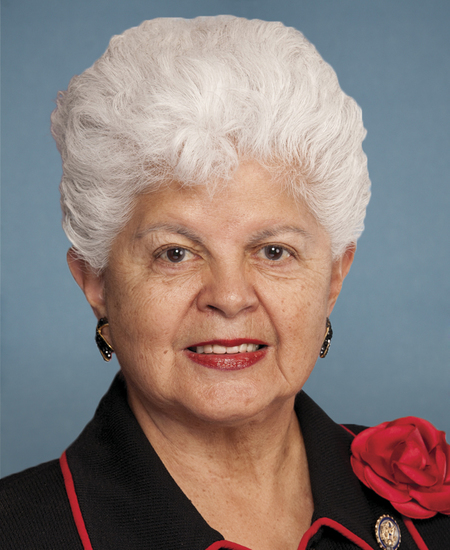
Rep. Grace F. Napolitano
Sponsored bills
Maddy summaryHRES 1414 is a non-binding resolution expressing congressional support for "Warehouse Worker Recognition Week" (August 18-24, 2024), which celebrates workers in the logistics industry. It does not create new laws or funding but symbolically acknowledges warehouse workers’ contributions to the economy, noting they number over 9 million and face challenging conditions like extreme heat. The resolution encourages public awareness of their role in supply chains and commits to addressing workplace safety concerns. It directly affects warehouse workers by formally recognizing their labor, though it has no legal force.
Maddy summaryThis bill would allow states to skip in-person interviews for SNAP (food stamp) benefit renewals if applicants agree to waive the interview and have already proven they qualify for continued benefits. It also requires states to offer phone or virtual interview options when interviews are still needed for renewal. The change directly affects SNAP recipients who may face fewer in-person requirements and state agencies administering the program. The policy aims to reduce paperwork burdens without altering eligibility rules for food assistance.
Maddy summaryHR 9274, the SHAWL Act, establishes two new Smithsonian museums: the National Museum of the American Latino and the American Women’s History Museum. It authorizes both museums to be located within the National Mall’s "Reserve" area, overriding prior restrictions, and requires federal agencies managing potential sites to transfer jurisdiction to the Smithsonian after notifying congressional committees. The bill mandates that both museums accurately represent diverse cultures, histories, and viewpoints within Latino and women’s communities through exhibits and programs, requiring input from a broad range of community experts. It also requires the Smithsonian to submit biennial reports to Congress detailing compliance with these representation requirements.
Maddy summaryThe NO BAN Act (HR 9244) prohibits U.S. immigration authorities from denying visas or entry based on national origin, religion, or sex. It amends immigration law to explicitly ban such discrimination in visa decisions and tightens restrictions on the president’s power to suspend entry of certain groups under Section 212(f). The bill requires specific evidence, narrow tailoring, time limits, and congressional notification for any entry restriction, while mandating public reports on visa denials and waivers. It directly affects nonimmigrant visa applicants (e.g., students, workers) and federal agencies administering immigration policy.
Maddy summaryH.J. Res. 193 proposes a constitutional amendment to eliminate legal immunity for federal officials, including the President, from criminal prosecution for actions taken while performing official duties. It also prohibits the President from granting a pardon to themselves. The amendment would apply to all federal officers (such as the President, Vice President, and members of Congress) except for Congress members acting in their legislative role as defined in the Constitution. If ratified by 38 states, this change would become part of the U.S. Constitution, requiring no further congressional action.
Maddy summary# Summary of Water Resources Development Act This comprehensive legislation authorizes numerous water infrastructure projects across the United States, with a focus on flood control, water supply, wastewater management, environmental restoration, and shoreline protection. Key elements include: 1. **Project Authorizations**: The act authorizes funding for hundreds of specific water infrastructure projects across all 50 states, with significant allocations for: - Water and wastewater infrastructure ($200 million for San Diego County, $100 million for Kings County NY, $100 million for Mohawk River area) - Flood control and stormwater management (particularly in coastal and riverine areas) - Environmental restoration projects 2. **Key Amendments**: - Increased funding for the Upper Mississippi River restoration program ($15 million for FY 2024, $20 million annually thereafter) - Modified the Santa Ana River Mainstem project to treat Santiago Creek as a separable element - Reduced navigation as an authorized purpose for the Upper St. Anthony Falls Lock and Dam - Increased funding for the Missouri River levee system ($65 million) 3. **Specific Project Highlights**: - $100 million for water infrastructure in Kings County, New York (addressing combined sewer overflows) - $50 million for environmental infrastructure in Broward County, Florida - $25 million for water infrastructure in Delaware's coastal communities - $20 million for water infrastructure in the Lake Tahoe Basin - $30 million for Oakland-Alameda Estuary water infrastructure 4. **Program Changes**: - Established a Western Washington State environmental assistance program - Modified the New York and New Jersey Harbor study to maximize public benefits - Added new projects to the lakes program (East Lake Tohopekaliga, Dillon Lake, etc.) - Authorized conveyances of property to local governments (e.g., Los Angeles fire station facility) 5. **Funding Details**: - The legislation contains numerous specific funding allocations ranging from $100,000 to $200 million for various water infrastructure projects - Includes provisions for cost-sharing arrangements, with Federal shares typically at 75% for new projects The legislation represents a significant investment in water infrastructure, with a focus on addressing aging infrastructure, improving water quality, reducing flood risks, and enhancing environmental protection across diverse geographic regions in the United States.
Maddy summaryHRES 1355 is a non-binding resolution supporting the designation of July 10 as Journeyman Lineworkers Recognition Day. It honors lineworkers who maintain electrical infrastructure under hazardous conditions, including during disasters, and commemorates Henry Miller, the first president of the International Brotherhood of Electrical Workers, who died on July 10, 1896, while troubleshooting an electrical outage. The resolution encourages public recognition of these workers' contributions but does not create new laws or policies.
Maddy summaryThis bill (HR 2365, Public Law 118-66) directs the U.S. Department of Health and Human Services (HHS) to establish the National Parkinson’s Project. It requires HHS to create and update a coordinated national plan for preventing, diagnosing, treating, and researching Parkinson’s disease and related disorders (including multiple system atrophy and progressive supranuclear palsy), while coordinating federal research and care efforts across agencies like the NIH, CDC, and VA. The law mandates annual progress assessments, an advisory council with patient advocates and diverse experts, and annual reports to Congress on federal Parkinson’s programs and recommendations for improvement. It affects federal agencies managing Parkinson’s-related programs and aims to improve care coordination and research efficiency for patients and caregivers, with the law sunsetting in 2035.
Maddy summaryHRES 1331 is a non-binding House resolution supporting Immigrant Heritage Month by recognizing immigrants' economic, cultural, and military contributions to the United States. It cites data showing immigrants contributed $1.9 trillion to the economy in 2021, made up 20% of entrepreneurs, and serve in critical roles like healthcare and agriculture. The resolution calls on elected officials, educators, and the executive branch to counter anti-immigrant rhetoric, educate the public about immigrant contributions, and protect immigrant communities. It does not create new legal obligations but aims to raise awareness and promote inclusion.