Empowering Parents' Healthcare Choices Act of 2021 This bill provides a 60-day time frame within which parents with separate health insurance plans may choose which plan provides primary coverage for their newborn child. The bill limits the application of certain standard health insurance provisions that determine which plan becomes the primary coverage of a dependent child based on the order of the parents' birthdays.
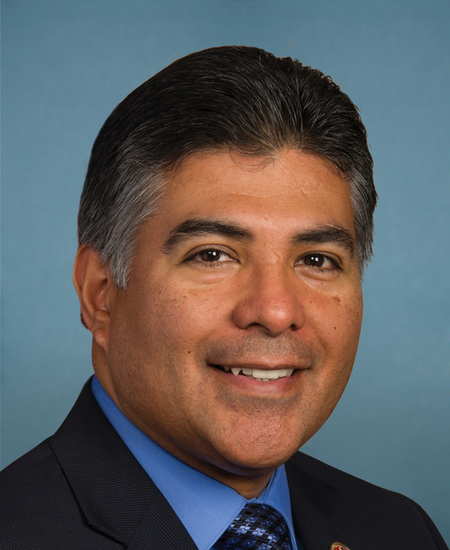
Rep. Tony Cárdenas
Sponsored bills
Smoke Planning and Research Act of 2021 This bill requires the Environmental Protection Agency (EPA) to research and mitigate the impacts of smoke emissions from wildland fires. Specifically, the EPA must establish (1) four Centers of Excellence for Wildfire Smoke at institutions of higher education, and (2) a grant program to support community mitigation efforts.
Securing Universal Communications Connectivity to Ensure Students Succeed Act or the SUCCESS Act This bill provides additional funding for the Emergency Connectivity Fund, which supports remote learning during the COVID-19 emergency period by covering reasonable costs of laptop and tablet computers, Wi-Fi hotspots, modems, routers, and broadband connectivity purchases for off-campus use by students, school staff, and library patrons.
Universal School Meals Program Act of 2021 This bill revises requirements under the food and nutrition programs of the Department of Agriculture, such as the school lunch and breakfast programs. For example, the bill permanently provides free meals to all school children regardless of income. The bill increases the reimbursement rate for school food authorities participating in the food and nutrition programs. The bill also prohibits school food authorities from (1) physically segregating or otherwise discriminating against any child participating in the free breakfast program, or (2) overtly identifying a child participating in the program with a special token or announcement. Additionally, the bill expands the summer food service program by making all children eligible for participation in the program. Further, the bill revises eligibility determinations for measuring poverty to include runaway or homeless youth, foster children, migratory children, and children participating in specified programs (e.g., Head Start).
PFAS Action Act of 2021 This bill establishes requirements and incentives to limit the use of perfluoroalkyl and polyfluoroalkyl substances, commonly referred to as PFAS, and remediate PFAS in the environment. PFAS are man-made and may have adverse human health effects. A variety of products contain PFAS, such as nonstick cookware or weatherproof clothing. The bill directs the Environmental Protection Agency (EPA) to designate the PFAS perfluorooctanoic acid (PFOA) and perfluorooctanesulfonic acid (PFOS) as a hazardous substances under the Comprehensive Environmental Response, Compensation, and Liability Act of 1980, thereby requiring remediation of releases of those PFAS into the environment. Within five years, the EPA must determine whether the remaining PFAS should be designated as hazardous substances. The EPA must publish human health water quality criteria under the Clean Water Act for each measurable PFAS and class of such substances and establish standards to limit discharges of PFAS from industrial sources into waters of the United States. In addition, the EPA must issue a national primary drinking water regulation for PFAS that, at a minimum, includes standards for PFOA and PFOS. Among other requirements, the EPA must also issue a final rule adding PFOA and PFOS to the list of hazardous air pollutants, test all PFAS for toxicity to human health, and regulate the disposal of materials containing PFAS. The EPA must also require PFAS manufacturers to submit analytical reference standards for PFAS. The EPA and states may use those standards for (1) the development of information, protocols, and methodologies, and (2) activities relating to the implementation of enforcement of requirements. Finally, the bill provides incentives to address PFAS, such as grants to help community water systems treat water contaminated by PFAS and grants to schools for testing and filtrating PFAS from drinking water.

Supporting Medicaid in the U.S. Territories Act of 2021 This bill extends, increases, and otherwise modifies Medicaid funding for U.S. territories. Specifically, the bill extends (1) the temporarily increased Federal Medical Assistance Percentage (i.e., federal matching rate), and (2) a higher cap on Medicaid funding. Such provisions apply to Puerto Rico through FY2026 and to other territories through FY2029. The bill also requires Puerto Rico to implement an asset verification program and to report on its ability to comply with certain reporting requirements, procurement standards, and other Medicaid program integrity measures.
Consumer Protection and Recovery Act This bill authorizes the Federal Trade Commission (FTC) to seek monetary relief in federal court from businesses that engage in unlawful commercial practices such as false advertising, consumer fraud, and anticompetitive conduct. Specifically, the FTC may seek restitution in these cases for losses, rescission or reformation of contracts, refund of money, return of property, or disgorgement of unjust enrichment. On April 22, 2021, the Supreme Court held in AMG Capital Management, LLC v. Federal Trade Commission that the Federal Trade Commission Act does not authorize the FTC to seek, or a court to award, such relief.
This resolution reaffirms the House of Representatives' commitment to media diversity and expresses its pledge to eliminate barriers to such diversity.
Health Enterprise Zones Act of 2021 This bill provides for the designation of Health Enterprise Zones in certain geographic areas with documented and measurable health disparities. This designation, which expires 10 fiscal years after the bill's enactment, confers eligibility for certain grants, student loan repayment programs, and tax credits for those working to reduce health disparities and improve health outcomes in these zones. Specifically, community-based nonprofits or local government agencies, in coalition with health care providers, social service organizations, and others, may apply to the Department of Health and Human Services (HHS) for the designation. The application must include a plan to reduce health disparities and achieve other outcomes. In implementing the program, HHS must consult with, among others, the Department of Housing and Urban Development. When approving applications, HHS shall consider factors including geographic diversity and the commitment of supporting funds from the private sector. HHS (1) may award grants to organizations or agencies that applied for the designation to support activities aligned with their plans, and (2) must carry out a student loan repayment program for health care providers who agree to provide services in a Health Enterprise Zone. In addition, the bill establishes tax credits for employers that hire, and individuals who work as, Health Enterprise Zone workers.
Medicaid Dental Benefit Act This bill requires state Medicaid programs to cover dental and oral health services for adults. It also increases the Federal Medical Assistance Percentage (i.e., federal matching rate) for such services. The Centers for Medicare & Medicaid Services must develop oral health quality and equity measures and conduct outreach relating to such coverage. Additionally, the Medicaid and Children's Health Insurance Program (CHIP) Payment and Access Commission must report on specified information relating to adult oral health care.