

Domestic Workers Bill of Rights Act This bill provides rights and protections for domestic workers (e.g., housekeepers, nannies, caretakers, personal assistants, and chauffeurs), including pay and leave rights, and health and safety protections. Specifically, the bill repeals the exemption of domestic live-in employees from certain minimum wage and maximum hour requirements. Employers must provide written notice of termination and provide at least 30 days of lodging and two weeks of severance pay to terminated live-in employees. Live-in employees also must be provided with reasonable access to telephone and internet service during their employment. The bill requires employers to provide domestic workers with a written agreement covering wages, sick leave, benefits, and other matters. Further, domestic workers may request and be granted changes to work schedules due to personal events. The bill also provides domestic workers with certain privacy rights, extends to domestic workers protections against discrimination in employment, and increases the federal medical assistance percentage (FMAP) for certain Medicaid-funded medical services provided by domestic workers. The Department of Labor must (1) award grants for a domestic worker national hotline for reporting emergencies, training on hazards facing domestic workers, and workforce investment activities for domestic workers; and (2) establish a Domestic Worker Wage and Standards Board to investigate standards in the domestic workers industry. Labor must publish online a document that describes the rights and protections for domestic workers under this bill.
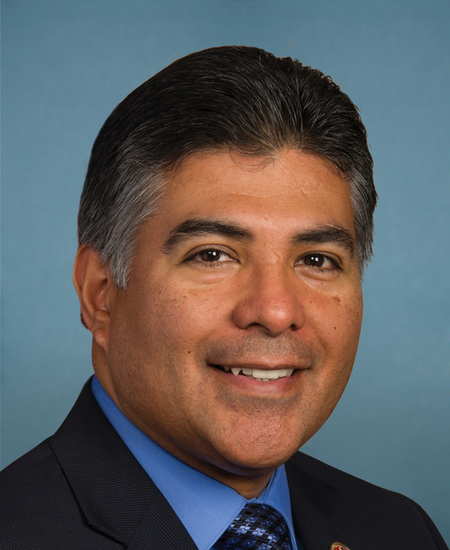
Rep. Tony Cárdenas
Sponsored bills
Protecting Renters from Evictions Act of 2021 This bill extends through December 31, 2021, the order issued by the Centers for Disease Control and Prevention titled Temporary Halt in Residential Evictions To Prevent the Further Spread of COVID–19 and published on September 4, 2020.
Protecting Our Widows and Widowers in Retirement (POWR) Act This bill increases Social Security benefits for widows or widowers in two-income households by establishing an alternative method to calculate survivors benefits based on combined household benefit amounts.
Evaluating Disparities and Outcomes of Telehealth During the COVID-19 Emergency Act of 2021 or the EDOT Act of 2021 This bill requires the Centers for Medicare & Medicaid Services (CMS) to report on the effects of changes that were made during the public health emergency relating to COVID-19 with respect to the provision or availability of telehealth services under Medicare and Medicaid. Among other information, the report must include (1) a summary of all services utilized by beneficiaries during the emergency period, including the number of telehealth visits and in-person visits; (2) any changes in utilization compared to prior periods; and (3) demographic characteristics of beneficiaries who utilized telehealth services. The CMS must submit the required reports after the end of the emergency period, as specified.
Seniors' Chronic Care Management Improvement Act of 2021 This bill eliminates cost-sharing for chronic care management services under Medicare.
Diversity and Inclusion at the Department of State Act This bill establishes a new position and requires other activities to promote diversity and inclusion in the Department of State. The bill creates the presidentially-appointed position of Chief Diversity and Inclusion Officer in the Office of the Deputy Secretary of State to, among other activities, develop a strategic plan to guide implementation of diversity and inclusion efforts and support State Department personnel from traditionally underrepresented groups. The officer reports directly to the Secretary of State. Additionally, the State Department must establish a Diversity and Inclusion Leadership Council to coordinate applicable strategic plans, initiatives, and policies. The bill also modifies merit selection processes for promotions, performance pay, and related matters to promote diversity and inclusion in the Foreign Service. Specifically, it adds factors (e.g., testimony from peers and subordinates or demonstrated support for diversity and inclusion) that may be considered in recommendations and rankings related to a Foreign Service officer's performance. The State Department must also establish a mentorship program for entry- and mid-level members of the Foreign Service and periodically offer a Senior Executive Service development program to members of the civil service in the top two pay grades. Senior Executive Service members serve as high-level managers within federal agencies. The bill requires the State Department to report on its diversity and inclusion efforts, as well as demographic information about members of boards that make personnel decisions and candidates for the Senior Executive Service.
Community-Based Gang Intervention Act This bill extends federal support for juvenile justice and delinquency prevention efforts to programs and activities involving community-based gang intervention. First, the bill authorizes community-based gang intervention grants for nonprofit community-based organizations to reduce and stop gang-related and gang-motivated violence and crime. Second, the bill modifies the qualifications of representatives of state advisory groups to specify that (1) a representative of a public agency includes an individual from a public agency concerned with community-based gang intervention, and (2) a representative of a nonprofit organization includes a person with a special focus on community-based gang intervention. Third, the bill adds, as a purpose area under the Incentive Youth Promise Grants for Local Delinquency Prevention Programs, providing community-based gang intervention and gang prevention activities to juveniles and their families.
Performing Artist Tax Parity Act of 2021 This bill modifies the tax deduction for the expenses of performing artists (including commissions paid to managers or agents) to provide for a phaseout of such deduction for taxpayers whose adjusted gross income exceeds $100,000 ($200,000 for joint return filers). The $100,000 phaseout threshold is adjusted for inflation annually for taxable years beginning after 2021.
Closing the Meal Gap Act of 202 1 This bill revises the requirements for calculating Supplemental Nutrition Assistance Program (SNAP) benefits. The bill increases the minimum SNAP benefit and requires benefits to be calculated using the value of a low-cost food plan. The Department of Agriculture (USDA) must determine the requirements for the low-cost food plan, which is the diet required to feed a family of four, consisting of a man and a woman 19-50 years of age, a child 6-8 years of age, and a child 9-11 years of age. USDA must (1) reevaluate and publish the market baskets of the plan by January 1, 2027, and every five years thereafter, based on current food prices, food composition data, consumption patterns, and dietary guidance; and (2) make adjustments to the plan to account for household size, changes in the cost of the diet, and the costs of food in specified areas. The bill modifies the requirements for calculating household income to determine SNAP eligibility by (1) authorizing a standard medical expense deduction for households containing an elderly or disabled member, and (2) eliminating the cap on the excess shelter expense deduction. The bill eliminates certain work requirements for SNAP. The requirements apply to able-bodied adults who are ages 18-49 and have no dependent children. The bill allows Puerto Rico, American Samoa, and the Northern Mariana Islands to participate in SNAP. Currently, the three territories receive block grants instead of participating in SNAP.
Food Chemical Reassessment Act of 2021 This bill establishes the Office of Food Safety Reassessment within the Center for Food Safety and Applied Nutrition and addresses related issues. The office must conduct reassessments of additives, food contact substances, and other related substances to ensure that such substances are safe. Specifically, every three years, the office must reassess the safety of at least 10 substances or classes of substances, including those that are generally recognized as safe for use in food. The office must issue final regulations relating to the safety of each reassessed substance. The bill also specifies 10 substances that the office must assess in its first review. The Food and Drug Administration (FDA) must reestablish the Food Advisory Committee to advise the FDA on issues related to the substance assessments required by this bill.