

Maddy summaryHRES 1235 is a non-binding resolution designating the third week of July as "Latino Conservation Week." It recognizes the Latino community's engagement with outdoor activities and conservation efforts, while highlighting statistics showing Latinos' strong support for protecting natural resources and public lands. The resolution does not create new policies or programs but formally supports this annual observance, which encourages community events like park cleanups and educational outings on public lands. It was introduced in the House on July 20, 2022, by Representatives Barragán, Espaillat, and others.
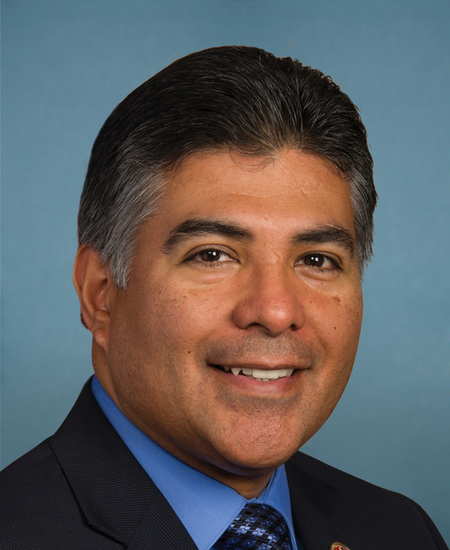
Rep. Tony Cárdenas
Sponsored bills
LGBTQI+ and Women's History Education Act of 2022 This bill directs the National Museum of American History of the Smithsonian Institution to carry out, among other things (1) the development and national dissemination of accurate, relevant, and accessible national resources for classrooms to administer LGBTQI+ and women's history education in an inclusive and intersectional approach; (2) the development, national dissemination, and implementation of principles of sound pedagogy for administering LGBTQI+ and women's history education; and (3) the development, operation, and expansion of a teacher fellowship program to cultivate and support leaders in LGBTQI+ and women's history education. In addition to the activities described in this bill, the museum shall develop and maintain on its website content designated for educators, students, and families to improve their awareness and understanding of LGBTQI+ and women's history education.
No Tax Breaks for Union Busting (NTBUB) Act This bill denies employers a tax deduction for any expenditures incurred for attempting to influence their employees with respect to labor organizations or labor organization activities, such as elections, labor disputes, and collective actions. The bill requires employers to report on their attempts to influence their employees with respect to labor organizations and their activities.
Serving Our LGBTQ Veterans Act This bill establishes a Center for Lesbian, Gay, Bisexual, Transgender, and Queer (LGBTQ) Veterans within the Department of Veterans Affairs (VA). Among other functions, the center must serve as principal adviser to the VA on the adoption and implementation of policies and programs affecting veterans who are LGBTQ.
Ensuring Women's Right to Reproductive Freedom Act This bill prohibits anyone acting under state law from interfering with a person's ability to access out-of-state abortion services. ( Abortion services includes the use of any drugs that are approved to terminate pregnancies and any health care services related to an abortion, whether or not provided at the same time or on the same day.) Specifically, the bill prohibits any person acting under state law from preventing, restricting, impeding, or retaliating against health care providers who provide legal abortion services to out-of-state residents, any person or entity who helps health care providers to provide such services, any person who travels to another state to obtain such services, any person or entity who helps another person travel to another state to obtain such services, or the movement in interstate commerce of drugs that are approved to terminate pregnancies. The Department of Justice may enforce this bill through civil actions; the bill also establishes a private right of action for violations.
Peggy Frank Memorial Act This bill requires, by three years after this bill's enactment, that any delivery vehicle owned or leased by the U.S. Postal Service (USPS) be modified to include a climate control unit. The USPS may not purchase or lease any delivery vehicle unless that vehicle has a climate control unit.
LGBTQ I+ Data Inclusion Act This bill addresses federal data collection of voluntary, self-disclosed information on sexual orientation, gender identity, and variations in sex characteristics. Specifically, the bill requires federal agencies that collect information through a survey for statistical purposes that includes demographic data (where subjects self-report information or a proxy provides information about the subject or responds for all persons in a household) to review existing data sets to determine which data sets do not include information about sexual orientation, gender identity, and variations in sex characteristics. Such agencies must assess needed changes in survey methods related to asking questions on such matters. Agencies that publish reports relying on survey demographic data must include information on sexual orientation, gender identity, and variations in sex characteristics. Agencies may waive this publication requirement on a case-by-case basis if the confidentiality of the information cannot be maintained or if adding such information to the survey would impair the agency's ability to preserve the utility, accuracy, or objectivity of the survey while also generating relevant evidence about the LGBTQI+ community. The Government Accountability Office must report to Congress on the implementation of this bill's requirements by agencies.
This resolution expresses support for the designation of Journeyman Lineworkers Recognition Day. (A journeyman lineworker is a person who builds and maintains electrical power systems.)
This bill allows changes to be made to medical devices without the need for supplemental applications or premarket notifications if the changes are made in accordance with a predetermined change control plan.
Climate Leadership and Environmental Action for our Nation’s Future Act or the CLEAN Future Act This bill creates requirements and incentives to reduce emissions of greenhouse gases. The bill establishes an interim goal to reduce greenhouse gas emissions to at least 50% below 2005 levels by 2030 as well as a national goal to achieve net-zero greenhouse gas emissions by 2050. Each federal agency must develop a plan to achieve the goals. Beginning in 2023, retail electricity suppliers must provide an increasing percentage of electricity that is generated without the release of greenhouse gases into the atmosphere (zero-emission electricity). By 2035, the suppliers must provide 100% zero-emission electricity or demonstrate alternative means of compliance. For example, the suppliers may buy credits under a trading program that allows entities to buy, sell, and trade credits to demonstrate compliance. The bill also establishes a variety of requirements, programs, and incentives to reduce or eliminate greenhouse gas emissions by modernizing the electric grid and supporting clean energy microgrids; increasing the use of renewable energy and advanced nuclear power technologies; increasing energy efficiency in buildings, homes, and appliances; supporting clean transportation, including electric vehicles and related charging infrastructure; issuing greenhouse gas standards for certain vehicles, engines, and aircraft; promoting manufacturing and industrial decarbonization, including through buy-clean programs; supporting environmental justice efforts; and reducing methane, plastics, and super pollutants.