

Maddy summaryThis bill extends federal welfare program eligibility to the Northern Mariana Islands (CNMI), granting its residents access to the same family assistance benefits previously available only to U.S. states. It authorizes an annual federal grant of $1.631 million to the CNMI for its family assistance program, requiring the territory to submit a 3-year plan outlining benefit delivery, avoiding duplicate aid, and promoting employment opportunities for recipients. The bill also adjusts matching grant formulas to include the CNMI ($2.131 million annually) and provides $5 million for initial child support program development. These changes directly affect CNMI residents and its government by integrating the territory into federal welfare administration under existing Social Security Act provisions.
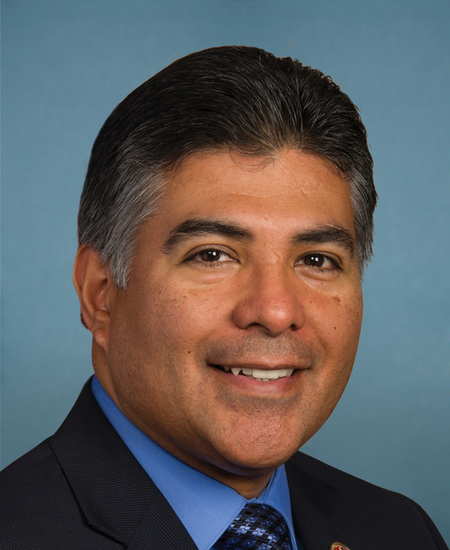
Rep. Tony Cárdenas
Sponsored bills
Maddy summaryHR 6400 extends the deadline for Medicare to provide certain payment increases to biosimilar biological products from 2027 to 2032. This affects Medicare beneficiaries who use these lower-cost biosimilar drugs and the pharmaceutical companies that manufacture them. The bill makes a technical change to an existing provision in the Social Security Act, simply updating the expiration date without altering the underlying payment structure.
Maddy summaryThe ARCC Act provides $100 million in federal funding to help apprentices and pre-apprentices in job training programs cover childcare costs. It authorizes competitive grants to 10 states, which must distribute monthly stipends of at least $500 per dependent child directly to eligible childcare providers on behalf of participants in these programs. The bill prioritizes individuals from historically underrepresented groups (based on race, ethnicity, or gender) and ensures stipends are tax-free while not affecting eligibility for other federal benefits. States must report on participation, program completion rates, and demographic data, with the Secretary later summarizing program impacts for Congress.
Maddy summaryHR 5819, the COMPLETE Care Act, incentivizes Medicare primary care providers to integrate behavioral health services by increasing payments for specific services (like mental health and substance use disorder support) during 2025-2027. Providers using designated HCPCS codes for integrated care would receive 125-175% of standard payment rates, with the percentage declining annually. The bill also requires these providers to report on integration quality measures and mandates technical assistance for practices adopting integrated models, funded through new appropriations for 2024-2027. It directly affects Medicare-participating primary care practices serving beneficiaries needing mental health or substance use services.
Maddy summaryThe MORE Act (HR 5601) would federally decriminalize cannabis by removing it from the Schedule I list of controlled substances under the Controlled Substances Act. It requires federal courts to expunge non-violent cannabis convictions and associated arrests, with a focus on addressing racial disparities in cannabis enforcement. The bill creates an Opportunity Trust Fund that would allocate 50% of funds to criminal justice programs, 20% to small business assistance for minority cannabis entrepreneurs, and 20% to community reinvestment grants for individuals impacted by the War on Drugs. It also prohibits federal agencies from denying benefits or security clearances based on cannabis use or past cannabis convictions, and establishes a Cannabis Justice Office to administer these programs.
Maddy summaryHR 5008, the HEAL for Immigrant Families Act of 2023, would remove immigration status as a barrier to health insurance coverage for immigrants in the United States. The bill would make all lawfully present immigrants, including those with Deferred Action for Childhood Arrivals (DACA) status, eligible for Medicaid, CHIP, and Affordable Care Act health insurance subsidies. It would eliminate state-level restrictions on Medicaid eligibility for immigrants and allow individuals with federally authorized presence to access premium tax credits and cost-sharing reductions. This legislation aims to address health coverage disparities that disproportionately affect immigrant communities, particularly Black, Indigenous, Latinx, and other communities of color.
Maddy summaryThis bill prevents Medicare from imposing stricter supervision requirements for outpatient physical therapy and occupational therapy than those established by state law, requiring Medicare to follow existing state regulations instead. It takes effect January 1, 2024, directly affecting Medicare-covered therapy services in all states. Additionally, it mandates a Government Accountability Office study by December 2024 to analyze how Medicare’s 15% payment differential for therapy assistants impacts access to care in rural and underserved areas. The study will examine this payment policy across all Medicare Part B settings.
Maddy summaryThe 9-8-8 Implementation Act of 2023 establishes a national mental health crisis response system centered around the 9-8-8 suicide prevention hotline. It provides $441 million for call center technology, staffing, and operations, and requires Medicare, Medicaid, and private health plans to cover crisis response services including mobile crisis teams and crisis stabilization facilities. The bill also mandates a national suicide prevention media campaign and creates protocols for 9-1-1 dispatchers to better respond to mental health crises. These provisions aim to improve access to mental health crisis care across the United States.
Maddy summaryThis bill, the Childhood Offenders Rehabilitation and Safety Act of 2023, changes federal juvenile justice procedures to better protect young people and promote rehabilitation. It raises the age for transferring juveniles to adult court from 15 to 16, requires courts to consider a youth's childhood trauma and involvement in the child welfare system when making transfer decisions, and limits murder liability for minors who weren't directly responsible for causing death. The bill also creates a new grant program to help states improve collaboration between child welfare and juvenile justice systems, particularly for vulnerable youth groups like children under 12 or over 15 excluded from juvenile proceedings, child survivors of commercial sexual exploitation, and youth in both foster care and juvenile justice systems. Additionally, it mandates annual federal statistics on children in the justice system to track demographics, sentencing, and other key data points.
Maddy summaryThe Social Security 2100 Act would significantly enhance Social Security benefits for millions of Americans by increasing monthly payments for retirees, disabled workers, widows/widowers, and children. Key provisions include raising the minimum benefit for long-term low earners, improving cost-of-living adjustments using a more accurate index, eliminating the 5-month waiting period for disability benefits, and extending child benefits to age 26. The bill also changes how Social Security taxes are calculated by applying them to income above $400,000 and establishes a unified Social Security Trust Fund to manage program finances. Most provisions would apply to benefits payable from 2025 through 2034, affecting all current and future Social Security beneficiaries.