

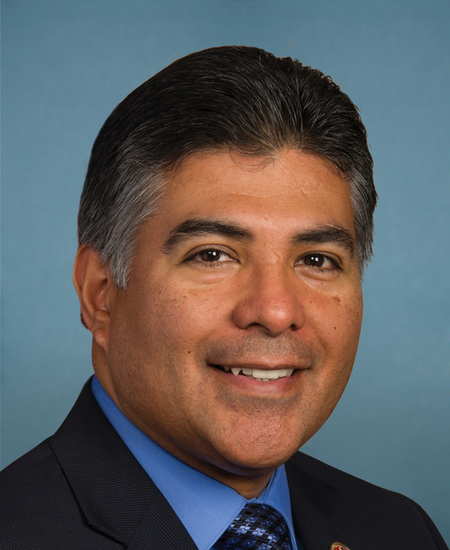
Photo of Tony Cárdenas
D United States House · District 29 · California

Rep. Tony Cárdenas

Compare
Total votes
2,168
all sessions
Attendance
97%
57 missed
Near the chamber average
With party
98%
of cast votes
Near the chamber average
Bipartisan score
1%
crosses aisle rarely
Near the chamber average
Sponsored
1,189
bills & resolutions
Near the chamber average
Committees
0
assignments
1,189 bills and resolutions

Sponsored bills

Total
1,189
Primary
64
Co-sponsor
1,125
This page
1,189
matching current filters
Primary HR 10419
In committee · United States House · Lead sponsor
CARE for Behavioral Health Act of 2024

Maddy summaryThe CARE for Behavioral Health Act of 2024 establishes a Medicare demonstration program to test crisis response services for eligible beneficiaries. It requires participating providers (like mobile teams, urgent care facilities, and short-term stabilization centers) to offer 24/7 services with medical staff, meet specific quality standards, and avoid terminating care until a patient is stabilized. The program pays providers 100% of the average monthly cost for these services using Medicare funds, aiming to reduce emergency department visits and improve behavioral health outcomes. The Secretary must evaluate the program after three years, reporting on its effectiveness, service quality, and impact on jail incarceration rates.

In committee Dec 17, 2024 0 co-sponsors
Co-sponsor HR 9001
In committee · United States House · Co-sponsor
Physician Led and Rural Access to Quality Care Act

Maddy summaryThis bill creates an exemption from certain physician self-referral rules for specific rural hospitals. It defines a "covered rural hospital" as one located more than 35 miles (or 15 miles in mountainous terrain) from another hospital or critical access hospital, primarily affecting rural facilities in remote areas. The bill also removes restrictions preventing physician-owned hospitals from expanding their services. These changes directly impact rural hospitals meeting the new distance criteria and physicians owning hospitals in those areas, while leaving most existing Medicare self-referral rules unchanged.

In committee Dec 17, 2024 1 co-sponsor
Co-sponsor HR 8796
In committee · United States House · Co-sponsor
Stop Comstock Act.

Maddy summaryHR 8796, the "Stop Comstock Act," removes outdated restrictions from federal law that previously banned the distribution of materials related to contraception and abortion as "obscene" or "indecent." The bill amends Title 18 and the Tariff Act by deleting references to "indecent," "immoral," "unlawful abortion," and "procuring abortion" from provisions governing obscene materials. It clarifies that the law only prohibits "obscene materials" in commerce, eliminating broad restrictions on reproductive health information. This directly affects internet platforms, healthcare providers, and individuals sharing reproductive health resources by removing legal barriers to their distribution.

In committee Dec 17, 2024 1 co-sponsor
Co-sponsor HR 8064
In committee · United States House · Co-sponsor
HEAR Act of 2024

Maddy summaryThe HEAR Act of 2024 would require Medicare to cover hearing rehabilitation services and hearing aids for eligible beneficiaries. It defines hearing rehabilitation to include assessments, counseling, and fitting of hearing aids, while defining hearing aids as FDA-approved devices (excluding over-the-counter options). Coverage applies to Medicare beneficiaries with hearing loss who have not received hearing aids in the past three years and whose hearing has deteriorated, as confirmed by a comprehensive assessment. The bill amends Medicare to include these services as standard benefits, removing prior exclusions that previously limited coverage. This policy change directly affects older adults and people with disabilities who rely on Medicare for hearing care.

In committee Dec 17, 2024 1 co-sponsor
Co-sponsor HR 7451
In committee · United States House · Co-sponsor
Youth Homelessness Guaranteed Income Pilot Program Act of 2024

Maddy summaryThe Youth Homelessness Guaranteed Income Pilot Program Act of 2024 would establish a 36-month pilot program providing monthly cash payments to up to 105,000 homeless youth and young adults aged 18-30. Participants would receive payments of at least $1,400 per month (or the adjusted fair market rent for a 2-bedroom home in their area) along with housing navigation services, financial coaching, and workforce development support. The program would prioritize individuals from historically marginalized communities and include a study to evaluate how direct cash payments affect housing stability, economic outcomes, and health for participants. The bill aims to address systemic barriers to stable housing faced by homeless youth, particularly those from Black, Indigenous, and other communities of color.

In committee Dec 17, 2024 1 co-sponsor
Co-sponsor HR 7224
Passed · United States House · Co-sponsor
To amend the Public Health Service Act to reauthorize the Stop, Observe, Ask, and Respond to Health and Wellness Training Program.

Maddy summaryHR 7224 extends funding for the SOAR to Health and Wellness Training Program by updating its authorization period in law from fiscal years 2020-2024 to 2025-2029. This procedural bill directly affects the existing program, which trains health professionals to identify and address patient health concerns through observation and communication. It does not create new requirements or change program operations, only renewing the legal funding timeframe.

Passed Dec 17, 2024 1 co-sponsor
Co-sponsor HR 7142
In committee · United States House · Co-sponsor
Alternatives to PAIN Act

Maddy summaryHR 7142 (Alternatives to PAIN Act) requires Medicare Part D plans to cover non-opioid pain management drugs with no deductible and at the lowest copay level starting in 2025. It defines "qualifying non-opioid drugs" as FDA-approved medications that don’t act on opioid receptors (like certain NSAIDs or nerve pain treatments), excluding opioids and schedule I-III drugs. The bill prohibits Medicare plans from forcing patients to try opioids first (step therapy) or requiring prior approval for these non-opioid options. It directly affects Medicare beneficiaries needing pain management, especially those seeking alternatives to opioids for post-surgical or acute pain. The policy change aims to improve access to non-addictive pain treatments while preserving doctors' authority to prescribe medically appropriate care.

In committee Dec 17, 2024 1 co-sponsor
Co-sponsor HR 6961
In committee · United States House · Co-sponsor
Nutrition CARE Act of 2024

Maddy summaryThe Nutrition CARE Act of 2024 expands Medicare Part B coverage to include medical nutrition therapy services for beneficiaries diagnosed with eating disorders. It directly affects Medicare beneficiaries with eating disorders - particularly an estimated 420,500-560,700 Black, Indigenous, and People of Color seniors - by requiring coverage for 13 hours of initial care (including assessment) and 4 hours annually for ongoing management. The bill amends Medicare law to specify that these services must be provided by registered dietitians or nutrition professionals following referrals from physicians or psychologists. Coverage applies to all eating disorders as defined by the DSM-5, addressing a gap where Medicare previously excluded this critical treatment component. This policy change aims to improve access to evidence-based care for a condition linked to high mortality and significant healthcare costs.

In committee Dec 17, 2024 1 co-sponsor
Co-sponsor HR 6780
In committee · United States House · Co-sponsor
Medically Tailored Home-Delivered Meals Demonstration Pilot Act

Maddy summaryHR 6780 establishes a 4-year Medicare demonstration program testing whether hospitals providing medically tailored home-delivered meals to specific patients improves health outcomes and reduces hospital readmissions. The program targets Medicare beneficiaries with diet-sensitive chronic conditions (like diabetes or heart failure) who are at high risk of readmission and meet specific discharge criteria, such as limited daily living activities. Selected hospitals must screen patients, provide at least two tailored meals daily for 12 weeks, and offer medical nutrition therapy, all without patient cost-sharing. The program requires hospitals to submit data for evaluation, with the goal of assessing impacts on hospital admissions, care costs, and patient satisfaction before reporting to Congress in 2027 and 2030.

In committee Dec 17, 2024 1 co-sponsor
Co-sponsor HR 6545
In committee · United States House · Co-sponsor
Physician Fee Schedule Update and Improvements Act

Maddy summaryThis bill updates Medicare's physician fee schedule to better align with current healthcare costs and support providers. It extends a key deadline for geographic payment adjustments from 2024 to 2025, increases the rate for payment adjustments from 1.25% to 3%, and extends incentive payments for doctors in alternative payment models (APMs) through 2026. For 2026, it imposes payment reductions (34% for 4-6 years in APMs, 67% for 7+ years) but allows exceptions if providers increased their financial risk compared to 2025. The bill also raises Medicare's budget neutrality threshold to $53 million in 2025 and requires regular updates to cost data (like staff wages and equipment prices) every five years. These changes directly affect Medicare-participating physicians, especially those in APMs, by altering payment calculations and incentives.

In committee Dec 17, 2024 1 co-sponsor
Showing 11 to 20 of 1,189 bills