

Maddy summaryHR 4942 extends and modifies the Conrad State 30 program, which allows states to sponsor foreign medical graduates to work in medically underserved areas in exchange for a commitment to practice for three years. The bill directly affects foreign medical graduates seeking to work in the U.S., states that sponsor them, and health facilities in underserved communities. Key provisions include creating mechanisms for physicians to change employers or states if they face issues with their current employment, adding requirements for employment agreements (including prohibitions on non-compete clauses), and establishing exceptions to the three-year work requirement under certain circumstances. The bill also creates a process for states to recapture waiver slots when physicians leave their employment and requires annual reporting on the program's usage. These changes aim to improve physician retention in underserved areas by providing more flexibility and protections for foreign medical graduates.
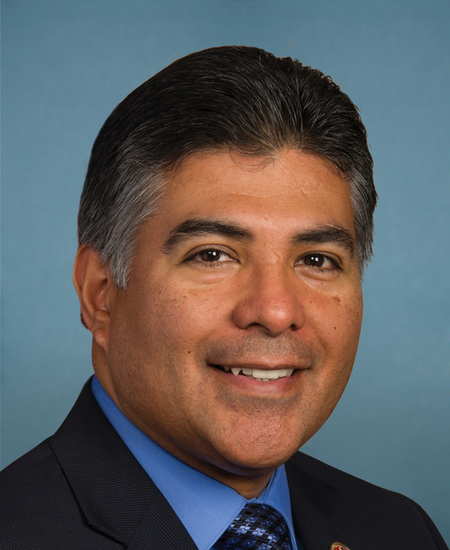
Rep. Tony Cárdenas
Sponsored bills
Maddy summaryHR 4893, the Scientific Integrity Act, requires federal agencies that fund, conduct, or oversee scientific research to adopt policies preventing political interference in science. The bill mandates these agencies to prohibit suppression or distortion of research findings, establish Scientific Integrity Officers to enforce policies, and implement training and reporting systems. It directly affects scientists and engineers employed by or contracted with covered agencies (like the EPA or NIH), ensuring their work remains free from political pressure. Key mechanisms include annual public reporting on misconduct complaints, whistleblower protections, and requiring scientific conclusions to be based on evidence, not ideology.
Maddy summaryHR 4889, the Raise the Wage Act of 2023, would gradually increase the federal minimum wage for most workers to $15.50 per hour by 2027, with specific annual targets: $9.50 starting in 2023, rising to $11.00 after one year, $12.50 after two years, and $15.50 after four years. It would also phase out the separate lower minimum wage for tipped employees (starting at $6.00/hour) by aligning their pay with the regular minimum wage by 2028, while requiring employers to let workers keep all tips. The bill includes similar phased increases for workers under 20 and transitions toward fairer wages for workers with disabilities under special certificates, which would sunset after 2028. Future annual increases after 2028 would tie the minimum wage to the median hourly wage of all workers.
Maddy summaryThe CHIPP Act (HR 4771) permanently extends federal funding for the Children's Health Insurance Program (CHIP), which provides health coverage to low-income children in families that earn too much to qualify for Medicaid but cannot afford private insurance. It removes previous expiration dates (like 2029) from CHIP funding provisions, ensuring continuous support for states administering the program. The bill also permanently extends related programs, including pediatric quality measures funding with automatic inflation adjustments, and modifies eligibility rules to allow states to expand coverage for children in higher-income households. This affects all 50 states that run CHIP programs and the millions of children and families who rely on this coverage.
Protecting Pandemic and All-Hazards Preparedness Act of 2023 or the Protecting PAHPA Act of 2023 This bill extends through FY2028 and modifies various programs and activities that support public health preparedness and response. The bill also addresses matters concerning shortages of drugs and medical devices and recalls of drugs. For example, the bill modifies activities of the Office of the Assistant Secretary for Preparedness and Response, the Centers for Disease Control and Prevention, and the Biomedical Advanced Research and Development Authority; grants to support preparedness and response activities of health departments, hospitals, and public health laboratories; programs to facilitate the response of volunteer health providers and other professionals during disasters and emergencies; efforts related to the management and operation of the Strategic National Stockpile; federal partnerships and initiatives for collaborating and coordinating during public health and other emergencies and with the development of medical countermeasures and diagnostic testing capacity; and requirements for collecting and reporting public health and health care data and information. Additionally, the bill makes various changes to address and mitigate shortages of drugs and devices, including by (1) setting out a process to safely extend the expiration date of certain medical countermeasures and other life-saving drugs, and (2) expanding requirements for drug manufacturers to notify the Food and Drug Administration concerning potential shortages. Further, the bill expands the authority of the Secretary of the Department of Health and Human Services to order the recall of controlled substances to cover all drugs.
Maddy summaryHR 4663, the Federal Mechanical Insulation Act, defines "mechanical insulation" (insulation around pipes and equipment in federal buildings) as an eligible energy efficiency measure. It requires federal agencies to include mechanical insulation in their required energy and water evaluations, specifically mandating that evaluations identify this insulation as a potential efficiency measure. The bill specifies that such insulation must meet minimum standards under Reference Standard 90.1 to qualify. This change directly affects federal building managers and contractors by formally recognizing mechanical insulation as a standard efficiency option in compliance with existing energy conservation laws.
Maddy summaryHRES 608 is a non-binding House resolution recognizing the value of diversity, equity, and inclusion (DEI) efforts at colleges and universities. It affirms that DEI initiatives help create supportive learning environments where all students, faculty, and staff thrive, and specifically supports programs like implicit bias training and cultural competence resources. The resolution emphasizes that DEI efforts strengthen institutions’ ability to recruit diverse talent and align with academic freedom principles. It also notes concerns about state-level efforts to restrict DEI programs and states that such restrictions threaten campus inclusivity. As a symbolic resolution, it does not create new laws or funding but expresses congressional support for DEI work in higher education.
Maddy summaryHR 4812, the Food for Thought Act of 2023, provides federal grants to eligible colleges and universities to offer free on-campus meals to low-income students. The bill targets institutions with high Pell Grant enrollment (at least 30% of undergrads), prioritizing community colleges, minority-serving institutions, and those in areas with high need. Participating schools must provide 1-10 free meals weekly to students facing food insecurity, with priority given to those with greatest financial need, and must report on student outcomes like retention and graduation rates. Grants cover meal costs, campus food pantries, and SNAP enrollment support, with funds allocated for 5 years and requiring detailed reporting on program impact.
Transportation for Reentry Act This bill requires certain Federal Transit Administration (FTA) grant recipients to provide free public transportation to returning individuals (i.e., individuals who have been incarcerated for at least one year in federal or state prison). Specifically, the bill requires recipients of FTA financial assistance under the Urbanized Area Formula Grants Program and the Formula Grants for Rural Areas Program to carry out a reentry service program. A grantee must provide reentry service for a one-year period beginning on the returning individual's release date. The bill also establishes certain program requirements for grantees (e.g., to create an enrollment system for returning individuals). The Department of Transportation (DOT) may reimburse a grantee for the cost of providing the reentry service, including for indirect costs (e.g., the costs to develop and implement the program and operational costs). DOT must issue such regulations as necessary to carry out these requirements. This includes regulations that (1) promote the coordination of providing technical assistance to grantees, (2) promote the marketing of the reentry service, and (3) clarify the treatment of a returning individual who resides in different locations. The bill also directs the Government Accountability Office to submit a report to Congress on the implementation of the reentry service program.
This resolution (1) recognizes the Latino community’s commitment to conservation and the importance of getting outdoors, and (2) supports the designation of Latino Conservation Week.