

Maddy summaryHCONRES 119 is a non-binding congressional resolution expressing that people wrongfully or unjustly deported after establishing long-term ties in the U.S. (such as DACA recipients, veterans, or those with expunged convictions) deserve a fair process to return. It proposes creating a centralized unit within the Department of Homeland Security (DHS), modeled after DHS’s existing ImmVets program for veterans, to review applications for re-entry. The resolution does not change immigration law but urges DHS to establish this dedicated process to address systemic barriers like lengthy delays, complex procedures, and limited access to legal help. It specifically targets individuals separated from families after years in the U.S., including those deported due to errors, protests, or outdated convictions. The resolution emphasizes repairing past injustices without altering current legal frameworks.
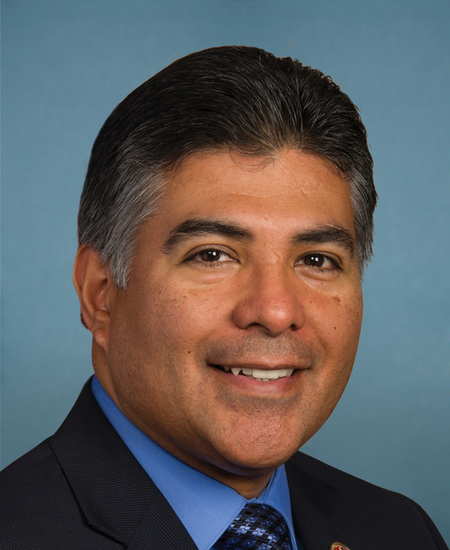
Rep. Tony Cárdenas
Sponsored bills
Maddy summaryHRES 1355 is a non-binding resolution supporting the designation of July 10 as Journeyman Lineworkers Recognition Day. It honors lineworkers who maintain electrical infrastructure under hazardous conditions, including during disasters, and commemorates Henry Miller, the first president of the International Brotherhood of Electrical Workers, who died on July 10, 1896, while troubleshooting an electrical outage. The resolution encourages public recognition of these workers' contributions but does not create new laws or policies.
Maddy summaryThis bill (HR 2365, Public Law 118-66) directs the U.S. Department of Health and Human Services (HHS) to establish the National Parkinson’s Project. It requires HHS to create and update a coordinated national plan for preventing, diagnosing, treating, and researching Parkinson’s disease and related disorders (including multiple system atrophy and progressive supranuclear palsy), while coordinating federal research and care efforts across agencies like the NIH, CDC, and VA. The law mandates annual progress assessments, an advisory council with patient advocates and diverse experts, and annual reports to Congress on federal Parkinson’s programs and recommendations for improvement. It affects federal agencies managing Parkinson’s-related programs and aims to improve care coordination and research efficiency for patients and caregivers, with the law sunsetting in 2035.
Maddy summaryHRES 1331 is a non-binding House resolution supporting Immigrant Heritage Month by recognizing immigrants' economic, cultural, and military contributions to the United States. It cites data showing immigrants contributed $1.9 trillion to the economy in 2021, made up 20% of entrepreneurs, and serve in critical roles like healthcare and agriculture. The resolution calls on elected officials, educators, and the executive branch to counter anti-immigrant rhetoric, educate the public about immigrant contributions, and protect immigrant communities. It does not create new legal obligations but aims to raise awareness and promote inclusion.
Maddy summaryThis bill requires the U.S. Postal Service (USPS) to install climate control units in all existing delivery vehicles within three years of enactment and mandates that all new delivery vehicles purchased or leased after enactment must include them. It directly affects USPS operations by changing vehicle specifications for temperature regulation during deliveries. The bill also requires the Postmaster General to submit annual progress reports to Congress until the modifications are complete. The policy change aims to improve vehicle conditions for postal workers and package safety, without specifying environmental or cost impacts.
Maddy summaryHR 8859, the Deafblind DATA Act, requires the Census Bureau to create and publish a new annual table starting in 2026 showing the number of people in the U.S. who reported both hearing and vision loss in the American Community Survey. This table will display data by state, including sex, race, age, and economic factors like employment and income, without revealing personal details. The bill directly addresses the lack of a centralized count for deafblind individuals, who currently aren't accurately represented in census data. By cross-referencing existing survey responses, the Act aims to provide a clearer national picture to better understand and serve this population's needs.
Maddy summaryThis bill creates a federal framework for "extreme risk protection orders" (ERPOs) that temporarily remove firearms from individuals who pose a risk of harming themselves or others. Family members or law enforcement officers can petition a federal court for a temporary order (up to 14 days) based on probable cause, followed by a hearing within 72 hours to determine if a longer-term order (up to 180 days) is warranted. The bill requires clear and convincing evidence of risk at the hearing and mandates respondents to surrender firearms to law enforcement within 48 hours. It also includes provisions for reporting, training law enforcement on ERPOs, and a federal grant program to support state ERPO implementation, without preempting state laws.
Maddy summaryThis resolution recognizes June 19, 2024, as Juneteenth Independence Day, acknowledging its historical significance as the anniversary of the end of slavery in the U.S. (specifically referencing Union soldiers' announcement in Galveston, Texas, on June 19, 1865). It does not create new policy but formally encourages all Americans to observe the day through ceremonies and educational activities. The resolution emphasizes Juneteenth's role in honoring African American freedom and its importance to U.S. history and cultural heritage. It follows the 2022 law that established Juneteenth as a federal holiday, focusing solely on symbolic recognition and annual observance.
Maddy summaryThis bill creates designated dog relief areas on the U.S. Capitol Grounds for visitors and staff with dogs. It requires dog owners to dispose of waste in sealed bags placed in trash receptacles, with fines of up to $100 for first violations and $500 for repeat offenses enforced by Capitol Police. Collected fines fund Capitol Grounds maintenance. The bill directly affects Capitol visitors, staff, and Capitol Police, and mandates that relief area designs follow ADA accessibility standards while preserving historic character.
Maddy summaryHR 8732, the Domestic Workers Bill of Rights Act, would establish new labor protections for domestic workers including nannies, housekeepers, and caregivers who work in private homes. The bill requires written agreements between employers and domestic employees, provides earned sick days, ensures fair scheduling practices, and prohibits unfair wage deductions for cash shortages or communications. It also creates a Domestic Employee Standards Board to recommend workplace standards and establishes a National Domestic Employee Hotline for assistance. The bill specifically targets domestic workers who have historically been excluded from labor protections under the Fair Labor Standards Act and Civil Rights Act, benefiting an estimated 2.2 million domestic workers in the U.S. who are disproportionately women of color and immigrants.