

Maddy summaryThe Equal Pay for Equal Work Act establishes a National Equal Pay Enforcement Task Force to strengthen enforcement of existing equal pay laws. The task force, made up of representatives from the Equal Employment Opportunity Commission, Department of Justice, Department of Labor, and Office of Personnel Management, will coordinate efforts to investigate pay disparities and develop solutions. It will create action plans to address enforcement gaps and improve public education about pay equity. This bill directly affects federal agencies and workers facing wage discrimination by enhancing how equal pay laws are enforced across government.
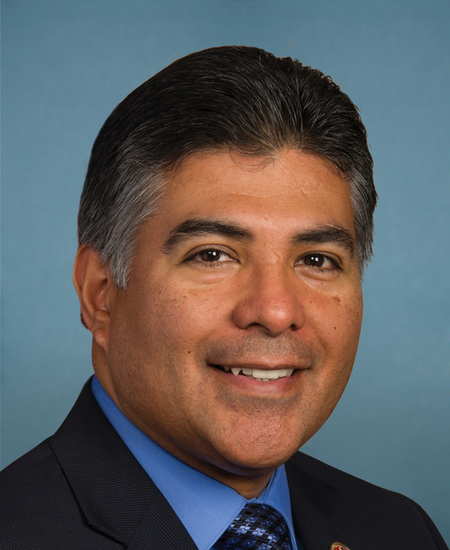
Rep. Tony Cárdenas
Sponsored bills
Maddy summaryHRES 1414 is a non-binding resolution expressing congressional support for "Warehouse Worker Recognition Week" (August 18-24, 2024), which celebrates workers in the logistics industry. It does not create new laws or funding but symbolically acknowledges warehouse workers’ contributions to the economy, noting they number over 9 million and face challenging conditions like extreme heat. The resolution encourages public awareness of their role in supply chains and commits to addressing workplace safety concerns. It directly affects warehouse workers by formally recognizing their labor, though it has no legal force.
Maddy summaryThis bill establishes a federal grant program to fund school sports access for K-12 students. It provides grants to elementary and secondary schools that comply with Title IX, allowing them to expand athletic programs, cover costs like equipment/uniforms, or reduce participation barriers - especially for girls and women in underrepresented sports. Schools receiving funds must certify they won’t discriminate based on gender identity or sexual orientation. The legislation directly affects public schools seeking to improve equity in youth sports, building on existing Title IX protections for transgender and LGBTQ+ students.
Maddy summaryThis bill creates a new program to provide emergency grants to farm worker organizations during covered disasters. It directly affects migrant and seasonal farm workers who lose income or cannot work due to events like hurricanes, wildfires, pandemics, or extreme weather. The grants fund immediate relief (including direct cash or aid), building community resilience, infrastructure support, and emergency services. Funds remain available until spent, and the program requires consultation with eligible organizations, defined as farm worker groups or qualified nonprofits with relevant experience.
Maddy summaryThis bill bans weighted sleep products for infants under 1 year old, including wearable blankets, sleep sacks, and swaddles that add weight for non-insulation purposes. It classifies these products as hazardous under existing consumer safety law, prohibiting their sale, manufacture, or import. The Consumer Product Safety Commission can define specific terms related to the ban, and the law takes effect 180 days after enactment. The policy directly affects infant product manufacturers, retailers, and caregivers who use such items.
Maddy summaryHR 9274, the SHAWL Act, establishes two new Smithsonian museums: the National Museum of the American Latino and the American Women’s History Museum. It authorizes both museums to be located within the National Mall’s "Reserve" area, overriding prior restrictions, and requires federal agencies managing potential sites to transfer jurisdiction to the Smithsonian after notifying congressional committees. The bill mandates that both museums accurately represent diverse cultures, histories, and viewpoints within Latino and women’s communities through exhibits and programs, requiring input from a broad range of community experts. It also requires the Smithsonian to submit biennial reports to Congress detailing compliance with these representation requirements.
Maddy summaryHR 9229, the MAIL Act, requires the U.S. Postal Service to provide free post office boxes to unhoused or housing unstable individuals without fees. Eligibility is based on proof of income below the poverty line or participation in specific federal assistance programs, including housing vouchers (like Section 8), Medicaid, or the Supplemental Nutrition Assistance Program (SNAP). The bill defines "unhoused or housing unstable" using existing federal standards for homelessness or risk of homelessness. It mandates the Postal Service to issue regulations within one year of enactment and report on implementation to Congress. This policy change directly affects low-income individuals facing housing insecurity by removing a financial barrier to secure mail access.
Maddy summaryHRES 1375 is a non-binding resolution recognizing extreme weather as a critical threat to children's health and well-being, emphasizing that children face unique vulnerabilities due to their developing bodies, higher exposure to pollutants, and heightened risks during events like heatwaves, wildfires, and poor air quality. It expresses Congress's view that solutions must be developed and deployed rapidly and equitably, with specific attention to children's physical and mental health needs. The resolution suggests concrete measures such as improved air filtration in schools, accessible public alerts for extreme heat, expanded cooling centers, and better infrastructure for child-friendly emergency spaces, though it does not create new laws or mandates.
Maddy summaryThe Baby Food Safety Act of 2024 establishes the first federal limits on toxic elements like lead, cadmium, mercury, and arsenic in infant and toddler food (food for children up to age 2). It requires manufacturers to implement testing programs for these contaminants, maintain detailed records of testing for at least two years, and conduct environmental monitoring for pathogens in production facilities. The bill sets specific deadlines for establishing these limits (lead and arsenic by December 2025, cadmium by April 2026, mercury by April 2028) and defines foods exceeding limits as adulterated. This legislation directly affects manufacturers of infant and toddler food, facilities processing certain fruit and vegetable purees, and food importers. The requirements for testing and recordkeeping will begin two years after the bill's enactment.
Maddy summaryHR 9011, the Ukraine Democracy Defense Lend-Lease Act of 2024, extends the U.S. government's authority to provide military equipment to Ukraine and Eastern European countries affected by Russia's invasion through fiscal year 2026 (previously ending in 2023). It requires the Secretary of Defense to submit a report within 90 days of using this authority, detailing the specific defense equipment provided and outlining a strategy for recovering and returning that equipment. The bill directly affects Ukraine's government and allied nations in Eastern Europe by enabling continued access to U.S. military aid. Key provisions include the extended funding period and mandatory transparency measures to track aid usage and future recovery.