

Maddy summaryThe STAGE Act establishes a federal grant program to support professional nonprofit theaters. Eligible theaters (nonprofits producing live performances with fair wages, 3+ years of programming, and financial need or community focus) can receive grants covering payroll, facility repairs (prioritizing accessibility), marketing, and workforce training. Grants max out at $16 million per entity or 20% of its prior year's expenses, with $1 billion annually allocated for 2024-2028. The bill also mandates a federal study on sustaining the nonprofit arts sector, including input from artists and community stakeholders.
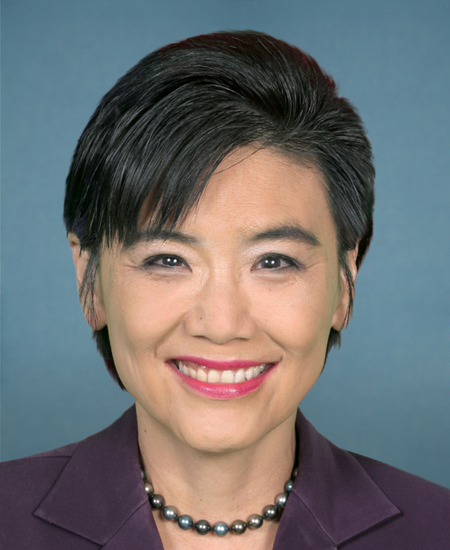
Rep. Judy Chu
Sponsored bills
Maddy summaryThe STAMP Act of 2024 bans state and local governments from taxing menstrual products. It prohibits taxes on items like pads, tampons, menstrual cups, discs, and period underwear that meet industry standards. The law directly affects consumers purchasing these products and state/local governments that previously imposed such taxes. It takes effect 120 days after enactment, removing tax burdens on menstrual products nationwide.
Maddy summaryHR 7862 directs federal agencies to annually report on converting unused government-owned buildings into affordable housing. It establishes two grant programs: a $1.75 million annual grant for exploring office-to-residential conversions, and a $250 million annual program for states and local governments to convert underutilized public buildings into rental housing. The state/local program requires converted housing to maintain affordability for 30 years, with at least 20% of units reserved for households earning ≤50% of local median income, or 40% for households ≤60% of median income. This bill directly affects federal agencies (through reporting) and state/local governments (through grant funding), focusing on repurposing vacant public property to expand affordable housing options.
Maddy summaryHRES 1110 is a symbolic resolution passed by the U.S. House of Representatives in March 2024 to commemorate March 2024 as National Women’s History Month. It formally supports the month’s goals, recognizes women and organizations advancing women’s history education, and highlights the intersectional contributions of Black, Hispanic, Asian, Native American, Pacific Islander, LGBTQ+, and disabled women throughout U.S. history. The resolution has no legal effect or policy changes - it serves solely as a ceremonial acknowledgment of historical milestones and ongoing advocacy for gender equality. It directly affects all Americans by affirming the significance of women’s historical contributions through official congressional recognition.
Maddy summaryHR 7849, the Disaster Resiliency and Coverage Act of 2024, establishes a federal grant program to help homeowners in high-risk disaster areas make their homes more resilient. The program provides up to $10,000 per household (adjusted annually for inflation) for specific qualifying mitigation activities, such as reinforcing roofs, installing flood barriers, or creating fire-resistant landscaping. Homeowners must have an adjusted gross income under $250,000 ($500,000 for joint filers) and the work must meet FEMA-established standards. States and tribal governments administer the program, with funds intended to incentivize insurance companies to offer or increase coverage in vulnerable areas.
Maddy summaryThe Pink Tax Repeal Act prohibits businesses from charging different prices for substantially similar consumer products or services based on the gender of the intended users. It defines "substantially similar" as having no meaningful differences in materials, use, or design - meaning color alone (e.g., pink vs. blue packaging) cannot justify price differences. The Federal Trade Commission would enforce this under existing laws, and state attorneys general could also sue companies for violations on behalf of residents. This directly affects consumers who pay higher prices for identical or nearly identical items marketed to a specific gender, such as women’s razors or clothing.
Maddy summaryHR 7812, the National Parent and Youth Helpline Act, creates a federal grant program to establish a 24/7 national toll-free helpline for parents, caregivers, and youth facing personal challenges like emotional distress, substance abuse, or educational concerns. The grant, worth $20 million annually from 2025-2030, will fund one nonprofit to operate the helpline (via phone, text, and chat), host weekly evidence-based support groups, and maintain a resource website. It specifically prioritizes serving diverse groups, including LGBTQ+ individuals, and requires annual performance reports to the Secretary and a congressional report after three years. The bill directly affects millions of parents and youth by providing accessible, trauma-informed support to strengthen families and prevent issues like child maltreatment.
Maddy summaryThe AADAPT Act reauthorizes and expands the Project ECHO grant program to specifically address Alzheimer's disease and dementia care. It provides $1 million annually (2026-2031) for grants to eligible health care entities - such as rural clinics, tribal organizations, or community health centers - to develop online training programs for primary care providers working in underserved areas (including rural, frontier, or medically underserved communities). These programs aim to improve provider retention, increase early diagnosis of dementia, and enhance quality care. The bill requires grantees to report on outcomes and ensures funding supplements, rather than replaces, existing resources.
Maddy summaryThis bill would provide federal grants to public housing agencies to modernize public housing through energy efficiency upgrades, infrastructure improvements, and renewable energy systems. It requires all public housing to become "zero-carbon homes" that produce enough renewable energy to meet their own consumption within 10 years. The bill includes specific requirements for workforce development, hiring from low- and very low-income communities (40% in year 1, 50% in year 2, 90% after that), and contracting with resident-owned businesses (20% in year 1, 30% in year 2, 50% after that). It also mandates resident and community engagement in planning, and requires public housing agencies to meet specific energy efficiency and water quality standards. The bill directly affects all public housing agencies managing housing for low- and very low-income residents across the United States, including tribal housing entities.
Maddy summaryHR 7790, the Women and Underrepresented Minorities in STEM Booster Act of 2024, authorizes $15 million annually (2024-2028) through the National Science Foundation to fund grants for programs increasing participation of women, underrepresented racial/ethnic groups (including Black, Hispanic, Native American, and specific Asian subgroups), LGBTQ+ individuals, and people with disabilities in STEM fields. The grants support concrete activities like mentoring programs, STEM internships, K-12 outreach, and faculty recruitment initiatives designed to address documented disparities in STEM degree completion and career retention. The bill directly affects eligible institutions (e.g., universities, nonprofits) that apply for competitive funding to implement these targeted programs. It focuses on measurable policy changes through federal funding for evidence-based retention strategies, not on outcome predictions.