

Maddy summaryHR 8141, the Azerbaijan Sanctions Review Act of 2024, requires the President to review whether 44 specific Azerbaijani officials meet criteria for U.S. sanctions under the Global Magnitsky Act and related laws. The bill targets military commanders, judges, prosecutors, and security officials linked to alleged human rights violations, including torture of prisoners of war and suppression of political dissent. Within 180 days of enactment, the President must submit a detailed determination to Congress on whether sanctions should be imposed on these individuals. The review is based on findings of Azerbaijan’s alleged war crimes, arbitrary detentions, and failures to uphold international legal obligations. This bill focuses on procedural review, not immediate sanctions.
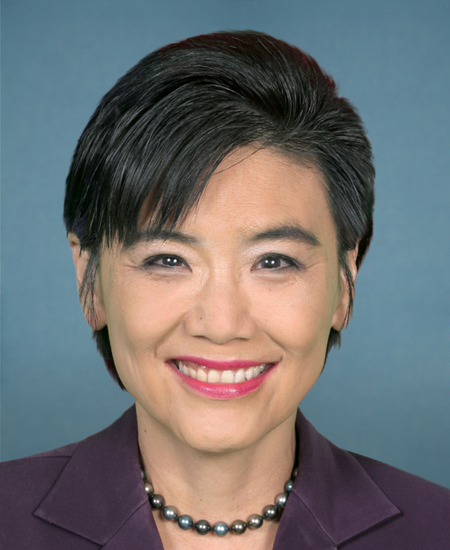
Rep. Judy Chu
Sponsored bills
Maddy summaryHR 8061, the Crime Victims Fund Stabilization Act of 2024, ensures stable funding for the Crime Victims Fund by directing certain False Claims Act collections into it from 2024 through 2029. Specifically, it adds a provision requiring that amounts collected under the False Claims Act (excluding whistleblower rewards and government reimbursement for damages) be deposited into the fund during this period. This directly affects crime victims who rely on the fund for services like counseling and emergency aid, as it prevents potential shortfalls in funding. The bill makes a concrete policy change by redirecting specific federal civil penalties into the fund, rather than altering the fund's existing purposes or eligibility rules.
Maddy summaryHRES 1151 is a symbolic resolution recognizing the Interstate Compact on Educational Opportunity for Military Children and designating April 2024 as "Month of the Military Child." It directly affects military-connected children (over 1.5 million in the U.S.) who face frequent school transitions due to parental service. The resolution expresses congressional support for the Compact - which helps streamline educational transitions for military students - and encourages nationwide recognition through events like "Purple Up!" to honor these children. As a non-binding resolution, it does not create new policies or funding but aims to raise awareness of military-connected students' educational challenges.
Maddy summaryThe Love Lives On Act of 2023 modifies benefits for surviving spouses of military veterans and service members. It removes an expiration date on the Marine Gunnery Sergeant John David Fry Scholarship for surviving spouses, ensures remarriage doesn't automatically end eligibility for veterans' dependency and indemnity compensation, and expands access to commissary and exchange privileges for remarried surviving spouses. The bill also clarifies that remarried widows or widowers whose subsequent marriage ended (due to death, divorce, or annulment) can still be considered dependents under TRICARE. These changes directly affect surviving spouses of veterans and military members who have remarried or are considering remarriage, providing more consistent benefits regardless of marital status.
Maddy summaryThe BUILD for Veterans Act of 2023 requires the Department of Veterans Affairs to improve management of its physical infrastructure, including buildings, land, and related systems used to deliver services to veterans. The bill establishes specific requirements for better staffing, performance metrics, and strategic planning for capital asset management, with deadlines for reports to Congress. It mandates a comprehensive review of climate resilience for VA facilities and requires centralized management of asset disposal and reuse. These provisions aim to enhance the efficiency and effectiveness of VA's infrastructure management to better serve veterans.
Maddy summaryHR 1083, the Caring for Survivors Act of 2023, increases financial support for surviving spouses of veterans. It amends Title 38 to raise dependency and indemnity compensation from a fixed $1,154 to 55% of the monthly compensation rate under section 1114(j), effective six months after enactment. The bill also modifies eligibility for survivors of veterans who died before 1993, ensuring they receive the greater of their current benefit or the new calculation. Additionally, it reduces the required continuous service rating period for survivors from 10 years to five years when a veteran was totally disabled at death. These changes directly affect surviving spouses, particularly those with veterans who died prior to 1993.
Maddy summaryThis bill creates a new federal tax credit for family child care providers who operate from their primary residence and hold state licenses. It allows qualifying providers to claim up to $5,000 in startup costs per year, including licensing fees, supplies, insurance, safety equipment, furniture, and required home renovations. The credit applies only once per provider (no repeat claims) and expires after 7 years. It directly benefits small-scale, licensed family child care providers serving at least two non-family children, aiming to reduce their initial business setup costs.
Maddy summaryHR 7990 increases federal funding for large-scale water recycling projects by raising the annual grant authorization from $450 million to $1 billion under the Infrastructure Investment and Jobs Act, directly affecting water recycling projects that qualify for these grants. The bill also increases another funding cap from $500 million to $1 billion and extends the deadline for project applications from 5 to 6 years after the bill’s enactment. These changes aim to expand investment in infrastructure that treats and reuses wastewater for non-potable purposes like irrigation or industrial use. The policy change provides more financial resources and flexibility for communities and utilities to develop water recycling systems.
Maddy summaryHRES 1135 is a non-binding resolution supporting the "Rise Up for LGBTQI+ Youth in Schools" initiative. It calls for communities to demand equal educational opportunities, civil rights protections, and an end to exclusion for LGBTQI+ students in K-12 schools, particularly transgender, nonbinary, Black, Indigenous, and disabled youth. The resolution encourages states and school districts to adopt policies prohibiting bias-based bullying, harassment, and erasure - such as inclusive sports participation, bathroom access, and curriculum inclusion - without creating new legal requirements. It references growing state-level restrictions targeting LGBTQI+ students, including sports bans and curriculum censorship, as context for the call to action. The resolution itself does not enact new laws but formally recognizes efforts to foster safer, affirming school environments.
Maddy summaryHRES 1127 is a symbolic House resolution commemorating the 45th anniversary of the Taiwan Relations Act (TRA) and reaffirming U.S. policy toward Taiwan. It does not create new law but formally reiterates the U.S. commitment to Taiwan under the TRA framework, including regular defense transfers to support Taiwan's self-defense and advocacy for Taiwan's meaningful participation in international organizations. The resolution highlights longstanding U.S.-Taiwan cooperation on trade, security, education, and global challenges like public health and cybersecurity. It specifically calls on the Secretary of State to advance Taiwan's international engagement and supports existing programs like the Taiwan Fellowship Program and the American Institute in Taiwan. As a procedural resolution, it expresses congressional support for current policy without altering legal obligations.