

Maddy summaryThis bill permanently removes a 2026 expiration date for a tax exclusion allowing employers to pay employees' student loans through educational assistance programs without those payments being counted as taxable income. It directly affects employees who receive employer-sponsored student loan repayment assistance and employers offering such programs. The key provision amends the Internal Revenue Code to make this tax exclusion permanent, applying to all future payments made after the bill's enactment. This change simplifies the tax treatment for both employers and employees participating in these student loan repayment programs.
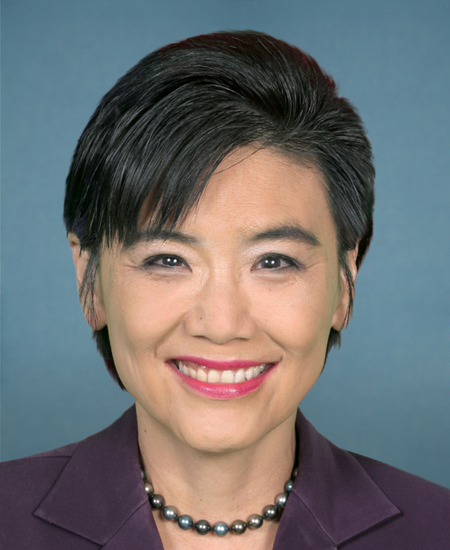
Rep. Judy Chu
Sponsored bills
Maddy summaryThe LET'S Protect Workers Act increases civil penalties for employers who violate labor and workplace safety laws. It significantly raises fines for child labor violations (up to $700,000 for serious injuries/deaths), wage and hour violations (up to $50,000 per violation for repeated/willful violations), and workplace safety violations (up to $800,000). The bill also increases penalties for farmworker protections (to $30,000), mine safety violations, and unfair labor practices (up to $100,000). New provisions require employers to pay penalties, with withdrawal orders for mines that fail to pay fines. These changes apply to violations occurring on or after January 1, 2025, with some provisions taking effect immediately.
Maddy summaryH.J. Res. 193 proposes a constitutional amendment to eliminate legal immunity for federal officials, including the President, from criminal prosecution for actions taken while performing official duties. It also prohibits the President from granting a pardon to themselves. The amendment would apply to all federal officers (such as the President, Vice President, and members of Congress) except for Congress members acting in their legislative role as defined in the Constitution. If ratified by 38 states, this change would become part of the U.S. Constitution, requiring no further congressional action.
Maddy summaryThis resolution designates September 2024 as "PCOS Awareness Month" to highlight polycystic ovary syndrome (PCOS), a hormonal condition affecting an estimated 5-10 million U.S. women and girls. It recognizes PCOS as a serious health issue linked to infertility, type 2 diabetes, heart disease, mental health challenges, and other related conditions. The resolution urges increased public and medical education about PCOS, improved diagnosis, and research into better treatments, without creating new laws or funding. It directly supports women and girls living with PCOS by promoting awareness of its wide-ranging health impacts.
Maddy summaryHR 9104, the Access to Birth Control Act, requires pharmacies that normally stock contraception to provide birth control or related medications without delay if in stock, or immediately offer alternatives like referrals to other pharmacies or expedited orders if unavailable. It prohibits pharmacists from intimidating customers, misrepresenting availability, breaching confidentiality, or refusing to fill valid prescriptions for birth control. Pharmacies violating these rules face civil penalties up to $1,000 per day or private lawsuits. The law specifically applies to pharmacies that routinely carry contraception and excludes cases where a valid prescription is missing or payment cannot be made. It aims to address documented refusals to dispense birth control, particularly following the Dobbs decision.
Maddy summaryHR 6362, the Protecting Benefits for Disabled Veterans Act of 2023, allows the VA to assign a total disability rating to veterans with service-connected disabilities who cannot work due to those conditions. It specifies that veterans qualify if they have one disability rated at least 60% or multiple disabilities totaling 70% (with at least one at 40%), and the VA must consider certain disability combinations as a single condition. The bill prohibits the VA from considering a veteran’s age or Social Security benefits when making this determination, and clarifies that veterans maintaining marginal employment (below the poverty threshold) may still qualify for total disability. This change directly affects disabled veterans seeking full benefits by providing clearer pathways to qualify for total disability ratings based on employment impact.
Maddy summaryHR 9038, the FAIR Fleets Act, requires the U.S. Postal Service to conduct ongoing assessments of its vehicle distribution and develop a strategic plan to increase fleet availability in underserved areas using fuel-efficient, modern vehicles. The bill mandates an annual report to Congress by December 31 each year, detailing fleet distribution by state, steps taken to improve service in underserved areas, and recommendations for further action. Underserved areas are specifically defined to include rural regions, postal regions with aging vehicles, counties with significant delivery delays, high-poverty urban neighborhoods, and tribal lands. The law aims to improve fleet modernization and equitable distribution across all U.S. regions.
Maddy summaryThe Revitalizing Downtowns and Main Streets Act creates a 20% tax credit for converting non-residential buildings into affordable housing. To qualify, buildings must be at least 20 years old and nonresidential, with conversion costs exceeding 50% of the building's adjusted basis or $100,000. The converted housing must be rent-restricted for 30 years for residents earning 80% or less of area median income (60% in certain designated areas), with a $12 billion national credit limit. Special provisions apply for economically distressed areas and rural historic preservation projects, primarily affecting developers who convert vacant commercial buildings in downtown or main street areas into affordable housing.
Maddy summaryHR 9021, the "No Tax Breaks for Drug Ads Act," prohibits pharmaceutical companies from deducting expenses related to direct-to-consumer advertising of prescription drugs when calculating their federal taxable income. This applies specifically to ads targeting the general public through media like TV, radio, print, social media, and digital platforms, but excludes ads directed at healthcare professionals. The bill directly affects drug manufacturers that spend on such consumer-facing advertising campaigns. The provision takes effect for expenses paid after the bill's enactment date.
Maddy summaryHCONRES 118 is a symbolic congressional resolution recognizing the wage disparity faced by Black women in the U.S. It specifically highlights that Black women earn 69 cents for every dollar earned by White, non-Hispanic men, as noted in Census Bureau data. The resolution marks July 9, 2024, as Black Women’s Equal Pay Day to symbolize how long into 2024 Black women must work to earn what White men earned in 2023. It does not create new laws or policies but formally acknowledges this disparity and reaffirms congressional support for equal pay for equal work.