

Maddy summaryThe Polluters Pay Climate Fund Act of 2024 would require major fossil fuel companies that emitted more than 1 billion metric tons of carbon dioxide between 2000 and 2022 to pay a tax based on their historical emissions. The tax revenue would fund a new Climate Fund that would provide $15 billion annually for disaster response and resilience programs through FEMA, $6 billion for clean air initiatives, and mandate 40% of funds support environmental justice communities. The fund would finance climate resilience projects including climate-resilient infrastructure, ecosystem restoration, and support for vulnerable communities affected by climate change. Companies could pay the tax over nine years, and the bill explicitly states it does not affect existing legal claims against polluters for climate-related damages.
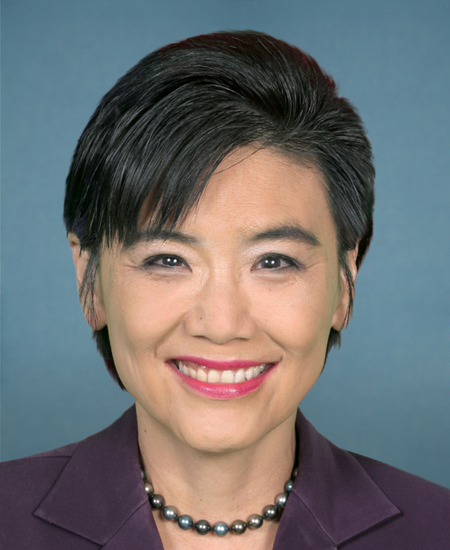
Rep. Judy Chu
Sponsored bills
Maddy summaryThis bill creates a federal grant program to fund supportive services for residents in affordable housing properties. It provides 5-year competitive grants to non-profit organizations or tribes managing properties assisted by programs like the low-income housing tax credit or Section 8 housing. Grantees must use at least 25% of funds for staff salaries/benefits and can cover services including health access, education, financial literacy, aging-in-place support, and disability services - though residents cannot be required to accept these services. The program targets residents of qualifying affordable housing properties, focusing on improving health, economic stability, and community integration.
Maddy summaryHRES 1437 is a ceremonial resolution designating the week beginning September 9, 2024, as "National Hispanic-Serving Institutions Week." It recognizes Hispanic-serving institutions (HSIs) - colleges and universities with at least 25% Hispanic enrollment - and their role in educating low-income students, advancing economic mobility, and serving 31.7% of all undergraduate students. The resolution calls for the public and organizations to observe this week with ceremonies and activities during Hispanic Heritage Month. It does not create new laws, allocate funding, or change existing policies - it is purely a symbolic gesture of recognition.
Maddy summaryThis bill designates the U.S. Postal Service facility at 130 South Patterson Avenue in Santa Barbara, California, as the "Brigadier General Frederick R. Lopez Post Office Building." It updates all official U.S. government references to the building to reflect this new name, with no policy changes or funding impacts.
Maddy summaryHRES 1432 designates September 10, 2024, as "National Firearm Suicide Prevention Day" to raise public awareness about firearm suicides and promote safe storage practices. The resolution encourages healthcare professionals to discuss safe firearm storage with patients and supports the day's goals of reducing firearm suicides through education. It directly affects the general public and healthcare providers by highlighting evidence that safe storage lowers suicide risk, referencing statistics like 54.6% of U.S. suicides in 2022 involving firearms. The bill is symbolic, with no new legal requirements, and aligns with existing awareness efforts like Firearm Suicide Prevention Day.
Maddy summaryThe Protecting Communities from Plastics Act of 2024 establishes new environmental standards for plastic production facilities, including a temporary moratorium on new permits for covered facilities during a "temporary pause period." It requires environmental justice assessments for permits affecting fenceline communities (low-income communities and communities of color near plastic facilities) and sets specific targets to reduce single-use plastics by 25% and increase reusable/refillable packaging by 30% by 2034. The bill mandates comprehensive reporting on plastic production and distribution, including a national inventory of plastic manufacturing, and requires continuous air and water quality monitoring near plastic facilities. This legislation directly affects plastic producers, manufacturers, and communities located near plastic production facilities, particularly those disproportionately impacted by plastic pollution.
Maddy summaryThis resolution symbolically designates March 2024 as Endometriosis Awareness Month to highlight a condition affecting approximately 1 in 10 women of reproductive age. It encourages public awareness and education about endometriosis, which causes chronic pain, long diagnosis delays (3-11 years), and significant healthcare costs ($13,000+ annually per patient). The resolution has no funding or policy changes; it is purely a symbolic gesture urging the public to observe the month through educational activities and recognizing the need for more research and culturally competent care. It directly affects women living with endometriosis and their healthcare experiences.
Maddy summaryThis bill creates a new grant program to fund climate-focused projects on agricultural land. It provides up to $150 million annually (2023-2031) to eligible groups like state agricultural departments, tribal governments, farmer cooperatives, and conservation districts. These groups can use funds to develop or implement projects that increase carbon sequestration, reduce emissions, or improve farm resilience to extreme weather - prioritizing historically underserved farmers, tribal knowledge, and practices like soil health management. Grants require projects to align with USDA climate plans and include performance measures to track outcomes.
Maddy summaryThe Equal Pay for Equal Work Act establishes a National Equal Pay Enforcement Task Force to strengthen enforcement of existing equal pay laws. The task force, made up of representatives from the Equal Employment Opportunity Commission, Department of Justice, Department of Labor, and Office of Personnel Management, will coordinate efforts to investigate pay disparities and develop solutions. It will create action plans to address enforcement gaps and improve public education about pay equity. This bill directly affects federal agencies and workers facing wage discrimination by enhancing how equal pay laws are enforced across government.
Maddy summaryHR 9337, the "Don’t STEAL Act," requires employers to pay employees the full wage rate specified in their employment contracts (including collective bargaining agreements) if it exceeds the minimum rate under the Fair Labor Standards Act (FLSA). This directly affects workers engaged in commerce or production for commerce, ensuring they receive agreed-upon higher wages. The bill adds criminal penalties for willful wage theft, including fines and up to 5 years in prison for violations exceeding $1,000, with penalties based on severity and business size. It also directs fines collected from violations to fund the Department of Labor’s Wage and Hour Division enforcement efforts. The law applies to unpaid wages or overtime violations occurring 90 days after enactment.