

Maddy summaryThe VA Employee Fairness Act of 2024 modifies collective bargaining rules for employees of the Veterans Health Administration (VHA). It removes existing subsections (b), (c), and (d) from the law governing VHA employee bargaining and renumbers the remaining provision. This change streamlines the collective bargaining framework but does not alter the Secretary of Veterans Affairs' existing authorities over incentive pay and expedited hiring. The bill directly affects VHA employees by changing how their collective bargaining rights are structured under federal law. The law remains neutral, focusing solely on procedural adjustments to the existing bargaining framework.
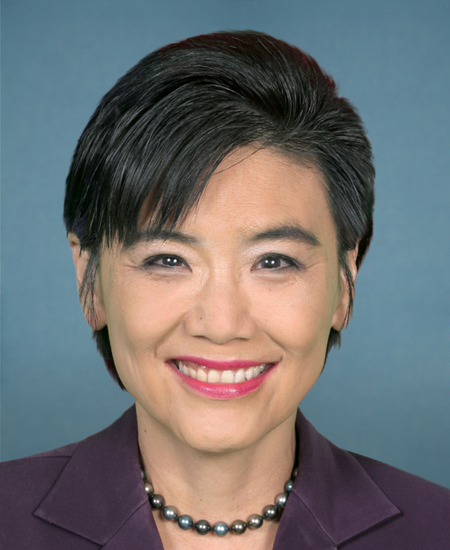
Rep. Judy Chu
Sponsored bills
Maddy summaryHouse Resolution 1532 is a symbolic resolution expressing the U.S. House of Representatives' support for the United Nations-designated World Space Week, scheduled for October 4-10, 2024. It encourages schools, communities, and the public to participate in events celebrating space science and technology, highlighting the 2024 theme "Space and Climate Change." The resolution recognizes space technology's role in monitoring environmental shifts and promoting climate resilience, while urging K-12 students and citizens to engage with space-related educational activities. As a non-binding resolution, it does not create new laws or directly affect policies.
Maddy summaryHRES 1525 is a non-binding resolution calling for the U.S. government to address policies contributing to forced migration and displacement. It urges reforms such as overhauling economic sanctions, investing in developing countries to reduce poverty and instability, and reforming trade agreements to protect workers. The resolution also calls for expanding legal immigration pathways, improving asylum processing, and creating a roadmap to citizenship for immigrants living in the U.S. As a resolution, it does not create new laws but sets policy priorities for future legislative action.
Maddy summaryThe Long COVID Research Moonshot Act establishes a dedicated National Institutes of Health research program to accelerate scientific understanding and treatment development for Long COVID, directly affecting millions of people experiencing persistent health issues after COVID-19 infection. The bill creates a Long COVID Research Program with a specific Director to coordinate all NIH research, develop an annual research plan, and establish a patient-informed advisory board with representation from both patients and scientific experts. It authorizes $1 billion annually for 10 years (2025-2034) to fund research on Long COVID's causes, prevention, detection, management, and treatment, including a clinical trial registry and public health surveillance through the CDC. The legislation also includes provisions for public education campaigns, provider training, and a national network of multidisciplinary Long COVID clinics to improve care access, particularly for underserved populations. This comprehensive approach aims to address Long COVID through coordinated research, surveillance, and clinical care improvements.
Maddy summaryThis bill establishes procedures for handling requests to dismiss criminal prosecutions against the President. It requires the Attorney General to submit a sworn statement confirming whether a dismissal request came from the President or their direction, and mandates that courts consider evidence of bad faith before granting such dismissals. A three-judge court must hear these cases, and the Justice Department's Inspector General must report to Congress if they find a dismissal was requested by the President. The bill directly affects the President, Attorney General, courts, and Justice Department oversight mechanisms during presidential criminal cases.
Maddy summaryThe Child Safety and Well-Being Act of 2024 (HR 9875) establishes a Children's Commission to represent children's interests in federal policymaking. The Commission, composed of 15 diverse members including experts, youth with lived experience, and representatives from various backgrounds, will advise Congress and federal agencies on policies affecting children, particularly marginalized youth defined as those experiencing systemic barriers. The Commission will review agency actions, receive complaints about how children are treated, and publish annual reports with recommendations to improve child well-being policies. It is authorized $5 million annually for operations and must study the feasibility of requiring agencies to create "child impact statements" assessing how policies affect children.
Maddy summaryHCONRES 131 is a symbolic resolution recognizing the wage gap between Latina women and White, non-Hispanic men in the U.S. workforce. It highlights that Latina women working full-time earn 58 cents for every dollar earned by White, non-Hispanic men, with an average lifetime earnings loss of over $1.2 million. The resolution designates October 3, 2024, as "Latina Equal Pay Day" to draw attention to this disparity, citing Bureau of Census data showing the gap has persisted for decades. It does not create new laws or policies but formally acknowledges the economic impact on Latina women and their families.
Maddy summaryHRES 1514 is a symbolic House resolution recognizing that cancer patients should have the right to access care focused on prevention, early diagnosis, treatment, rehabilitation, and affordability. It does not create new laws or funding but formally states the House's support for five key care principles: access to advanced treatments at specialized centers, diagnostic testing, multidisciplinary care, and culturally appropriate information. This resolution directly addresses cancer patients and their families, highlighting disparities in care access. As a non-binding resolution, it has no legal effect but aims to raise awareness of cancer care challenges.
Maddy summaryHRES 1504 designates October 2024 as Filipino American History Month to celebrate the history, culture, and contributions of Filipino Americans to the United States. The resolution urges the American public to observe the month through educational programs and activities highlighting the community's early settlements, military service (including World War II veterans' contributions), and roles in healthcare, labor movements, and other fields. As a non-binding congressional resolution, it formally recognizes Filipino American heritage without creating new legal obligations or policy changes.
Maddy summaryThis bill requires the Service Corps of Retired Executives (SCORE) to provide nationwide entrepreneurship counseling and training to people recently released from federal prisons. It mandates mentoring, business planning assistance, and help accessing capital to help them start or grow small businesses. Annual reports to Congress will track participation, demographics, and program effectiveness. The law directly affects formerly incarcerated individuals in federal custody, not state prisons.