

Maddy summaryThe Our Homes, Our Votes Act requires landlords and public housing agencies managing federally assisted housing (including public housing, Section 8, and supportive housing programs) to include voter registration forms in lease agreements. When tenants sign their lease, it automatically serves as a voter registration application for federal elections, unless they opt out. Landlords must ensure forms include basic eligibility information, provide language access for limited-English speakers, and submit completed forms to election officials within 10 days. This applies to all tenants in covered housing units, streamlining registration without requiring separate action.
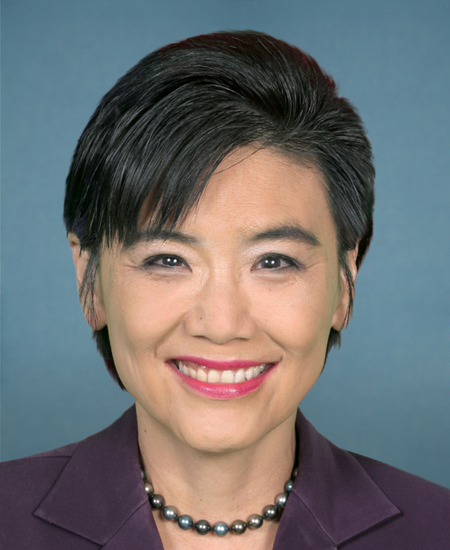
Rep. Judy Chu
Sponsored bills
Maddy summaryThe DIPLOMA Act authorizes federal funding to support "full service community schools" that integrate academic, health, and social services through partnerships between schools and community organizations. It directly affects schools serving high-poverty students, requiring local consortia (schools plus community partners) to develop evidence-based plans for comprehensive services. The bill creates a competitive grant program with requirements for community engagement, accountability measures, and coordination with existing programs. It aims to improve student outcomes by addressing both academic needs and non-academic challenges through integrated support systems rather than isolated services.
Maddy summaryHRES 1588 is a House resolution supporting Transgender Day of Remembrance (TDoR) by recognizing the epidemic of violence against transgender people and memorializing those killed between October 1, 2023, and September 30, 2024. It specifically honors 38 transgender or gender-nonconforming individuals whose lives were lost to violence during that period, highlighting that transgender women of color face disproportionate risks. The resolution acknowledges systemic issues like underreporting, barriers to healthcare, and higher rates of homelessness and suicide within the community. It calls for the U.S. government to prioritize solutions to this violence while affirming transgender people's right to dignity and safety. As a symbolic resolution, it does not create new laws or policies but formally recognizes these issues for congressional record.
Maddy summaryThis bill prohibits Medicaid from covering conversion therapy for any enrollee. It amends federal law to block Medicaid payments for any therapy aimed at changing a person's sexual orientation or gender identity (defined as "conversion therapy" in the bill), starting in the first full quarter after the law takes effect. The prohibition applies to all Medicaid providers who offer such therapy for compensation, but explicitly excludes support for gender transition, acceptance-based care, and interventions focused on safety or unlawful conduct. It directly affects Medicaid recipients seeking therapy and providers who previously billed for conversion therapy services.
Maddy summaryThis bill increases the cap on project-based housing assistance units from 20% to 30% of a public housing agency's inventory under the Housing Act of 1937. It specifically allows agencies to use these units for homeless individuals and families, requiring Secretary approval for additional units beyond the standard limit. The Secretary of Housing and Urban Development must issue implementing rules within 90 days of enactment, with the changes taking effect in the first fiscal year after the bill passes. The legislation directly affects public housing agencies managing federally assisted housing, expanding their capacity to serve homeless populations through modified funding rules.
Maddy summaryHRES 1569 is a symbolic resolution designating the week beginning November 11, 2024, as "National School Psychology Week." It expresses the House's support for recognizing school psychologists' roles in promoting student mental health, academic success, and school safety. The resolution honors school psychologists as key professionals who provide mental health services, support learning, and collaborate with educators and families. It does not create new laws or funding; it simply encourages public awareness and observance of their contributions during that designated week.
Maddy summaryThis resolution (HRES 1558) is a symbolic House of Representatives measure supporting October as "National Domestic Violence Awareness Month." It does not create new laws or allocate funding but formally expresses the House's support for raising awareness about domestic violence and its impacts, and urges continued backing for existing programs that address domestic violence. The resolution cites statistics on domestic violence prevalence (e.g., 24 people per minute affected by intimate partner violence) to underscore the importance of the observance. It directly affects public awareness efforts but does not change policies or directly impact individuals.
Maddy summaryThis bill modifies how disability benefits are treated for homeless disabled veterans seeking housing assistance. It excludes certain disability payments (under Chapter 11 or 15 of Title 38, U.S. Code) from income calculations when determining eligibility for HUD-assisted housing programs, including the supported housing program under Section 8(o)(19) and housing on Department property. Specifically, it ensures these benefits are not counted toward income for housing eligibility, though they still count for "adjusted income" definitions. The bill directly affects disabled veterans applying for HUD housing assistance who receive these specific disability benefits. It makes a concrete change to income calculation rules without altering benefit amounts or creating new funding.
Maddy summaryThe COACH Act requires the Small Business Administration to create and regularly update a multilingual resource guide for small childcare businesses. This guide provides practical help on operations, finances, safety, compliance, and quality standards - covering topics like marketing, payroll, and eligibility for federal childcare funding. The guide must be published in English and 10 major U.S. languages (including Mandarin, Cantonese, Japanese, and Korean) and distributed through SBA offices, women’s business centers, and other partner organizations. It directly affects small childcare providers, sole proprietors, and organizations with limited administrative capacity.
Maddy summaryThe Victims of Agent Orange Relief Act of 2024 would provide medical care, environmental remediation, and support services for people affected by Agent Orange exposure during the Vietnam War. The bill directly affects Vietnamese residents exposed to Agent Orange (including those living near contaminated areas), their children and descendants, Vietnamese Americans, and American veterans' families, particularly expanding VA benefits to cover birth defects for children of male veterans (previously limited to children of female veterans). Key provisions include creating new USAID programs for medical care, housing repairs, and environmental cleanup at Agent Orange hotspots, requiring health assessments for Vietnamese Americans, and mandating research into intergenerational effects. The bill sets implementation deadlines for federal agencies (180 days for plans, 18 months for full implementation) and expands VA benefits to address gaps in current support. This legislation aims to address longstanding gaps in assistance for victims across Vietnam, Laos, Cambodia, and the United States affected by Agent Orange exposure.