

Maddy summaryHR 5827, the Tenants’ Right to Organize Act, grants tenants in federally assisted housing the right to form and join tenant organizations to address housing issues without fear of retaliation. It directly affects tenants receiving tenant-based rental assistance (like Section 8 vouchers) and tenants in low-income housing tax credit (LIHTC) properties. Key provisions require public housing agencies and property owners to recognize tenant organizations, allow protected activities (such as leafleting and door-to-door outreach), and prohibit retaliation - while establishing an enforcement protocol for complaints and quarterly reporting to Congress. The bill also mandates annual notifications to tenants about their organizing rights and includes specific protections for LIHTC properties through owner compliance requirements and fines for violations.
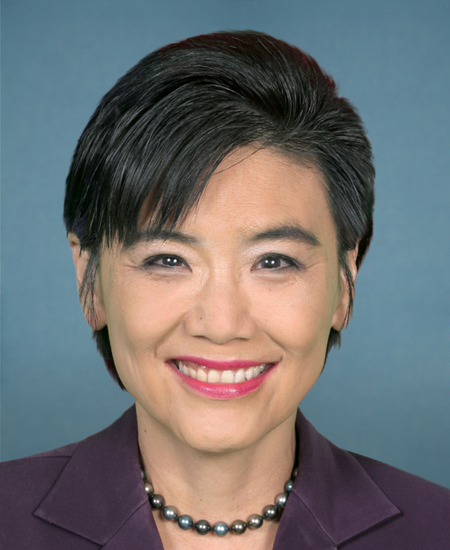
Rep. Judy Chu
Sponsored bills
Maddy summaryThe Youth, Peace, and Security Act of 2023 requires the U.S. government to increase meaningful youth engagement in peacebuilding and conflict prevention efforts globally. The bill mandates the development of a U.S. Foreign Assistance Youth, Peace, and Security Action Plan within one year, focusing on inclusive participation of diverse youth aged 10-29, particularly marginalized groups including girls, LGBTQI+ youth, and youth with disabilities. It authorizes $5.5 million for grants to youth-led organizations working on peacebuilding, conflict resolution, community violence intervention, and post-conflict recovery. The legislation also establishes a USAID Youth Coordinator role to oversee implementation and requires U.S. foreign assistance programs to integrate youth participation in decision-making processes. The Act aims to address barriers to youth involvement in peace processes while ensuring safety, security, and equitable access to resources for young people in conflict-affected areas.
Maddy summaryHRES 736 is a House resolution designating September 25-October 1, 2023, as "Asian American and Native American Pacific Islander-Serving Institutions Week" to recognize institutions that serve high proportions of Asian American, Native Hawaiian, and Pacific Islander students. These institutions - enrolling over 46% of such students despite representing only 6.5% of U.S. colleges - provide critical support for low-income, first-generation students through culturally relevant programs. The resolution encourages eligible institutions to seek funding and urges the public to observe the week with activities celebrating their educational contributions. It has no legal effect but serves as a symbolic acknowledgment of their role in higher education.
Maddy summaryThis bill replaces "Columbus Day" with "Indigenous Peoples’ Day" as the official federal holiday observed on the second Monday in October. It directly affects federal government operations and all federal documents, rules, or laws that previously referenced "Columbus Day" by automatically updating those references to "Indigenous Peoples’ Day" upon enactment. The key mechanism is a simple amendment to federal law (5 U.S.C. § 6103(a)) to change the holiday name and a provision ensuring all existing federal references to Columbus Day are legally treated as referring to Indigenous Peoples’ Day instead. This is a procedural change to federal holidays and references, not a new policy or program.
Maddy summaryHR 5797, the Protecting Immigrants From Legal Exploitation Act of 2023, targets fraud in immigration services by imposing criminal penalties on individuals who falsely claim legal authority or defraud immigrants. It makes it a federal offense to execute schemes involving false promises about immigration services (up to 10 years in prison) or falsely represent oneself as an attorney (up to 15 years), requiring full reimbursement to victims. The bill mandates that immigration service providers (non-lawyers charging fees) identify themselves and disclose fees when assisting applicants, and allows immigrants to withdraw fraudulent applications without penalty. It also requires government agencies to create outreach programs educating immigrants on legitimate legal services and establish procedures for corrected filings.
Maddy summaryThe Eviction Protection Act of 2023 establishes a new Office of Eviction Prevention within the Department of Housing and Urban Development (HUD). This office, led by a career-appointed Director, will administer a new Eviction Protection Grant Program, coordinate eviction prevention strategies across federal agencies, and develop a national eviction database while protecting tenant privacy. The bill directly affects renters (including those in federally subsidized housing), housing providers receiving HUD assistance, and local governments through its focus on preventing both court-ordered evictions and illegal "self-help" evictions like lockouts or utility shutoffs. It authorizes $100 million annually for fiscal years 2024-2028 to fund the grant program and the office's operations, including technical assistance for grantees and tenant education initiatives.
Maddy summaryHRES 733 is a non-binding resolution expressing concern about the rising number of book bans in U.S. schools and libraries. It cites data showing nearly 3,400 book removals affecting 1,557 titles from July 2022-June 2023, with disproportionate targeting of books featuring LGBTQ+ themes (36%) and racial justice content (37%). The resolution urges school districts to follow established best practices for handling book challenges and reaffirms the importance of protecting students' access to diverse materials. It does not create new laws but calls for local governments to support free expression as protected by the First Amendment.
This resolution requests the Department of State to transmit to Congress a statement on human rights practices in Azerbaijan, including the steps the United States has taken to promote human rights in the region and an assessment of whether circumstances exist that necessitate a continuation of security assistance for Azerbaijan.
Maddy summaryThe WIC for Kids Act expands eligibility for the Special Supplemental Nutrition Program for Women, Infants, and Children (WIC) by adding new qualifying pathways. It allows children to qualify if they live in households where someone receives Head Start, Indian reservation food assistance, or Puerto Rico/Northern Mariana Islands nutrition block grants, and streamlines documentation by permitting states to use existing records. The bill extends certification periods for children from one to two years and automatically enrolls infants born to current WIC participants. This directly affects low-income families with children who qualify for related assistance programs but previously faced barriers to WIC access.
EITC Age Parity Act of 2023 This bill modifies the age requirement for the earned income credit. Under current law, an individual taxpayer must have attained age 25, but not age 65, to claim the credit. This bill reduces the base year to age 18 and eliminates the age 65 cap on the credit.