

Maddy summaryThe PAST Act of 2023 amends the Horse Protection Act to ban specific devices used to cause pain (soring) in horses at shows, particularly affecting Tennessee Walking Horses, Racking Horses, and Spotted Saddle Horses. It defines prohibited "action devices" (like boots or chains causing friction) and requires licensed, conflict-free inspectors at events to enforce rules. The bill increases penalties for violations to up to $5,000 fines or 3 years in jail, and mandates longer disqualifications for repeat offenses (180 days → 1 year → 3 years). Horse show organizers, exhibitors, and participants must comply with these new inspection and penalty requirements.
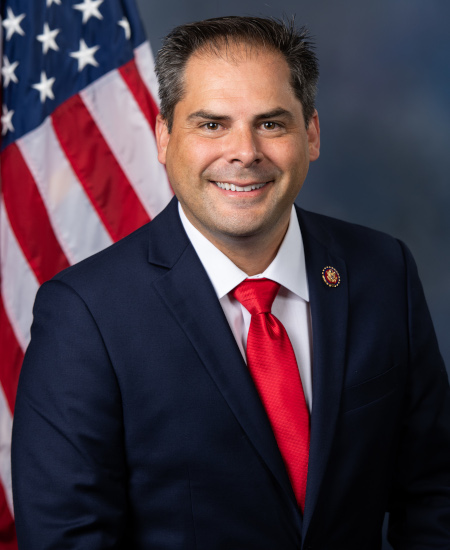
Rep. Mike Garcia
Sponsored bills
Maddy summaryHR 3238, the Affordable Housing Credit Improvement Act of 2023, updates the Low-Income Housing Tax Credit (LIHTC) program to increase the availability of affordable housing across the United States. The bill makes several key changes including increasing state funding formulas, modifying tenant eligibility rules to better serve vulnerable populations (such as domestic violence victims and students), and expanding credit eligibility for projects in rural and Native American communities. Specific provisions raise the credit for properties serving extremely low-income households, clarify rules around tenant income increases, and require housing providers to protect victims of domestic violence. The bill also updates terminology from "low-income" to "affordable" throughout the tax code and enhances program transparency through data sharing requirements. These changes aim to make the LIHTC program more effective at creating and preserving affordable housing units for low-income households nationwide.
Direct Capital Access Act of 2023 or the DCA Act of 2023 This bill increases the number of daily round-trip flights allowed at Ronald Reagan Washington National Airport (DCA). Specifically, this bill adds 56 new slots at DCA to allow for 28 additional daily round-trip flights. (Airlines flying to and from DCA are subject to slot and perimeter rules set by federal law and regulation. The slot rules determine the total number of flight slots that can be handled in a given time period. In addition, a statutory perimeter rule limits nonstop flights to a 1,250-mile radius unless they are granted an exemption in law.) Current law limits DCA to a maximum of 67 hourly slots for flights both within- and beyond-perimeter; a round-trip flight serving DCA requires two slots (or a slot pair). Of those slots, 40 daily slots are exempt from the perimeter rule. Under the bill's slot increase, operations at DCA may not increase by more than eight flights per hour.
Maddy summaryHR 801, the Securing the Border for Public Health Act of 2023, gives the Secretary of Health and Human Services authority to temporarily ban people and goods from specific countries. This can be done if the Secretary determines a serious risk of introducing communicable diseases or certain controlled substances (like fentanyl, narcotics, or opiates) into the U.S. The ban would apply to persons and property from designated countries for a time deemed necessary to protect public health. It directly affects travelers and importers from countries identified under this provision.
SALT Fairness and Deficit Reduction Act This bill increases the limitation on the tax deduction for state and local taxes to $60,000 (the limit is currently $10,000 for individual taxpayers). The bill also requires an annual inflation adjustment to the increased amount beginning after 2023, and extends through 2032 the period during which the limitation is in effect.
Maddy summaryThis bill removes a restriction that previously barred people in jail or prison while awaiting trial from receiving Medicaid health benefits. It directly affects individuals in custody pending legal proceedings by allowing states to provide Medicaid coverage for their medical care during this time. The bill also allocates $50 million in planning grants to help states develop systems to enroll these individuals, recruit healthcare providers who can serve them, and establish electronic billing for services provided in correctional facilities or through outpatient care. Key provisions require states to assess healthcare needs, eliminate policy barriers, and create plans to increase provider participation in Medicaid for this population.
Maddy summaryHR 2955, the Stop Institutional Child Abuse Act, establishes a Federal Work Group to improve data collection and best practices for youth in residential programs (like therapeutic schools, treatment centers, and group homes). The Work Group, composed of federal agency representatives and diverse stakeholders, must develop national data standards, create risk assessment tools, and issue biennial reports with recommendations to enhance safety, reduce restraints, and expand community-based alternatives. It directly affects youth with mental health, substance use, or disability needs placed in these facilities, as well as agencies overseeing them. The bill also mandates a National Academies study to examine funding, oversight, and barriers to community care. These mechanisms aim to standardize data tracking and promote less restrictive, trauma-informed care for youth in residential programs.
Maddy summaryHR 2836, the Cash to Classrooms Act, prohibits all states from using average daily attendance (ADA) formulas to determine public school funding. This directly affects every public school district in the country, particularly those serving low-income and minority students who often face higher absenteeism rates under current ADA systems. The bill bans states from calculating school funding based on the average number of students present each day over a set period. By eliminating ADA-based funding, the bill aims to prevent disproportionate funding cuts for schools in disadvantaged communities that struggle with absenteeism.
Maddy summaryHR 2592, the Safe Schools Act, allows states and school districts that received pandemic relief funds (ESSERF) to redirect unspent funds toward school security measures instead of their originally designated purposes. It prohibits the federal government from blocking or discouraging this reallocation, even if the security use isn’t tied to pandemic response. The bill defines specific security measures, including metal detectors, threat assessment teams, anonymous reporting systems, security training, and physical safety upgrades like reinforced doors or campus fencing. It applies directly to schools and districts with unused ESSERF funds from pandemic relief programs.
Maddy summaryHR 2495 requires all public elementary and secondary schools receiving federal education funds to hire two full-time, licensed school resource officers (SROs) per 500 students. These SROs must be trained to prevent student violence and carry firearms. The bill authorizes $28 billion annually (2023-2027) to fund this requirement, while simultaneously rescinding unused American Rescue Plan Act (ARPA) funds from programs like rental assistance and state grants. This policy directly affects all public schools under state educational agencies receiving federal education funding, mandating a specific SRO staffing ratio tied to federal funding.