

Maddy summary# Summary of the Weather Act Reauthorization Act of 2025 This comprehensive legislation reauthorizes and modernizes the National Oceanic and Atmospheric Administration's (NOAA) weather and climate programs through 2030, with several key focuses: ## Core Program Reauthorizations - **Commercial Data Program** ($100M annually): Establishes a formal program to acquire weather/environmental data from private sector entities, including standards, prioritization, and data assimilation practices - **Commercial Data Pilot Program** (15% of Commercial Data Program funds): Tests and evaluates private sector data for use in NOAA operations - **Advanced Weather Interactive Processing System**: Requires transition to cloud-based operations by 2030 to enable more flexible workforce ## Hazard Communication Improvements - **Hazardous Weather Risk Communication Program**: Focuses on simplifying and improving communication of weather hazards through social, behavioral, and risk science research - **Post-Storm Surveys**: Requires systematic surveys after significant weather events, with emphasis on vulnerable populations - **NOAA Weather Radio Modernization**: Expands coverage, enhances reliability, and transitions to internet protocol-based communications ## Operational Modernization - **National Weather Service Workforce**: Includes hiring assessments, health/morale evaluations, and designation of service hydrologists - **Aviation Weather Program**: Enhances turbulence forecasting, data acquisition, and coordination with the Federal Aviation Administration - **Data Management**: Establishes consistent data standards, infrastructure, and sharing practices across NOAA ## Specialized Programs - **Atmospheric Rivers Forecast Improvement Program**: Focuses on improving forecasts of atmospheric rivers that impact the western U.S. - **Coastal Flooding and Storm Surge Program**: Improves coastal inundation forecasting and warning systems - **National Integrated Drought Information System**: Enhances drought monitoring and forecasting capabilities - **National Mesonet Program**: Expands environmental observation networks across the U.S., with 15% of funds for financial assistance to state/local entities - **National Coordinated Soil Moisture Monitoring Network**: Supports soil moisture monitoring for agricultural and drought management - **Precipitation Forecast Improvement Program**: Aims to improve precipitation forecasting across all timescales ## Funding The bill authorizes significant funding across these programs, with annual appropriations ranging from $10M to $70M depending on the program, for fiscal years 2026-2030. The legislation represents a major effort to modernize NOAA's infrastructure, improve weather communication to the public, and better integrate commercial data sources while maintaining NOAA's leadership in weather and climate science.
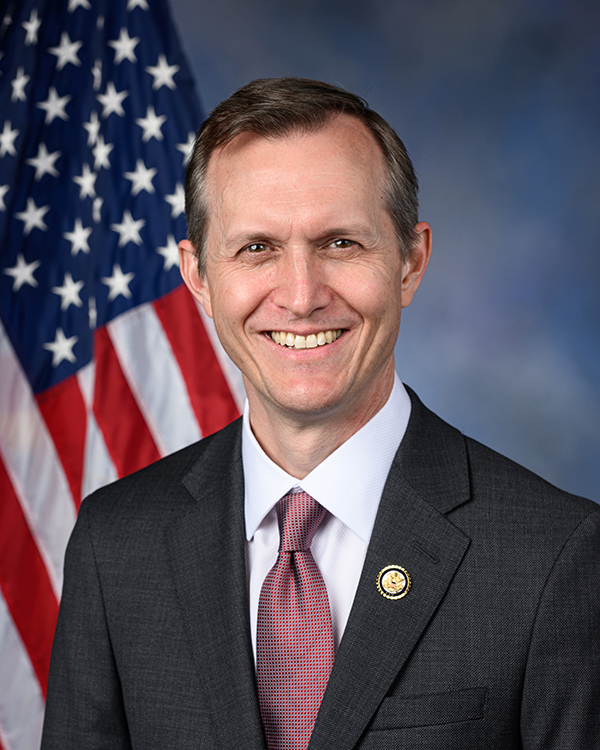
Rep. George Whitesides
Sponsored bills
Maddy summaryHRES 684 is a non-binding House resolution designating September 9, 2025, as "National Firearm Suicide Prevention Day." It aims to raise public awareness about firearm suicide statistics (including that firearms were used in 55% of U.S. suicides in 2023) and promote safe firearm storage as a key suicide prevention strategy. The resolution encourages health professionals to discuss safe storage with patients and supports existing awareness efforts led by organizations like Brady and End Family Fire. It directly affects the public and healthcare providers by emphasizing evidence-based prevention practices, not by creating new laws.
Maddy summaryThis bill modifies the Family and Medical Leave Act (FMLA) to extend eligibility to school support staff, including paraprofessionals, cafeteria workers, bus drivers, and clerical staff. It allows these employees to qualify for FMLA leave if they work 60% of their expected monthly hours (instead of the standard 1,250 hours), based on their school’s assigned schedule. Employers must maintain records of expected hours for each staff member. The change directly benefits part-time and seasonal education support staff who previously faced barriers to FMLA coverage.
Maddy summaryHR 5145, the Bipartisan Premium Tax Credit Extension Act, extends enhanced federal subsidies for health insurance premiums through 2026. It directly affects individuals purchasing coverage through health insurance marketplaces who qualify for premium tax credits. The bill extends the period for increased credit amounts (through 2026 instead of 2025) and maintains the rule allowing tax credits for households earning above 400% of the federal poverty level. These changes apply to tax years beginning after December 31, 2025.
Maddy summaryThis bill prohibits Members of Congress, their spouses, and dependent children from owning or trading certain investments, including stocks, commodities, and derivatives (referred to as "covered investments"). It requires affected individuals to divest these investments within 90-180 days, with specific exemptions for Treasury bonds, diversified mutual funds, small business interests, and family trusts meeting strict conditions. Violations incur penalties of 10% of the investment's value plus disgorgement of profits, paid directly to the U.S. Treasury. The law applies to all covered individuals during federal service, with exceptions for investments acquired through inheritance or occupational trading (e.g., a spouse’s finance job).
Maddy summaryHRES 670 is a symbolic resolution (not a law) expressing congressional support for designating September 22 as "National Military and Veterans Suicide Awareness Day." It aims to raise public awareness about mental health challenges and suicide prevention within military service members and veterans, acknowledging their sacrifices and the need to reduce stigma around seeking help. The resolution does not create new programs, allocate funding, or change existing policies - it simply encourages national attention during Suicide Prevention Awareness Month in September. This designation directly affects the military and veteran communities by promoting dialogue about their mental health needs.
Maddy summaryThis bill amends federal pay rules to provide hazard pay for specific federal firefighters. It requires that firefighters conducting prescribed burns (controlled fires for land management) and smokejumpers during training or operations receive the same hazard pay rate currently given to those fighting wildfires. The change applies to employees covered under Title 5 of U.S. Code, with implementation required within 90 days of enactment through Office of Personnel Management regulations. The policy directly affects federal wildfire management personnel performing these high-risk duties.
Maddy summaryThe SUN Act (HR 4998) requires the President to submit a detailed report to Congress within 15 days whenever National Guard members are deployed domestically for non-disaster purposes under specific laws. The report must include the legal basis for the deployment, evidence of reduced violence, input from local law enforcement, total costs, and a certification that the deployment won’t interfere with disaster response capabilities. It applies to all domestic uses of the National Guard except for responses to natural disasters under the Stafford Act. The bill aims to enhance congressional oversight of military deployments on U.S. soil.
Maddy summaryHR 4976, the Shielding Students from Wildfire Smoke Act, requires the Environmental Protection Agency to commission the National Academies of Sciences to review existing policies protecting children from wildfire smoke in K-12 schools, childcare centers, and related activities like sports or camps. The review will assess current standards, identify research and policy gaps, and provide recommendations to Congress for better protection, especially in under-resourced settings. This bill does not create new regulations but mandates a formal evaluation of current approaches to safeguard children during smoke events. It directly affects children in educational and childcare environments across the U.S., particularly in communities frequently impacted by wildfires.
Maddy summaryThis bill extends the expiration date for a provision allowing certain vehicles to use High Occupancy Vehicle (HOV) lanes without meeting standard occupancy requirements. Specifically, it amends federal law to change the deadline from September 30, 2025, to September 30, 2031. The change directly affects drivers and vehicle operators who currently qualify for this exemption under existing rules. It is a procedural reauthorization, not a policy change, maintaining the current HOV lane exemption rules for an additional six years.