

Maddy summaryThis bill establishes a federal grant program to address teacher shortages, particularly in rural schools and high-need subject areas like STEM, special education, and English as a second language. It authorizes funding for teacher residency programs (covering tuition, salaries, and mentor incentives), Grow Your Own programs (recruiting from local communities), and evidence-based strategies to improve teacher recruitment, retention, and diversity. The program requires grantees to track metrics like educator retention rates, teacher certification pass rates, and representation of underrepresented groups. Grants must prioritize rural districts, high-need subject areas, and efforts to diversify the teaching workforce, with specific funding allocations for these priorities.
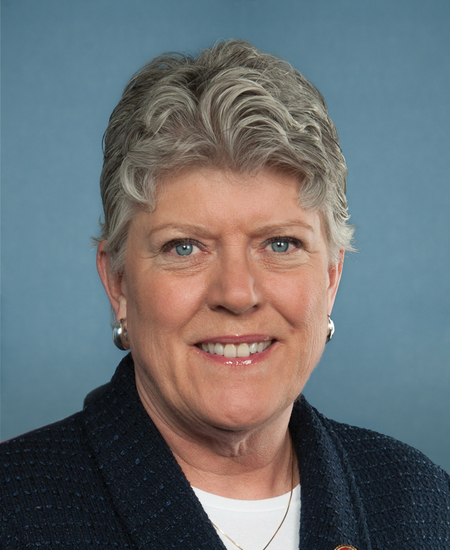
Rep. Julia Brownley
Sponsored bills
Maddy summaryThis bill prohibits the interstate transport, sale, breeding, or possession of captive American mink raised for fur production (including parts or offspring), directly affecting mink fur farmers and the fur industry. It includes a limited exception for entities covered under the Lacey Act and establishes a buy-out program where the government may purchase mink farms. The buy-out amount is based on the farmer's average mink count over three years and the farm's infrastructure value. Funding for the buy-out depends on available appropriations. The bill does not apply to mink not raised for fur or to certain wildlife management activities.
Maddy summaryThis concurrent resolution (HCONRES 97) recognizes the gender wage gap, noting that women working full-time earn 84 cents for every dollar earned by men. It highlights racial disparities (e.g., Latinas earn 57 cents, Black women 69 cents) and the economic impact of the gap, including $965 billion in annual lost wages for women. As a symbolic resolution, it does not create new laws or policies but formally acknowledges the issue and reaffirms Congress’s commitment to addressing wage inequality.
Maddy summaryHRES 1074 is a symbolic House resolution reaffirming congressional support for a two-state solution to the Israel-Palestine conflict. It explicitly states the House supports Israel's right to exist as a Jewish, democratic state and recognizes Palestinians' right to sovereignty through a separate state. The resolution identifies a two-state solution as the best path to lasting peace and condemns efforts opposing this approach. As a non-binding resolution, it does not create new law or policy but formally expresses the House's position on this issue. It was introduced by multiple House members on March 12, 2024.
Maddy summaryHR 7629, the Protect Our Letter Carriers Act of 2024, allocates $1.4 billion annually (2025-2029) to the U.S. Postal Service for high-security collection boxes and replacing physical universal mailbox keys with electronic versions, directly affecting USPS operations and letter carriers. It requires the Attorney General to appoint specialized prosecutors in each district to coordinate investigations and prosecutions of postal-related crimes, such as assaults on carriers or mail theft. The bill also mandates the U.S. Sentencing Commission to adjust guidelines so that assaults or robberies against postal employees are treated with the same severity as assaults against law enforcement officers. These provisions aim to enhance safety through infrastructure upgrades, improved prosecution, and stricter sentencing for crimes targeting postal workers.
Maddy summaryThe Action for Dental Health Act of 2023 extends the authorization period for federal grants addressing dental workforce shortages. It amends Section 340G(f) of the Public Health Service Act to change the grant funding period from 2019-2023 to 2024-2028. This extension directly affects dental health programs and organizations receiving these grants, ensuring continued funding for initiatives that train and deploy dental professionals in underserved communities. The key provision is a straightforward renewal of the grant timeline without altering funding amounts or eligibility criteria.
Maddy summaryThis bill requires the Defense and Veterans Affairs Secretaries to evaluate existing research on menopause, perimenopause, and mid-life health in female service members and veterans. They must identify gaps in knowledge about treatments, military service impacts (including combat roles, burn pits, and toxic chemicals like PFAS), and mental health effects, then report findings and create a strategic research plan within 180 days. The bill also mandates both departments to conduct or fund new research on these issues. It directly affects women currently serving in the military and veterans who experience menopause-related health challenges. The law focuses on gathering evidence to address specific health gaps unique to this population.
Maddy summaryThe ZEVs Act of 2024 requires automakers selling over 100 new passenger vehicles annually in the U.S. to gradually increase sales of zero-emission vehicles (ZEVs), starting with 43% of new passenger vehicle sales in 2027 and reaching 100% by 2035. Manufacturers must meet these targets using a credit system: they earn credits for each ZEV sold or can purchase credits from others, with unused credits bankable for up to five years. The bill sets annual, increasing percentage targets (e.g., 51% in 2028, 88% in 2033) and imposes civil penalties for noncompliance, including fines equal to twice the value of missing credits. After 2035, manufacturers must sell only ZEVs, with the EPA enforcing these requirements through penalties and potential injunctions.
Maddy summaryHRES 1054 is a symbolic House resolution recognizing the historical contributions of military animals (such as dogs, horses, and pigeons) and their handlers in U.S. military service since World War I. It acknowledges that these animals, who have served in conflicts and peacekeeping operations, currently lack an official U.S. medal for their bravery. The resolution specifically supports creating a formal annual process to nominate military animals for the "Medal of Bravery" and "Distinguished Service Medal," building on existing efforts by the nonprofit Animals in War & Peace program. This resolution does not create new laws or benefits but formally endorses a process to honor these animals’ service.
Maddy summaryHR 6195, the Wildland Firefighter Fair Pay Act, modifies federal pay rules for wildland firefighters and related personnel employed by the Forest Service, Department of the Interior, and National Weather Service. It establishes that premium pay earned during wildfire suppression activities (excluding prescribed fires) will be disregarded when calculating total pay for certain pay limits, preventing these employees from exceeding the Executive Schedule Level II pay cap. The bill requires the Secretaries of Agriculture, Interior, and Commerce to submit a hiring plan by March 2024 to ensure sufficient staffing without triggering pay caps. The changes take effect in January 2024 for most provisions and October 2023 for premium pay adjustments.