

Maddy summaryThe Child Care for Working Families Act establishes a federal entitlement program providing subsidized child care for working families with children under age 6 who are not yet in kindergarten. It creates a sliding fee scale where families at or below 85% of State median income pay no copayment, while higher-income families pay up to 7% of their income based on income thresholds. The bill requires states to develop quality rating systems for child care providers and ensures providers receive sufficient funding to meet quality standards, including wages equivalent to elementary educators. It prioritizes access for underserved populations including children with disabilities, infants and toddlers, children experiencing homelessness, and families in low-income communities. The program is funded with $20 billion for fiscal year 2024 and subsequent years through 2029.
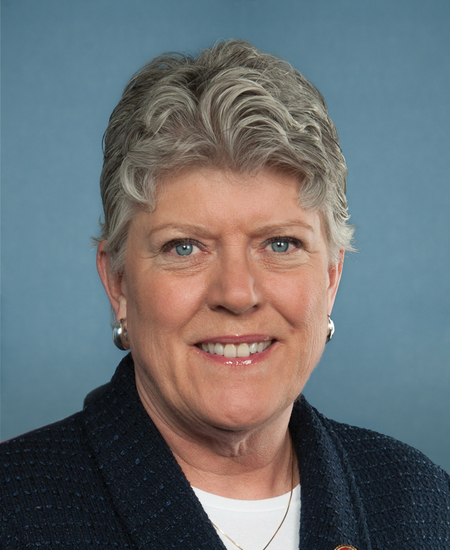
Rep. Julia Brownley
Sponsored bills
Forced Arbitration Injustice Repeal Act of 2023 or the FAIR Act of 2023 This bill prohibits a predispute arbitration agreement from being valid or enforceable if it requires arbitration of an employment, consumer, antitrust, or civil rights dispute.
Maddy summaryThe Combating Child Labor Act strengthens penalties for employers violating child labor laws under the Fair Labor Standards Act. It increases criminal fines to $500,000 or up to 10 years in prison for willful violations causing death or serious injury to children under 18, and raises civil penalties for such violations up to $700,000 per incident. The bill also requires the Department of Labor to publish an annual report detailing child labor violations, including employer names, types of violations, and trends by industry or region. This report will help track enforcement efforts and identify high-risk areas, directly affecting employers who violate child labor rules and the Department of Labor’s oversight role.
Maddy summaryThis bill creates a federally chartered National Center for the Advancement of Aviation to develop the U.S. aviation and aerospace workforce. The Center will provide grants for education and training programs, including scholarships, internships, and curriculum development for middle schools, high schools, and colleges focused on aviation careers. It will specifically support underrepresented groups and veterans transitioning to aviation careers while coordinating with government agencies to avoid duplicating existing programs. The Center must operate as a non-profit entity, maintain tax-exempt status, and submit annual reports to Congress on its activities.
Performing Artist Tax Parity Act of 2023 This bill modifies the above-the-line tax deduction for the expenses of performing artists (including commissions paid to managers or agents) to provide for a phaseout of such deduction for taxpayers whose adjusted gross income exceeds $100,000 ($200,000 for joint return filers). The $100,000 phaseout threshold is adjusted for inflation annually for taxable years beginning after 2023.
Maddy summaryThe Flight Education Access Act increases federal student loan limits for students enrolled in eligible flight education programs, which prepare students for commercial pilot certification. It sets specific annual and aggregate loan limits based on a student's year of study (e.g., dependent students can borrow up to $111,000 total), and requires programs to meet a 70% completion rate after three years to maintain eligibility. The bill also creates a new $40 million annual grant program to support partnerships between educational institutions and aviation industry partners to diversify the pilot workforce and increase interest in aviation careers. It requires data collection on program completion rates and demographic information, with reports to Congress on the program's effectiveness.
Raise the Age Act of 2023 This bill establishes new restrictions on the sale or transfer of certain semiautomatic firearms to individuals under 21 years of age. Specifically, this bill makes it unlawful for a licensed gun dealer, importer, manufacturer, or collector to sell or deliver a semiautomatic center-fire rifle or semiautomatic center-fire shotgun that has (or has the capacity to accept) an ammunition feeding device with a capacity of more than five rounds to an individual who the licensee knows or has reasonable cause to believe is under age 21. The prohibition does not apply if the individual under age 21 is a full-time law enforcement officer or active-duty member of the Armed Forces. The bill also requires the Federal Bureau of Investigation to report on the operation of its public access line, including a description of information sharing protocols and recommendations for improving such protocols.
Maddy summaryHR 2370, the Access to AEDs Act, authorizes $25 million in federal funding (2024-2028) to help public elementary and secondary schools improve access to automated external defibrillators (AEDs) and CPR training. The bill directs the Secretary of Health and Human Services to award grants to school districts and partners for developing AED programs, training staff and students, purchasing and maintaining AEDs, and creating cardiac emergency response plans. It specifically targets schools to address sudden cardiac arrest (SCA), which is a leading cause of death among student athletes and youth, with 90% of SCA victims dying without immediate CPR and defibrillation. The law requires grantees to report on their activities and establishes a clearinghouse to collect data on school AED access and costs.
Maddy summaryHRES 324 is a non-binding House resolution expressing support for library staff across public, school, academic, and special libraries. It recognizes these workers as essential community resources providing access to information, internet services, and social support - especially for underserved populations - and highlights their expanded roles during crises like the opioid epidemic and pandemic. The resolution calls for adequate funding, protects staff from threats while performing their duties, supports their right to unionize, and upholds the public’s right to free access to library resources. It does not create new laws or funding but formally acknowledges these priorities during National Library Week.
Advancing Cutting Edge Agriculture Act or the ACE Agriculture Act This bill reauthorizes the Agriculture Advanced Research and Development Authority (AGARDA) and expands the program's environmental sustainability goals. (The program supports innovative research and development of technology, research tools, and products to address long-term and high-risk challenges related to food and agriculture.) The bill expands the program's goals to include water conservation and responding to greenhouse gas emissions, as well as resilience to (1) drought, (2) infectious diseases, and (3) plant and animal pathogens and pests. The bill also removes the current pilot program designation and requires the Department of Agriculture to establish and maintain an AGARDA staff.