

Maddy summaryThis bill requires the Committee on Foreign Investment in the United States (CFIUS) to review real estate transactions involving foreign adversaries (including China, Russia, Iran, and North Korea) near sensitive sites like military installations, ports, or critical infrastructure. It defines "elevated risk real estate transactions" as purchases or leases by foreign adversaries near such sites, creating a presumption that these deals pose unresolvable national security risks unless CFIUS explicitly approves them with evidence. The bill also adds food security considerations to CFIUS reviews and mandates declarations for these high-risk transactions. These changes aim to prevent foreign adversaries from gaining access to strategic U.S. land or infrastructure through real estate deals.
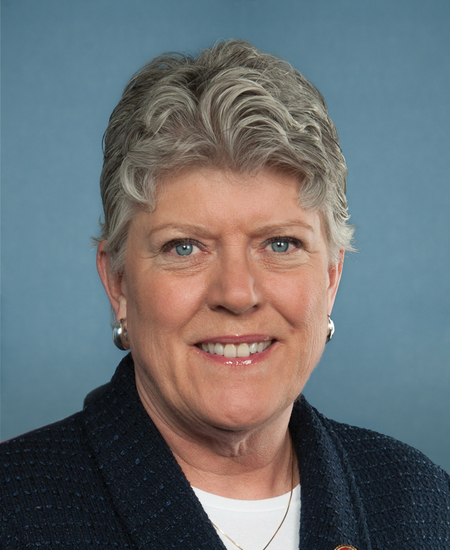
Rep. Julia Brownley
Sponsored bills
Amend the Code for Marriage Equality Act of 2023 This bill amends the Internal Revenue Code, the Social Security Act (SSA), and other federal laws to replace (1) references to wife or husband with references to spouse , and (2) references to husband and wife or husband or wife with references to married couple or married person. For purposes of federal laws or regulations, marriage is defined as a legal union between two people as spouses. The bill eliminates a definition of spouse that refers only to a person of the opposite sex who is a husband or a wife. Requirements concerning compensation to a surviving wife after the disability or death of a person employed at a military, air, or naval base outside the United States are revised to make surviving spouses eligible for such compensation. The bill makes similar revisions to the Family and Medical Leave Act of 1993, the Federal Mine Safety and Health Act of 1977, and other federal statutes. The bill revises title II (Old Age, Survivors, and Disability Insurance) of the SSA to consolidate separate provisions for a wife's insurance benefits and a husband's insurance benefits into a single standard for a spouse's insurance benefits.
Maddy summaryJaime’s Law requires federal background checks for ammunition purchases by expanding existing firearm background check rules to include ammunition. It mandates that unlicensed buyers must transfer ammunition through a licensed dealer (e.g., a gun store), who conducts the background check before completing the sale. The law includes exemptions for transfers between family members, law enforcement, transfers due to death, immediate self-defense situations, and legitimate shooting or hunting activities (with specific conditions). It explicitly states the law does not create a national ammunition registry and does not override state laws on ammunition.
Maddy summaryThe Federal Death Penalty Prohibition Act would ban the federal government from imposing or carrying out the death penalty for any violation of federal law after the bill's enactment. It would require federal courts to resentence all individuals currently under a federal death sentence to a non-death penalty. This bill directly affects federal criminal defendants and inmates on federal death row, but does not impact state-level death penalty cases. The law would take effect immediately upon passage, ending federal death penalty sentencing for future cases and changing current death row sentences.
Child Care Investment Act of 2023 This bill increases the employer-provided child care tax credit, the amount excludable from gross income for dependent care flexible spending accounts, and makes the household and dependent care tax credit refundable. Among other provisions, the bill increases the rate of the employer-provided child care tax credit from 25% to 50% and increases the maximum credit amount from $150,000 to $500,000. It also increases (1) the pre-tax deduction for dependent care flexible spending accounts from $5,000 to $10,000, plus an additional $2,000 for each eligible dependent; and (2) the rate of the household and dependent care tax credit and makes such credit refundable.
Maddy summaryHR 4579, the Fairness for Farm Workers Act, amends the Fair Labor Standards Act to establish phased overtime requirements for agricultural workers. Starting in 2024, most farm employers must pay overtime for hours worked beyond 55 per week (reducing to 50 in 2025, 45 in 2026, and 40 in 2027), with small farms (25 or fewer employees) getting a 3-year delay on the full 40-hour standard. The bill also removes existing exemptions that allowed some agricultural employers to avoid overtime pay for certain workers. This directly affects farm workers in agriculture and their employers, requiring compliance with standard overtime rules previously not applied to this sector.
Maddy summaryThis bill repeals a temporary restriction on deducting personal property damage from disasters (like storms or fires) for individual taxpayers. It sets a $50,000 annual limit on such deductions for tax years 2018-2025, except for losses from federally declared disasters, which remain fully deductible. The bill also extends the deadline for filing claims for these losses by one year after the bill's enactment. It directly affects individuals who suffered property damage in non-disaster events during the specified years, allowing them to deduct losses up to the $50,000 cap.
Maddy summaryThis bill requires national parks to reduce disposable plastic products, primarily targeting plastic water bottles and food containers sold to visitors. Park directors must eliminate these sales where feasible after considering factors like operational costs, waste reduction, infrastructure for refill stations, and impacts on park vendors. Each park must also implement visitor education about water availability and report biennially on progress, including visitor satisfaction and safety metrics. The law directly affects all national park units, concessionaire businesses, and park visitors. It mandates a phased, practical approach without banning all plastics immediately.
Maddy summaryThe DISCLOSE Act of 2023 would increase transparency in political spending by requiring organizations making campaign-related disbursements over $10,000 to disclose the names and addresses of their major donors, including the top five funders for political communications. It would close loopholes allowing foreign nationals to secretly fund election activities through corporations or other entities by expanding the definition of prohibited foreign contributions. The bill would mandate "stand by every ad" disclosure requirements for political communications across all media, including audio, video, and internet ads, requiring clear identification of funders. It would also require reporting of disbursements related to Federal judicial nominations, which currently aren't subject to disclosure requirements. These provisions would apply to corporations, labor organizations, and certain nonprofits that engage in political activity.
Maddy summaryThe IDEA Full Funding Act (HR 4519) mandates specific annual increases in federal funding for special education programs under the Individuals with Disabilities Education Act (IDEA). It requires Congress to appropriate increasing amounts each fiscal year - from $5.87 billion for 2024 up to $55.53 billion for 2033 - to reach 40% of the national average per-pupil expenditure for public schools by 2033. This directly affects all public school districts serving students with disabilities, as federal IDEA funding supports their special education services. The bill sets fixed dollar amounts or percentage targets (whichever is greater) for each fiscal year, aiming to gradually close the long-standing gap between promised and actual federal funding. It does not alter eligibility for services but mandates higher, phased funding levels to meet the 40% target.