

Maddy summaryThe Workers POWER Act (HR 6634) strengthens federal labor enforcement by expanding staffing and resources for the Department of Labor's Wage and Hour Division and Occupational Safety and Health Administration (OSHA). It creates new paid student positions (5 in Washington, DC, plus 2 per regional office), establishes child labor fellowships (5 per agency), and increases student loan repayment benefits for eligible employees. The bill also authorizes performance-based bonuses, retention incentives, and $250 million annually in grants to states to improve their labor enforcement capacity. These changes directly affect Department of Labor enforcement staff and state/local labor agencies working to address wage theft, child labor, and workplace safety violations.
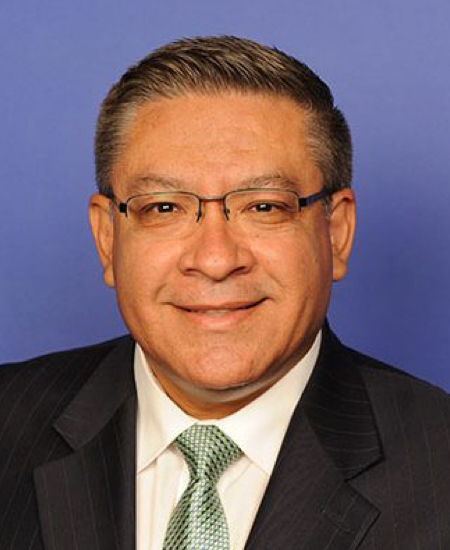
Rep. Salud O. Carbajal
Sponsored bills
Maddy summaryThe Elizabeth Dole Home Care Act of 2023 increases the expenditure cap for home- and community-based care for veterans from 65% to 100% of costs, with exceptions for certain cases based on clinical need and geographic factors. It establishes new programs including Veteran-Directed Care, which allows veterans to select and manage their own in-home care services, and Home-Based Primary Care, which provides in-home health care overseen by VA providers. The bill requires improved coordination with existing programs like the Program of All-Inclusive Care for the Elderly (PACE) and mandates a centralized website with information about available services. It specifically targets veterans who would otherwise require nursing home care or face increased risk of hospitalization, and includes provisions to address home health aide shortages through pilot programs.
Maddy summaryHR 6592, the Fight Book Bans Act, provides federal grants to reimburse public school districts for legal costs when they choose to keep instructional or library materials after parental objections. It directly affects school districts (covered local educational agencies) that select materials for students and handle challenges to their removal. The bill authorizes up to $100,000 per case in grants to cover attorney fees and court costs, provided the district didn’t remove the materials and wasn’t reimbursed by the state. Funding of $15 million is authorized for fiscal years 2024-2028. The grants are strictly for legal challenges to decisions not to remove materials, not for the content of the materials themselves.
Maddy summaryThe Valve Safety Fairness Act of 2023 requires the Pipeline and Hazardous Materials Safety Administration to apply an existing 2022 safety rule to Type A gas gathering lines. This rule mandates specific valve installations and minimum rupture detection standards on these pipelines. The bill directly affects operators of Type A gas gathering lines by requiring them to implement these safety measures. It does not create new requirements but extends an existing federal safety standard to this specific pipeline category.
Maddy summaryThis bill creates a presumption that certain health conditions are linked to military firefighting service. It applies to veterans who served at least five years in a firefighting military role (e.g., fire suppression specialists) and develop specific illnesses within 15 years of leaving service. The covered conditions include heart disease, lung disease, and multiple cancers (like leukemia, lymphoma, and lung cancer), with the VA automatically presuming service connection for these if they meet the 10% disability threshold. This simplifies benefit claims by shifting the burden of proof to the VA, rather than requiring veterans to prove their illness was caused by service. The law affects military firefighters who served in designated fire-related roles and seek VA disability benefits for qualifying conditions.
Maddy summaryThis bill establishes a two-year pilot program within the Department of Veterans Affairs (VA) to improve data collection and analysis of suicides and suicide attempts by veterans occurring on VA property (e.g., at medical centers or facilities). It creates a cross-departmental working group - including staff from mental health, health care, benefits, and cemetery offices - to conduct root cause analyses, interview families, and standardize data collection through updated reports and a unified management system. The program requires annual briefings to Congress on findings and mandates annual VA reports starting in 2025 to track trends and recommend prevention strategies. Additionally, it directs the Comptroller General to assess the VA’s suicide prevention efforts, including staffing, policies, and organizational structure.
Maddy summaryHR 6451, the Mental Health Justice Act of 2023, provides $250 million in federal grants to states, tribes, and localities to hire mental health professionals as first responders for specific emergencies. It directs these professionals to replace police in situations involving mental health crises, substance use, or intellectual/developmental disabilities - such as when a 911 caller describes a mental health emergency or a first responder identifies someone needing mental health support. The bill requires grantees to train responders in de-escalation techniques, link individuals to community-based services (not incarceration), and report on outcomes like reduced arrests or use of force. It also mandates data collection on demographics and prevents funneling people into institutional settings, with annual reports to Congress on program effectiveness.
Maddy summaryHRES 881 is a symbolic House resolution commemorating the 50th anniversary of the Endangered Species Act of 1973. It honors the Act's role in preventing the extinction of species like the bald eagle and humpback whale, citing its success in protecting 99% of listed species. The resolution does not create new legal requirements or affect any specific group, as it serves solely as a ceremonial recognition of the Act's conservation achievements.
Maddy summaryHR 6415, the CARE for First Responders Act, creates targeted mental health support for first responders, including law enforcement, firefighters, EMTs, and 911 operators (previously excluded from many services). It establishes a 24/7 confidential mental health hotline integrated with the 988 Suicide Lifeline, funds mobile crisis teams for disaster response, and mandates specialized training to reduce stigma and improve access to culturally competent care. The bill requires the development of peer support programs and education for responders and their families on mental health coping strategies. It authorizes $5 million annually (2024-2028) for grants to states and organizations to implement these services, specifically addressing the higher rates of mental health challenges and suicide among first responders compared to the general population.
Maddy summaryHR 6406, the "Last Servicemember Standing Medal Act," creates a new military service medal to honor specific service members. It authorizes the Secretary of Defense to award the medal to active-duty members who were the last surviving member of their unit after combat during a war or overseas operation, demonstrated extraordinary heroism in defense of the U.S., and received recommendations from their commanding officer and at least two peers. The medal is limited to one award per person, and if a recipient dies, the medal may be issued to their next-of-kin. The bill amends Title 10 of the U.S. Code to establish this recognition, with implementation to be expedited by Congress.