

Maddy summaryThe SWIMS Act of 2024 bans the captivity of orcas, beluga whales, false killer whales, and pilot whales for public display in the United States. It prohibits exporting, importing, or taking these animals for display - except for relocation to a sanctuary meeting specific welfare standards or release into the wild. The bill also makes it illegal to breed these species for public display. This directly affects marine parks and aquariums that currently display these animals, preventing them from acquiring new animals for exhibits or breeding them for that purpose.
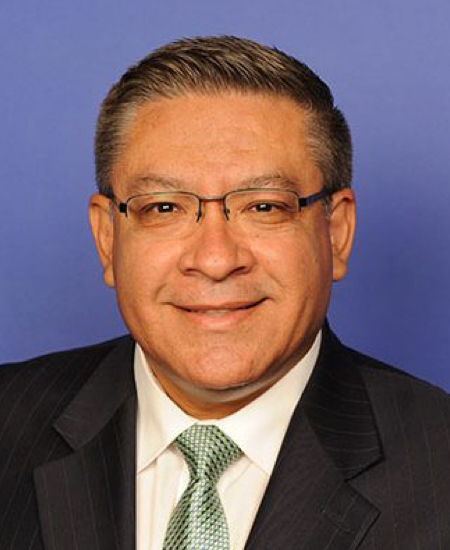
Rep. Salud O. Carbajal
Sponsored bills
Maddy summaryThe AFIDA Improvements Act of 2024 updates the Agricultural Foreign Investment Disclosure Act to require foreign individuals or entities owning at least 1% of U.S. agricultural land (directly or through multiple ownership tiers) to report their holdings. It creates new enforcement duties for the Farm Production and Conservation Business Center (FPAC-BC) to validate data, ensure compliance, and identify violators. The bill mandates the Secretary of Agriculture to share foreign ownership reports with the Committee on Foreign Investment in the United States (CFIUS) and update agency handbooks using recommendations from a 2024 Government Accountability Office report. These changes apply directly to foreign landowners and agricultural agencies like the Farm Service Agency, aiming to improve transparency around foreign ownership of U.S. farmland.
Maddy summaryHR 7114, the Universal Prekindergarten and Early Childhood Education Act of 2024, establishes a federal grant program to help states create or expand full-day prekindergarten programs for 3- and 4-year-olds. The bill directly affects all states that apply for grants and their public school systems, requiring programs to be free and open to all families regardless of income, held at public schools, and taught by qualified teachers. Key provisions mandate programs run the full school year (minimum 6 hours daily), supplement existing early childhood funding without replacing it, and use federal funds for up to 80% of program costs. The program is authorized through fiscal year 2030, aiming to provide universal access to prekindergarten in public schools.
Maddy summaryThe ACCESS Act of 2024 creates a federal grant program to help clinics and health care providers expand abortion and reproductive health services in states where abortion is legal (outside of life or health exceptions). It authorizes $200 million annually for fiscal years 2024-2028 to fund specific capacity-building activities, including facility expansions, hiring clinical staff, telehealth services, and culturally appropriate patient resources. Priority is given to providers in states experiencing the highest increases in out-of-state patients seeking abortion care. The bill directly supports health care entities serving patients who travel across state lines for services, aiming to reduce wait times and improve access for vulnerable communities.
Maddy summaryHR 7087, the MOMS Act, establishes a pilot program to provide evidence-based mental health support for pregnant and postpartum members of the U.S. Armed Forces and their beneficiaries (including family members). It requires the Defense Health Agency to integrate these prevention programs into existing maternal or pediatric care at military medical facilities, prioritizing diverse locations and removing barriers like childcare access. The bill mandates an advisory committee with military members, experts, and service organizations to guide implementation, along with annual reports tracking participation by demographics and a study on the program’s effectiveness. Funded at $5 million annually from 2025-2029, the pilot aims to reduce perinatal mental health conditions and improve military readiness.
Maddy summaryThe HOME Investment Partnerships Reauthorization and Improvement Act of 2024 reauthorizes and updates the HOME Investment Partnerships Program, which provides federal funds to states and local governments to develop affordable housing. The bill increases annual funding from $5 billion in 2024 to $6.08 billion in 2028, modifies eligibility requirements for participating jurisdictions, and eliminates a deadline for committing funds. It reforms homeownership resale restrictions, establishes a home loan guarantee program with $2 billion in initial funding (increasing with inflation), and enhances protections for tenants in small-scale affordable housing (defined as housing with no more than 4 rental units). These changes aim to make the program more flexible and effective in creating and preserving affordable housing options for low- and moderate-income households.
Maddy summary# Summary of the Clean Electricity and Transmission Acceleration Act of 2023 This comprehensive legislation establishes significant reforms across environmental policy, energy infrastructure, and community engagement frameworks. Key provisions include: 1. **Environmental Justice Framework**: - Creates an Office of Environmental Justice and External Civil Rights at EPA - Establishes a White House Environmental Justice Interagency Council - Prohibits disparate impact discrimination under Title VI of the Civil Rights Act - Requires community impact reports for Federal actions affecting environmental justice communities 2. **NEPA Reforms**: - Mandates 90-day public comment periods for environmental justice communities - Requires translation of documents into languages spoken by 5%+ of affected communities - Requires assessment of cumulative impacts, including historical pollution - Requires climate change impact assessments using social cost of carbon - Establishes searchable digital archives of NEPA documents 3. **Community Engagement Requirements**: - Creates "Senior Community Engagement Officers" and "Tribal Community Engagement Officers" at all federal agencies - Requires community benefits agreements for major projects - Establishes grants for capacity building in environmental justice communities - Creates an E-NEPA permitting portal for public access to documents 4. **Energy Policy Provisions**: - Includes reforms for FERC (Federal Energy Regulatory Commission) environmental justice liaison - Establishes requirements for intervenor funding at FERC - Contains provisions for transmission planning and infrastructure 5. **Tribal Consultation**: - Strengthens tribal consultation requirements for projects affecting tribal lands - Requires government-to-government relationships with tribal nations The legislation represents a significant shift toward integrating environmental justice considerations throughout the federal permitting and review process, with specific requirements for meaningful community engagement, transparency, and consideration of cumulative impacts on vulnerable populations. It also establishes new funding mechanisms and administrative structures to support these environmental justice goals.
Maddy summaryThe MARKET CHOICE Act establishes a tax on greenhouse gas emissions from fossil fuels, industrial processes, and certain products, starting at $35 per metric ton of carbon dioxide equivalent in 2025 with annual increases based on inflation. It creates a "RISE Trust Fund" to distribute 75% of the tax revenue to infrastructure projects including highways, climate adaptation initiatives, and worker retraining programs for energy sector workers. The bill also implements border tax adjustments for imports of greenhouse gas-intensive products to prevent competitive disadvantages for domestic manufacturers and limits EPA's authority to regulate emissions from sources already subject to the tax.
Maddy summaryHR 7056, the Access to Family Building Act, establishes federal rights for individuals to access assisted reproductive technology (ART) like IVF without unreasonable restrictions, directly affecting patients seeking fertility treatments and health care providers offering ART services. The bill prohibits states from imposing limitations on ART that are more burdensome than those for comparable medical procedures, fail to advance safety, or unduly restrict access, while allowing health and safety regulations that are necessary and least restrictive. It creates federal enforcement mechanisms, including lawsuits by the Attorney General or affected individuals to challenge violating state laws, and preempts conflicting state regulations. The bill explicitly preserves state authority over health/safety regulations and does not alter existing state insurance coverage laws for ART.
Maddy summaryThe Nurse Faculty Shortage Reduction Act of 2024 creates a new federal grant program to address nursing faculty shortages. It authorizes $28.5 million annually (2024-2028) to help nursing schools supplement faculty salaries, covering the gap between clinical nurse pay and teaching salaries. Schools must submit detailed salary data and plans to sustain higher pay after the 3-year grant period. The program prioritizes schools in high-need areas, serving vulnerable populations, or recruiting underrepresented faculty, with a report required to Congress after 3 years.