

Maddy summaryHR 7384, the Creating Hope Reauthorization Act of 2024, extends the deadline for issuing priority review vouchers to pharmaceutical companies developing treatments for rare pediatric diseases. The bill amends the Federal Food, Drug, and Cosmetic Act to push the program’s expiration from 2024 to 2028 and adjusts another related deadline to 2030. This directly affects drug manufacturers seeking faster FDA review for new treatments targeting rare childhood illnesses. The extension ensures continued incentives for developing these critical therapies without altering the core voucher mechanism.
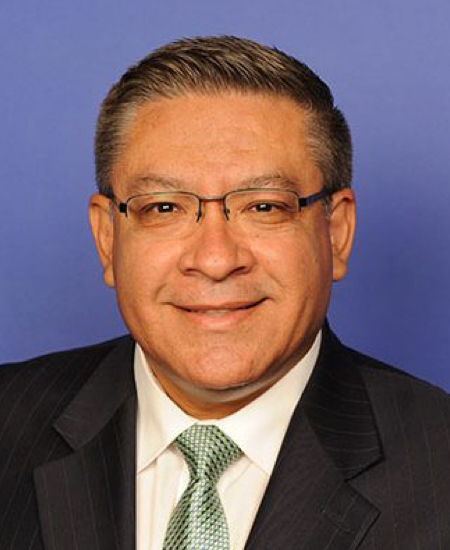
Rep. Salud O. Carbajal
Sponsored bills
Maddy summaryThis bill allows law enforcement officers, firefighters, and emergency medical personnel (covered employees) to sue their public safety employers if they face termination or other punishment for expressing personal opinions about work-related issues. It specifically protects speech on topics like public safety service delivery, pay/benefits, working conditions (including equipment), workplace policies, and even political/religious views. However, the protection does not cover on-duty speech, speech advocating violence or discrimination, disclosure of confidential information, or threats to withhold essential services. The law creates a new legal remedy but explicitly states it does not override existing federal or state civil rights laws.
Maddy summaryHR 7378, the Frederick Douglass Congressional Gold Medal Act, authorizes Congress to posthumously award a gold medal to honor Frederick Douglass's legacy as a pivotal abolitionist, writer, and advocate for civil rights. The medal, designed by the Treasury Secretary, will be presented to the National Museum of African American History and Culture for display, with bronze duplicates available for sale to cover costs. This ceremonial bill does not create new laws or affect current policies - it solely commemorates Douglass's historical contributions to ending slavery and advancing equality.
Maddy summaryHRES 966 is a symbolic resolution condemning alleged sexual violence committed by Hamas during its October 7, 2023, attack on Israel. It specifically references eyewitness accounts, forensic evidence, and Hamas fighters' admissions of ordering gang rape, sexual mutilation, and assault against Israeli civilians. The resolution calls for international condemnation of such acts as weapons of war, urges nations to criminalize sexual violence, and supports investigations into Hamas' actions. As a non-binding resolution, it does not create new laws or directly affect any individuals but formally expresses the House's position on the issue.
Maddy summaryThis bill updates the BEACH Act to improve monitoring of water quality at public beaches and coastal recreation areas. It expands the definition of monitored waters to include nearby shallow upstream areas and locations "present on" beaches, and allows states using federal grants to identify specific pollution sources. The bill also extends annual funding for these programs from $30 million per year through 2029 (replacing the previous 2001-2005 authorization) and requires the EPA to incorporate new water testing technologies into its guidance for states. These changes directly affect states and local governments receiving EPA grants for beach water quality monitoring.
Maddy summaryHRES 1002 is a symbolic House resolution recognizing the cultural and historical significance of Lunar New Year (celebrated as the Year of the Dragon in 2024). It acknowledges the holiday's 4,000-year history in China, its celebration across Asia (including Seollal and Tết), and its significance to Asian Americans and others in the U.S. The resolution expresses respect for those observing the holiday and wishes them a happy new year, but it does not create new laws, policies, or funding. As a ceremonial resolution, it has no direct effect on legislation or constituents.
Maddy summaryThe JOBS Act of 2023 would expand Federal Pell Grant eligibility to cover certain short-term job training programs that prepare students for high-demand careers. It defines "eligible job training programs" as those offering 150-600 hours of instruction over 8-15 weeks, aligned with in-demand industry sectors, and leading to recognized credentials that help students meet hiring requirements and take licensure exams. The bill would allow students in these programs to receive Pell Grants under standard terms, with the minimum Pell Grant amount reduced from 10% to 5% of the maximum. It also requires accrediting agencies to evaluate these programs and creates data-sharing between Education and Labor departments to track program effectiveness.
100 Year Canister Life Act This bill directs the Nuclear Regulatory Commission (NRC) to issue regulations that require casks used in dry storage systems for spent nuclear fuel (i.e., nuclear waste) to be capable of operating safely for at least 100 years. Specifically, the regulations must prohibit the NRC from issuing or renewing any certificate of compliance or license for a dry storage cask for spent nuclear fuel without a finding that the cask can safely operate with spent nuclear fuel for a period of at least 100 years. Under current NRC regulations, a cask must be designed to operate safely for the term proposed in the license, which may not exceed 40 years.
Maddy summaryThe Credit for Caring Act of 2024 creates a new federal tax credit for family caregivers. It allows eligible caregivers to claim a credit equal to 30% of qualified caregiving expenses (like home modifications, medical supplies, or respite care) exceeding $2,000 per year, capped at $5,000 annually. To qualify, caregivers must earn over $7,500 in income and provide care for a relative (like a spouse or parent) certified by a healthcare provider as needing long-term care for at least 180 days. The credit phases out for higher earners, with a $75,000 income threshold for single filers and $150,000 for joint returns.
Maddy summaryThis bill amends the McKinney-Vento Homeless Assistance Act to allow federal funding through the Emergency Solutions Grant Program to cover "safe parking" initiatives. It defines "safe parking" as providing homeless individuals living in vehicles (including RVs) with overnight parking alongside re-housing and supportive services to transition to stable housing. The key change makes safe parking programs eligible for federal grant funding that previously did not cover this specific activity. This directly affects homeless individuals residing in vehicles and the service providers operating these programs.