

Maddy summaryThis bill establishes a $20 million trust fund to compensate specific surviving victims of the 1988 Pan Am Flight 103 bombing. It defines qualifying individuals as U.S. citizens over 45 on December 3, 1991, who worked for Pan Am that day, were named in a prior lawsuit, and were alive as of August 14, 2008. The Foreign Claims Settlement Commission will verify claims within 60 days of filing, then certify eligible claimants to the Treasury for payment. Compensation will be calculated by dividing the $20 million fund equally among all approved claims. The bill directly affects qualifying survivors (or their estates) who met all five defined criteria.
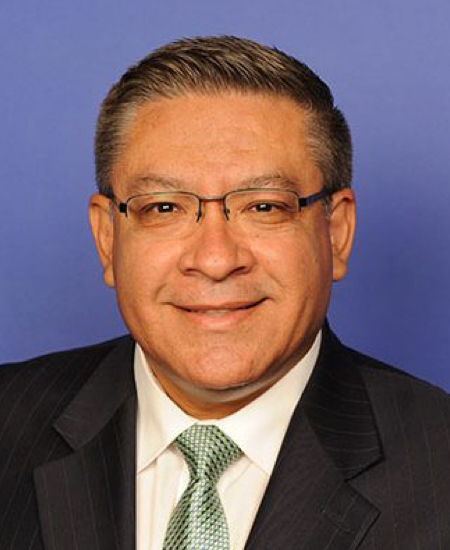
Rep. Salud O. Carbajal
Sponsored bills
Maddy summaryHR 7801, the Sultana Steamboat Disaster Commemorative Coin Act of 2024, authorizes the U.S. Mint to produce commemorative coins honoring the 1865 Sultana steamboat disaster - the worst maritime disaster in U.S. history, which killed nearly 1,200 people. The bill specifies three coin types ($5 gold, $1 silver, and half-dollar clad) to be minted between January 1, 2027, and December 31, 2027, with surcharges from sales directed to the Sultana Historical Preservation Society for museum development and artifact preservation. The coins will be sold at face value plus surcharges ($5-$35 per coin), and the funds must support constructing a museum, exhibits, and preserving disaster-related history. This bill does not create new laws but enables commemorative coin sales to fund a specific historical preservation effort.
Maddy summaryThe AADAPT Act reauthorizes and expands the Project ECHO grant program to specifically address Alzheimer's disease and dementia care. It provides $1 million annually (2026-2031) for grants to eligible health care entities - such as rural clinics, tribal organizations, or community health centers - to develop online training programs for primary care providers working in underserved areas (including rural, frontier, or medically underserved communities). These programs aim to improve provider retention, increase early diagnosis of dementia, and enhance quality care. The bill requires grantees to report on outcomes and ensures funding supplements, rather than replaces, existing resources.
Maddy summaryHR 7770, the Rosie the Riveter Commemorative Coin Act, authorizes the U.S. Mint to produce and sell three commemorative coins honoring women who worked on the U.S. home front during World War II. It specifies $5 gold coins (max 50,000), $1 silver coins (max 400,000), and half-dollar coins (max 750,000), all to be issued between January 1, 2025, and December 31, 2025. Each coin sale includes a surcharge ($35 for gold, $10 for silver, $5 for half-dollar), with all surcharge funds directed to the Rosie the Riveter Trust for maintaining the Rosie the Riveter WWII Home Front National Historical Park and educational programs. The coins will feature designs reflecting the legacy of diverse women workers and must meet specific weight, diameter, and composition standards.
Maddy summaryHR 7771 designates March 21 as National Rosie the Riveter Day to honor the over 6 million American women who joined the workforce during World War II. The bill requests the President issue an annual proclamation encouraging all levels of government to observe the day with ceremonies and educational programs. It does not create new programs or funding but formally recognizes these women's contributions to the war effort and their legacy of empowerment. This procedural resolution directly affects the President and government entities through ceremonial recognition, not policy changes.
Maddy summaryHR 6727 establishes the United States Foundation for International Conservation, a nonprofit organization that will provide grants to support long-term management of protected and conserved areas in eligible countries. The Foundation requires a 2:1 cost match from other sources, demands host country and community consent through binding agreements, and prioritizes areas with high biodiversity or species of significant importance. It will be governed by a Board of Directors including government officials and private sector experts, operate for 10 years with $1 million authorized for 2024 and $100 million annually from 2025-2035, and must follow international conservation standards while prohibiting funding for countries supporting terrorism or violating human rights.
Maddy summaryThe Protecting Students on Campus Act of 2024 requires colleges and universities receiving federal funds to prominently display links to file discrimination complaints (based on race, color, or national origin) on their websites and post annual awareness materials about Title VI rights in high-traffic campus locations. It mandates schools to submit annual reports detailing discrimination complaints received, their analysis, and actions taken. The bill also prevents the Department of Education’s civil rights office from dismissing complaints resolved through school internal processes. These requirements aim to improve transparency and accessibility for students reporting discrimination, directly affecting all institutions of higher education receiving federal funding.
Maddy summaryHR 7747, the Federal Judiciary Stabilization Act of 2024, reclassifies existing federal district court judgeships in specific jurisdictions under a new section of law (28 U.S.C. § 133). It directly affects the courts in Hawaii, Kansas, Missouri, Alabama, Arizona, California, Florida, New Mexico, North Carolina, and Texas by updating their authorized judge counts, such as adding 4 judgeships for Hawaii and increasing California's Central District to 28. The bill modifies the official table in federal law to reflect these new numbers without creating new permanent positions. It authorizes necessary funding to implement these changes. This is a procedural adjustment to judgeship authorizations, not a policy change affecting the public.
Maddy summaryHR 7698 establishes a new Office of Civic Bridgebuilding within the Corporation for National and Community Service to support programs reducing polarization and improving social cohesion. It authorizes $25 million annually (2025-2027) for competitive grants to nonprofits, community groups, and educational institutions to fund projects addressing local needs like healthcare gaps or environmental concerns through research-backed methods. Grantees must demonstrate how projects engage diverse communities, ensure participant safety (especially for marginalized groups), and use standardized metrics to track effectiveness. The Office will oversee grants, support training, and maintain a public research base on civic bridgebuilding best practices.
Maddy summaryThis bill clarifies that drug manufacturers must offer 340B discounted pricing for covered outpatient drugs regardless of where or how the drugs are dispensed - specifically including arrangements where covered entities (like community health centers, clinics, and hospitals) contract with pharmacies to dispense 340B drugs to patients. It explicitly prohibits manufacturers from imposing conditions on these arrangements, such as restricting delivery locations or requiring additional data. The bill also establishes civil penalties of up to $2 million per day for manufacturers violating these rules, with penalties assessed by the Secretary of Health and Human Services. This directly affects covered entities that rely on contract pharmacies to access specialty drugs for patients with conditions like cancer or multiple sclerosis, ensuring they can stretch scarce resources to provide comprehensive care.