

Maddy summaryHRES 1148 is a resolution passed by the U.S. House of Representatives that condemns the Iranian government for supporting terrorism, regional proxy conflicts, and internal suppression of dissent - including its crackdown on protests following Mahsa Amini's death in 2022. It specifically calls for maintaining sanctions against Iran, supporting the Iranian Resistance's Ten-Point Plan (which advocates for a democratic, secular, nonnuclear Iran), and protecting Iranian political refugees in Albania. The resolution also affirms the Iranian people's right to self-determination under international law and urges the U.S. to recognize their struggle for freedom. As a non-binding resolution, it does not create new laws but formally expresses congressional stance.
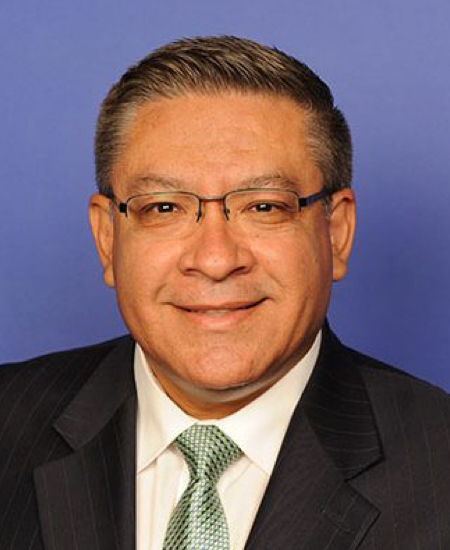
Rep. Salud O. Carbajal
Sponsored bills
Maddy summaryThis bill creates a new federal tax credit for family child care providers who operate from their primary residence and hold state licenses. It allows qualifying providers to claim up to $5,000 in startup costs per year, including licensing fees, supplies, insurance, safety equipment, furniture, and required home renovations. The credit applies only once per provider (no repeat claims) and expires after 7 years. It directly benefits small-scale, licensed family child care providers serving at least two non-family children, aiming to reduce their initial business setup costs.
Maddy summaryThis bill establishes a federal grant program to support accredited zoos, aquariums, and wildlife facilities caring for threatened and endangered species. It creates a "Wildlife Confiscations Network" to coordinate federal law enforcement with qualified facilities handling seized animals (like those from illegal trade), and authorizes a new permit under the Endangered Species Act to streamline rescue, rehabilitation, and reintroduction efforts. Facilities must meet standards for animal care, comply with the Animal Welfare Act, and use grants for specific costs like veterinary care, transportation, and reintroduction - capping federal funding at $1 million per facility annually (except during emergencies). The program directly affects accredited wildlife facilities, federal agencies (like USFWS), and law enforcement, aiming to standardize and fund conservation efforts for species under the Endangered Species Act.
Maddy summaryThis bill amends U.S. Code to lower the minimum student enrollment required for high schools to establish or maintain a Junior Reserve Officers' Training Corps (JROTC) program, reducing the threshold from 100 to 50 students. It directly affects high schools seeking to start or sustain JROTC units, particularly those with smaller student populations. The key provision changes the existing requirement under Title 10, U.S. Code, making it easier for schools to qualify for JROTC participation. This is a straightforward policy adjustment to existing law, with no additional funding or program changes specified.
Maddy summaryHR 7944, the Water Systems PFAS Liability Protection Act, exempts public water systems, wastewater treatment facilities, and related entities from liability under federal environmental law for PFAS releases, provided they follow all applicable laws during water treatment and disposal. The bill protects these "protected entities" from lawsuits seeking cleanup costs or damages related to PFAS, as long as their actions were consistent with current regulations during water management. However, entities remain liable if they acted with gross negligence or willful misconduct in handling PFAS.
Maddy summaryThis bill removes a barrier preventing Selected Reserve and National Guard members (who also work as civilian government employees) from enrolling in TRICARE Reserve Select health insurance. It modifies a law to allow these service members to purchase TRICARE Reserve Select plans starting January 1, 2025, instead of the previous 2030 effective date. The change aims to provide healthcare continuity during military mobilization and improve overall military readiness by ensuring consistent access to affordable coverage. It directly affects eligible reserve component members and their families who currently cannot enroll in TRICARE Reserve Select while having Federal Employee Health Benefits (FEHB) coverage.
Maddy summaryHCONRES 102 is a non-binding symbolic resolution supporting International Transgender Day of Visibility, introduced by multiple House members. It formally encourages the U.S. to observe the day with ceremonies and programs, celebrates transgender community achievements, and recognizes their ongoing fight for equality amid documented discrimination in employment, healthcare, housing, and public spaces. The resolution highlights transgender representation in politics (including 21 state legislators) and historical context, while acknowledging rising anti-transgender legislation. It directly affirms the transgender community's visibility and rights without creating new policies or funding.
Maddy summaryHCONRES 101 is a symbolic resolution introduced in the U.S. House of Representatives on March 22, 2024, by multiple cosponsors. It recognizes that people with disabilities face daily barriers accessing federally funded facilities and reaffirms support for the existing Americans with Disabilities Act (ADA) and Architectural Barriers Act of 1968. The resolution pledges to prioritize "universal and inclusive design" in future federal infrastructure projects but does not create new legal requirements or alter current accessibility standards. As a concurrent resolution, it has no binding effect and serves only to express congressional support for accessibility goals.
Maddy summaryHR 7849, the Disaster Resiliency and Coverage Act of 2024, establishes a federal grant program to help homeowners in high-risk disaster areas make their homes more resilient. The program provides up to $10,000 per household (adjusted annually for inflation) for specific qualifying mitigation activities, such as reinforcing roofs, installing flood barriers, or creating fire-resistant landscaping. Homeowners must have an adjusted gross income under $250,000 ($500,000 for joint filers) and the work must meet FEMA-established standards. States and tribal governments administer the program, with funds intended to incentivize insurance companies to offer or increase coverage in vulnerable areas.
Maddy summaryHRES 1109 is a symbolic resolution commemorating the 1913 Woman Suffrage Procession in Washington, DC, where suffragists led by Alice Paul and Inez Milholland marched to demand voting rights for women. It honors the participants' courage during a protest that drew 500,000 spectators despite violent opposition, highlighting how this event advanced the national push for the 19th Amendment. The resolution does not create new laws but reaffirms support for voting rights equality, connecting the 1913 march to ongoing efforts to protect democratic access. It specifically acknowledges the intersectional struggles of women of color in the suffrage movement. As a commemorative resolution, it has no binding policy effect.