

Maddy summaryThe HOPE Act of 2024 would establish HOPE Accounts, tax-advantaged savings accounts for paying qualified medical expenses. These accounts would allow individuals to save for medical costs with tax-free growth and distributions, with contribution limits of up to $4,000 per month for self-only coverage or $8,000 for family coverage. To qualify, individuals must have minimum essential health coverage and cannot have other health savings accounts like HSAs or FSAs. Contributions are generally not deductible but may be excluded from gross income for lower-income individuals, and distributions for qualified medical expenses would be tax-free. The bill also includes rules for employer contributions and coordination with existing health savings mechanisms.
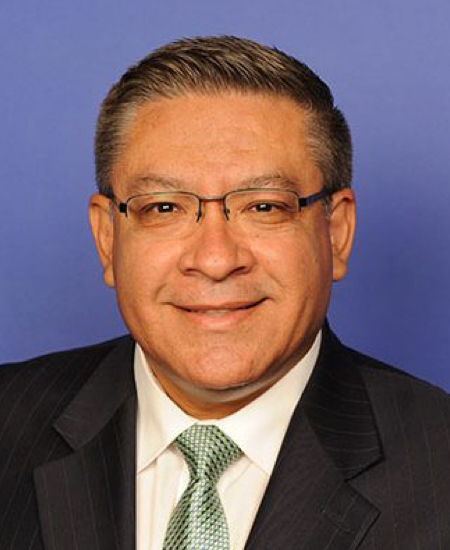
Rep. Salud O. Carbajal
Sponsored bills
Maddy summaryThis bill expands death benefit eligibility for military families when service members die during training or service. It removes a 13-day service requirement for death gratuities, ensures coverage for those not previously included (like ROTC participants during training), and updates life insurance rules to include Reserve members in advanced training regardless of duty status. The changes apply to deaths occurring after the bill's enactment, directly affecting surviving spouses, dependents, and other family members of service members who die during qualifying training or service. (Note: The bill's title misrepresents its focus - it addresses death benefit eligibility, not ROTC/DEP program improvements.)
Maddy summaryThis bill requires the Energy Information Administration (EIA) to include new data on sustainable aviation fuel (SAF) in its regular energy reports, such as the Petroleum Supply Monthly. The data must cover feedstock sources (by state, U.S. total, and foreign countries), production volumes, and imports, while defining SAF as fuel meeting environmental standards (at least 50% lower lifecycle emissions than jet fuel) and not derived from palm oil or petroleum. The EIA must collect this information using reliable statistical methods without double-counting. This provides transparency on the SAF industry but does not change production rules or regulations.
Maddy summaryThis bill creates a new program to provide emergency grants to farm worker organizations during covered disasters. It directly affects migrant and seasonal farm workers who lose income or cannot work due to events like hurricanes, wildfires, pandemics, or extreme weather. The grants fund immediate relief (including direct cash or aid), building community resilience, infrastructure support, and emergency services. Funds remain available until spent, and the program requires consultation with eligible organizations, defined as farm worker groups or qualified nonprofits with relevant experience.
Maddy summaryThe SOIL Act (HR 8754) increases financial support for farmers and ranchers participating in USDA conservation programs who implement practices that simultaneously improve soil health and wildlife habitat. It raises payments under the Environmental Quality Incentives Program (EQIP) to 90% of costs for 26 specific conservation practices, such as planting cover crops, restoring wetlands, establishing riparian buffers, and using no-till farming. The bill also modifies the Conservation Stewardship Program to prioritize contracts addressing both soil and wildlife concerns and introduces "co-benefit activities" that must enhance wildlife habitat while increasing soil carbon sequestration. These changes directly affect agricultural producers enrolled in these USDA programs by providing greater financial incentives for integrated conservation efforts.
Maddy summaryThis bill would allow states to skip in-person interviews for SNAP (food stamp) benefit renewals if applicants agree to waive the interview and have already proven they qualify for continued benefits. It also requires states to offer phone or virtual interview options when interviews are still needed for renewal. The change directly affects SNAP recipients who may face fewer in-person requirements and state agencies administering the program. The policy aims to reduce paperwork burdens without altering eligibility rules for food assistance.
Maddy summaryHR 9325 authorizes the President to award the Medal of Honor to retired Colonel Philip J. Conran for his heroic actions during a 1969 rescue mission in Laos while serving as an Air Force helicopter commander. The bill specifically cites his leadership under heavy enemy fire to save downed crew members and 44 troops despite a severe leg wound, actions that earned him a prior Air Force Cross. It bypasses standard time limits for Medal of Honor nominations by directing the President to award the honor under existing law. This bill directly affects Conran, recognizing his valor that was previously overlooked due to classified status of Laos operations during the Vietnam War.
Maddy summaryHR 9238, the Marine Energy Technologies Acceleration Act, establishes a $1 billion Marine Energy Acceleration Fund to advance marine energy projects. It allocates $600 million for 20+ demonstration projects connecting to microgrids, community grids, or utility-scale grids, prioritizing projects supporting rural, Tribal, and disadvantaged communities, energy resilience, and environmental monitoring. Additional funding includes $230 million for research and development, $50 million for site assessments, $15 million for streamlining permitting processes across federal agencies, and $85 million for workforce development programs focused on communities near project sites. The bill directly affects marine energy developers, coastal communities, and federal agencies like the Department of Energy and Bureau of Ocean Energy Management.
Maddy summaryHR 9274, the SHAWL Act, establishes two new Smithsonian museums: the National Museum of the American Latino and the American Women’s History Museum. It authorizes both museums to be located within the National Mall’s "Reserve" area, overriding prior restrictions, and requires federal agencies managing potential sites to transfer jurisdiction to the Smithsonian after notifying congressional committees. The bill mandates that both museums accurately represent diverse cultures, histories, and viewpoints within Latino and women’s communities through exhibits and programs, requiring input from a broad range of community experts. It also requires the Smithsonian to submit biennial reports to Congress detailing compliance with these representation requirements.
Maddy summaryThe NO BAN Act (HR 9244) prohibits U.S. immigration authorities from denying visas or entry based on national origin, religion, or sex. It amends immigration law to explicitly ban such discrimination in visa decisions and tightens restrictions on the president’s power to suspend entry of certain groups under Section 212(f). The bill requires specific evidence, narrow tailoring, time limits, and congressional notification for any entry restriction, while mandating public reports on visa denials and waivers. It directly affects nonimmigrant visa applicants (e.g., students, workers) and federal agencies administering immigration policy.