

Maddy summaryHR 1719, the Honoring Our Fallen Heroes Act of 2023, establishes a presumption that certain cancers diagnosed in public safety officers (like police and firefighters) are work-related if linked to their duties. It defines 22 specific cancers (including lung, mesothelioma, and WTC-related cancers) as "exposure-related," allowing officers or their families to receive benefits without proving direct work connection, provided they were diagnosed within 15 years of leaving active service. The bill also creates a process for adding new cancers to the list based on scientific evidence, requiring the Bureau to review petitions and make decisions within 180 days. This applies to deaths or disabilities occurring on or after January 1, 2023, directly affecting officers who developed covered cancers during service.
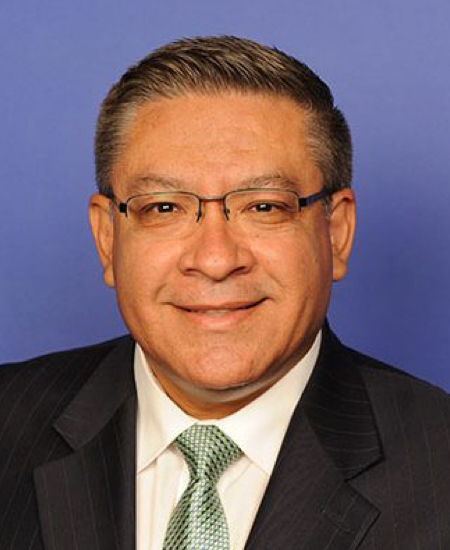
Rep. Salud O. Carbajal
Sponsored bills
Maddy summaryHCONRES 130 is a symbolic concurrent resolution commending state and local governments that treat reproductive rights as human rights following the *Dobbs* decision. It recognizes efforts by cities like Austin, Texas, and Montgomery County, Maryland, to expand abortion access and condemn criminalization of pregnancy outcomes. The resolution affirms that reproductive rights are human rights, urges states to repeal restrictive laws, and references U.S. obligations under international human rights treaties. As a non-binding resolution, it does not create new laws or alter existing policies.
Maddy summaryHRES 1496 is a resolution supporting the designation of October 23, 2024, as "National Marine Sanctuary Day." It aims to raise public awareness about the National Marine Sanctuary System, which protects ocean, coastal, and Great Lakes areas. The resolution encourages community engagement with these protected sites and acknowledges their role in conserving biodiversity, supporting local economies, and providing recreational opportunities. As a non-binding resolution, it does not create new laws but formally recognizes the importance of marine sanctuaries.
Maddy summaryThis resolution symbolically supports designating September 23-27, 2024, as "National Hazing Awareness Week." It does not create new laws but expresses the House’s endorsement of raising awareness about hazing in college settings. The resolution cites statistics showing 55% of college students experience hazing and references numerous fatalities linked to hazing incidents. It encourages ongoing hazing prevention efforts beyond the designated week and urges the public to observe the week through awareness and education. The resolution directly affects campus communities and student safety initiatives, though it has no binding legal effect.
Maddy summaryThis bill amends the tax code to exclude veteran disability compensation or pension payments (from Title 38, U.S. Code) when calculating income for two housing programs: the Low Income Housing Tax Credit and Qualified Residential Rental Project Bonds. It directly affects veterans receiving these disability payments who apply for or qualify for these housing tax benefits. The key provision adds a specific exclusion to the income calculation rules, ensuring these veteran payments are not counted as income for eligibility purposes. This change simplifies the income determination process for veterans seeking housing assistance through these federal programs. The amendment applies to income determinations made after the bill's enactment date.
Maddy summaryHR 3433, the "Give Kids a Chance Act of 2024," requires pharmaceutical companies developing certain cancer drugs to conduct pediatric studies if the drugs target molecular pathways relevant to childhood cancers. It directly affects drug manufacturers submitting new applications for cancer treatments, particularly those combining previously approved adult cancer drugs or containing a single new active ingredient. The bill amends FDA regulations to mandate these pediatric investigations only when specific conditions are met, such as when a drug's molecular target is relevant to pediatric cancer growth. The FDA must issue implementing guidance within 12 months, and reports to Congress will track implementation and effectiveness starting 2 years after enactment.
Maddy summaryHRES 1485 designates the third Friday of September each year as "National POW/MIA Recognition Day" to honor prisoners of war and missing-in-action military personnel. The resolution expresses the House's support for this designation and encourages Americans to observe the day through community commemorations, displaying the POW/MIA flag, and performing acts of service for families of those affected. It does not create new laws or alter existing policies but builds on the existing National POW/MIA Flag Act (Public Law 116-67) that requires the POW/MIA flag to be flown on federal properties. The resolution focuses on symbolic recognition and public engagement rather than substantive policy changes.
Maddy summaryHR 9760 establishes a federal grant program to help communities prepare for wildfires. It provides up to $10 million per project for eligible entities (like states, tribes, or local governments) to implement or develop community wildfire resilience plans. These plans must include strategies like clearing vegetation near homes (defensible space), protecting vulnerable residents, hardening critical infrastructure, and coordinating with local agencies. The program authorizes $1 billion annually from 2024-2028, prioritizing high-risk areas identified through federal maps, and requires annual reports on radio communication gaps for wildfire response.
Maddy summary# Summary of Health Equity and Accountability Act of 2024 This comprehensive legislation addresses multiple aspects of health care access, workforce development, and immigration policy with a strong focus on health equity. ## Key Themes 1. **Workforce Diversity**: Significant emphasis on increasing racial, ethnic, and socioeconomic diversity in the health care workforce 2. **Language Access**: Mandates for language access services for individuals with limited English proficiency 3. **Underserved Communities**: Targeted investments in medically underserved areas and communities 4. **Immigration Policy**: Modifications to programs that bring health care professionals to the U.S. ## Major Provisions ### Workforce Development - **$1 billion** for nursing education enhancement and modernization grants in underserved areas - **$552 million** for health professions workforce development in 2032 (increasing annually) - **$392 million** for health professions education programs in 2025 - New grants for schools of medicine and osteopathic medicine in underserved areas - Expansion of the Conrad State 30 program for foreign physicians to address physician shortages ### Language Access - Requires health care providers to provide language access services to individuals with limited English proficiency - Mandates translation services and interpretation services for all health care settings ### Diversity Initiatives - **David Satcher Public Health and Health Services Corps** to increase awareness of health career opportunities - **Louis Stokes Public Health Scholars Program** for underrepresented students - **Patsy Mink Health and Gender Research Fellowship Program** - **Paul David Wellstone International Health Fellowship Program** - **Edward R. Roybal Health Scholar Program** ### Immigration Policy - **Conrad State 30 program extension** through 2027 - **Physician retention** provisions to help foreign physicians stay in medically underserved areas - **Dual intent for physicians** seeking graduate medical training - **Clarifications to national interest waiver** requirements - **Automatic extension** of physician nonimmigrant status during residency transitions ### Funding - **Health Professions Workforce Fund** established with multi-year funding increasing from $392 million in 2025 to $552 million in 2032 - Specific allocations for nursing workforce development and health professions education This legislation represents a comprehensive approach to addressing health care disparities through workforce development, improved access, and policy changes to support a more diverse and equitable health care system.
Maddy summaryThis resolution (HRES 1472) symbolically recognizes the heritage, culture, and contributions of Latinas in the United States. It highlights their economic impact (over 2 million Latina-owned businesses), societal roles (48,000+ active-duty Latinas in the military, 18% of women-owned businesses), and ongoing challenges like the pay gap (Latinas earn 57 cents for every dollar earned by White, non-Hispanic men). The resolution notes that Latinas represent 1 in 5 U.S. women and will comprise 25% of the female population by 2060. As a non-binding resolution, it does not create new policies or allocate funds, but formally honors their contributions and acknowledges the need for continued progress.