

Maddy summaryThis resolution (HRES 1551) supports designating October 23, 2024, as a national day of remembrance for the 241 U.S. military personnel killed in the 1983 terrorist bombing of a Marine Corps barracks in Beirut, Lebanon. It honors Gold Star families, recognizes the fallen service members' sacrifice, and encourages public observance through ceremonies. The resolution is procedural - it does not create new laws or obligations but serves as a symbolic tribute to those who died. It directly affects military families and the public, who are invited to participate in commemorative activities.
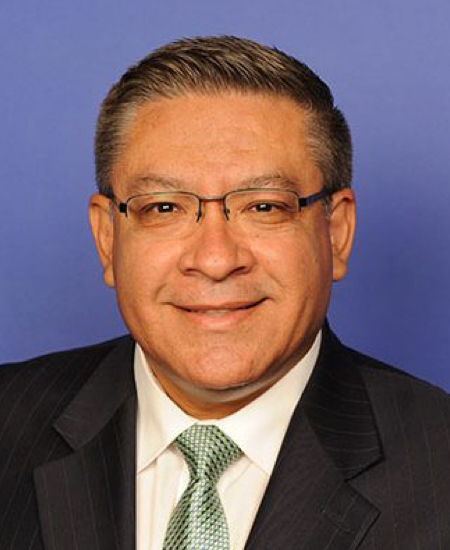
Rep. Salud O. Carbajal
Sponsored bills
Maddy summaryThe VA Employee Fairness Act of 2024 modifies collective bargaining rules for employees of the Veterans Health Administration (VHA). It removes existing subsections (b), (c), and (d) from the law governing VHA employee bargaining and renumbers the remaining provision. This change streamlines the collective bargaining framework but does not alter the Secretary of Veterans Affairs' existing authorities over incentive pay and expedited hiring. The bill directly affects VHA employees by changing how their collective bargaining rights are structured under federal law. The law remains neutral, focusing solely on procedural adjustments to the existing bargaining framework.
Maddy summaryHRES 1544 designates September 22, 2024, as "National Hispanic Nurses Day" and formally recognizes the National Association of Hispanic Nurses (NAHN) as the leading organization representing Hispanic nurses. The resolution acknowledges Hispanic nurses' contributions to healthcare equity, cultural competence, and reducing disparities in underserved communities. It has no binding policy changes or funding implications - it serves as symbolic recognition to honor their work and NAHN's advocacy role. This is a ceremonial resolution, not a law with enforceable provisions.
Maddy summaryThis bill amends federal railroad safety law to extend duty hour limits to yardmaster employees. It directly affects rail yard supervisors who coordinate train and engine movements within rail yards. The key change adds "yardmaster employee" to existing regulations and defines the role as someone responsible for supervising train control in rail yards. The bill modifies Section 21103 of Title 49 to include these workers under the same duty hour restrictions already applied to train employees. This is a procedural update to clarify which workers are covered by existing safety rules, not a new policy.
Maddy summaryThis bill eliminates out-of-pocket costs for all FDA-approved contraceptives under TRICARE for military dependents (spouses and children) and extends full coverage to include counseling, insertion, removal, and follow-up care. It requires TRICARE Select, Prime, and pharmacy benefits to cover all contraceptive methods without cost-sharing, addressing current gaps where dependents face copays. The law also mandates family planning education for all service members and ensures sexual assault survivors can access emergency contraception without barriers at military medical facilities. This applies to all individuals with reproductive capacity, including transgender and non-binary dependents.
Maddy summaryHR 9889 provides $14 billion in emergency funding to assist farmers and ranchers recovering from 2023 natural disasters like droughts, wildfires, floods, and hurricanes. It directly affects agricultural producers who suffered crop, livestock, or dairy losses, including $1.5 billion specifically for livestock-related expenses. The bill establishes payment limits (up to 90% of losses for insured producers, 70% for uninsured) and requires beneficiaries to purchase crop insurance or NAP coverage for the next two crop years. Payments cover revenue losses for crops, trees, vines, and livestock relocation costs, with administrative costs capped at 1% of the total appropriation.
Maddy summaryHCONRES 131 is a symbolic resolution recognizing the wage gap between Latina women and White, non-Hispanic men in the U.S. workforce. It highlights that Latina women working full-time earn 58 cents for every dollar earned by White, non-Hispanic men, with an average lifetime earnings loss of over $1.2 million. The resolution designates October 3, 2024, as "Latina Equal Pay Day" to draw attention to this disparity, citing Bureau of Census data showing the gap has persisted for decades. It does not create new laws or policies but formally acknowledges the economic impact on Latina women and their families.
Maddy summaryHRES 1504 designates October 2024 as Filipino American History Month to celebrate the history, culture, and contributions of Filipino Americans to the United States. The resolution urges the American public to observe the month through educational programs and activities highlighting the community's early settlements, military service (including World War II veterans' contributions), and roles in healthcare, labor movements, and other fields. As a non-binding congressional resolution, it formally recognizes Filipino American heritage without creating new legal obligations or policy changes.
Maddy summaryThe Industrial Agriculture Conversion Act of 2024 creates federal grants to help medium and large livestock operations convert to climate-smart farming. It targets producers operating defined "medium" (e.g., 200-699 dairy cows) or "large" (e.g., 10,000 swine) concentrated animal feeding operations (CAFOs), funding up to 90% of costs for projects like adding pasture access, switching to specialty crops, or installing irrigation. The bill explicitly excludes manure lagoons and methane digesters from funding and prohibits packers from refusing to buy livestock from farms using these grants. Socially disadvantaged farmers may qualify for reduced cost-sharing requirements when working with community or minority-serving organizations.
Maddy summaryThis bill makes it illegal to intimidate election workers while they perform duties like vote counting, tabulation, or certification during federal elections. It creates a legal presumption that carrying visible firearms (including realistic replicas) near voters or election workers constitutes intimidation, unless proven otherwise. The law applies to actual firearms, imitation firearms, and antique firearms that could reasonably be mistaken for real weapons. Courts can also impose temporary restrictions on firearm carrying in related cases to protect election workers and voters.